
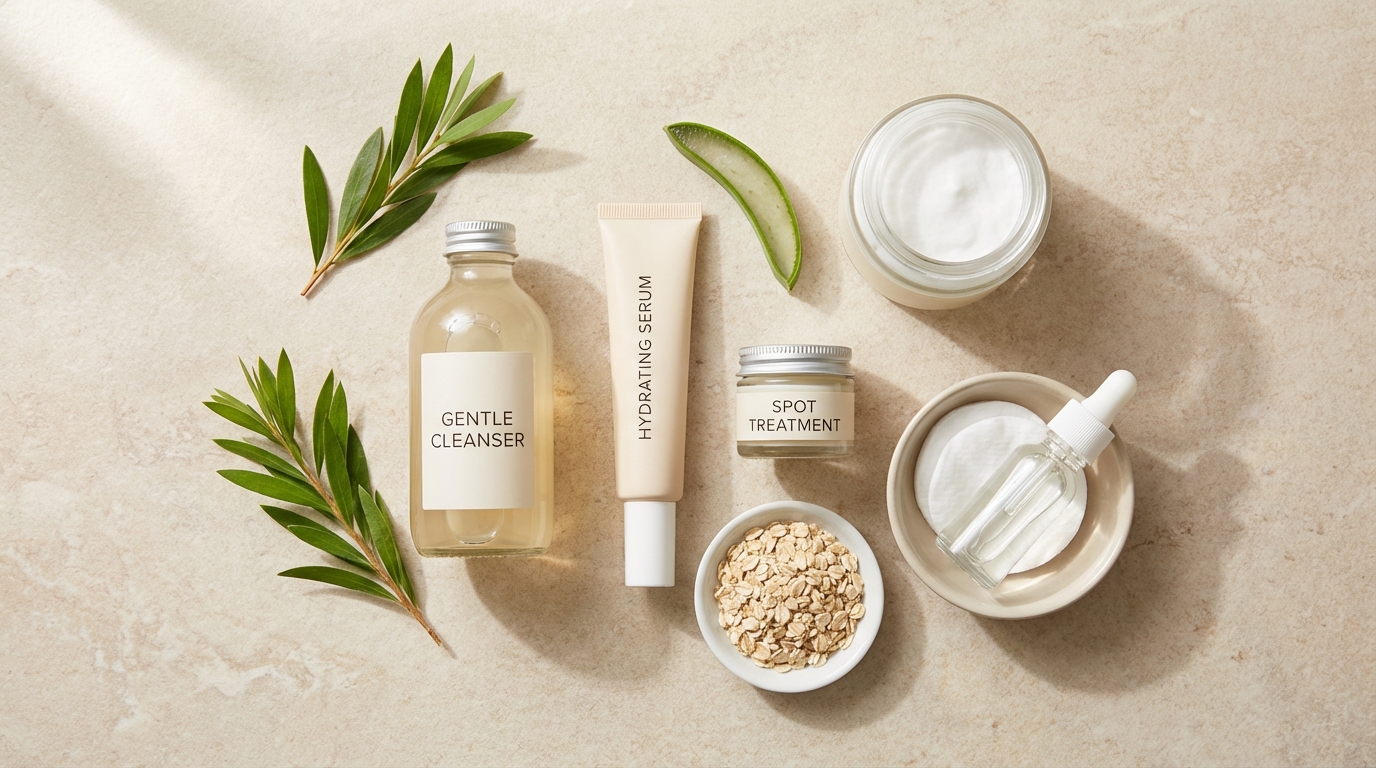
Here’s the truth nobody in the skincare aisle wants you to know: stripping your acne-prone skin until it feels “squeaky clean” is making your breakouts worse. I spent years as a beauty editor watching brands push harsh, drying formulas at people with acne, and the results were always the same. Red, irritated skin that somehow produced even more oil and more breakouts.
If that sounds familiar, it’s time for a different approach.
Why Gentle Cleansers Actually Work Better
Your skin has a protective barrier called the acid mantle. When you blast it with sulfates and alcohol-heavy toners, you damage that barrier. Damaged barriers leak moisture and become inflamed. Inflammation triggers more breakouts.
Look for cleansers with a pH between 4.5 and 6.5. Avoid anything that foams aggressively or leaves your skin feeling tight. That “tight” feeling isn’t clean. It’s damage.
Good options include:
- Gentle gel cleansers with amino acid surfactants
- Micellar water for light cleansing days
- Low-concentration salicylic acid cleansers (0.5% to 2%)
According to the American Academy of Dermatology, washing your face more than twice daily or using harsh scrubs can worsen acne. More is not better here.
Hydration Prevents Oil Overproduction
This is where most people with oily, acne-prone skin get it wrong. They skip moisturizer because they think it will make them greasier.
The opposite happens.
When your skin is dehydrated, it compensates by producing more sebum. That excess sebum clogs pores. Those clogged pores become pimples. You see where this is going.
Use a lightweight, non-comedogenic moisturizer every single day. Ingredients like hyaluronic acid and niacinamide are particularly good for acne-prone skin. Hyaluronic acid hydrates without adding oil. Niacinamide regulates sebum production and has anti-inflammatory properties.
If you’re dealing with both acne and dehydration, check out our guide on building a balanced routine that addresses both.
Spot Treatment vs All-Over Treatment
Stop putting benzoyl peroxide all over your face. Seriously.
Benzoyl peroxide is effective at killing acne-causing bacteria, but using it everywhere when you only have a few spots creates unnecessary irritation and dryness. Your forehead doesn’t need to peel because you have one pimple on your chin.
Here’s when to use each approach:
Spot treatment (targeted application):
- Occasional breakouts in specific areas
- Individual pimples that pop up
- Inflammatory acne (red, raised bumps)
All-over treatment (full face application):
- Widespread, persistent acne
- Blackheads or whiteheads across larger areas
- Prevention when you know breakouts are coming (hormonal cycles, stress periods)
Even with all-over treatments, start with every other day and build up. Your skin needs time to adjust.
Ingredients to Include and Avoid
Let’s make this simple.
Include these:
- Salicylic acid (BHA): Gets into pores and clears them out
- Niacinamide: Controls oil, reduces redness, strengthens barrier
- Azelaic acid: Kills bacteria, fades marks, gentle enough for sensitive skin
- Zinc: Anti-inflammatory, helps regulate sebum
- Centella asiatica: Calms irritation and supports healing
Approach with caution:
- Benzoyl peroxide: Effective but drying. Use it strategically, not everywhere
- Retinoids: Excellent for acne but can cause purging and irritation initially. Start slow
Avoid these:
- Isopropyl myristate and isopropyl palmitate: Common in moisturizers, known to clog pores
- Coconut oil: Great for dry skin, terrible for acne-prone skin
- Heavy fragrances: Unnecessary irritation
- Alcohol denat (high on ingredient list): Drying and damaging to barrier
The Paula’s Choice ingredient dictionary is a solid resource if you want to check specific ingredients before buying products.
A Sample Routine That Won’t Destroy Your Face
Morning:
- Gentle cleanser or just water
- Niacinamide serum
- Lightweight moisturizer
- Sunscreen (non-comedogenic, always)
Evening:
- Gentle cleanser (double cleanse if wearing sunscreen or makeup)
- Treatment product (salicylic acid, azelaic acid, or retinoid, not all at once)
- Moisturizer
That’s it. No twelve-step routine. No expensive gadgets. Just consistent, gentle care that lets your skin function properly.
If you’re currently using harsh products and want to transition, go slow. Swap out one product at a time. Give your skin two weeks to adjust before changing anything else. And expect a short adjustment period where your skin figures out its new normal.
The goal isn’t perfect skin overnight. It’s healthy skin that can manage itself without constant intervention. That starts with stopping the damage, not adding more products.