
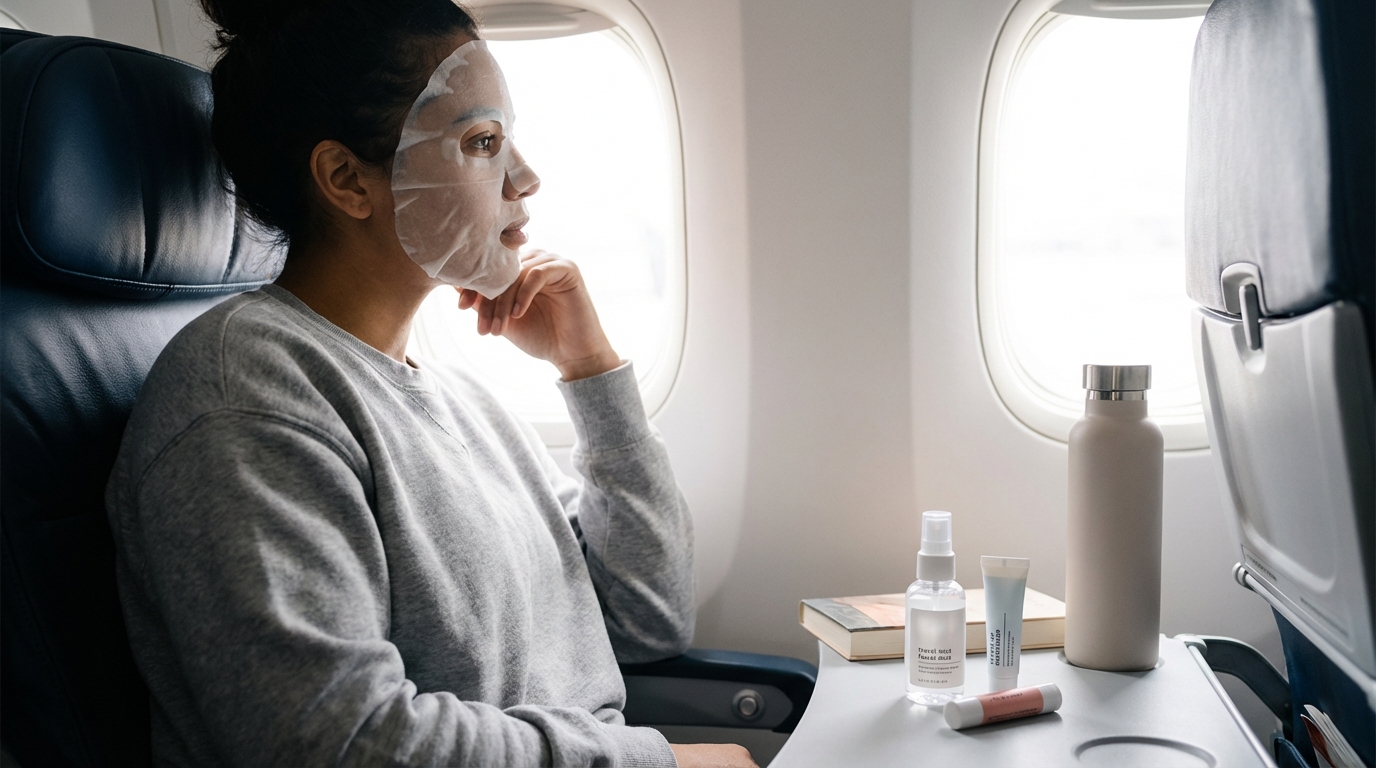
Okay, so I used to think “airplane skin” was just something influencers made up to justify their carry-on full of skincare products. Then I took a 10-hour flight to Europe and stepped off looking like a dehydrated raisin. My foundation had separated into what I can only describe as “desert crack patterns” and my under-eyes were giving haunted house energy. Fun times.
Turns out, airplane skin is absolutely, 100% a real thing. And once you understand why it happens, you can actually do something about it. So let me break down what’s going on up there at 35,000 feet and how to land looking like a human being.
Why Your Skin Freaks Out at 35,000 Feet
Here’s the deal: airplane cabins have humidity levels around 10-20%. For context, the Sahara Desert sits at about 25%. So yeah, you’re basically flying through conditions drier than an actual desert. Your skin is out here trying to survive in an environment it was absolutely not designed for.
According to research on transepidermal water loss, low humidity environments cause your skin to lose moisture at a much faster rate. The recycled cabin air makes it worse. Your skin barrier, which normally does a decent job keeping moisture in, just cannot compete with these conditions.
What happens next is either extreme dryness or, plot twist, your skin overcompensates by producing extra oil. Some people get both at the same time (yes, that’s possible and yes, it’s annoying). You might also notice your skin looks dull, feels tight, or breaks out a day or two after flying. All totally normal responses to basically putting your face through an environmental stress test.
Your In-Flight Skincare Strategy
Before you even board, there are some smart moves to make. Skip the full face of makeup if you can. I know, I know, sometimes you have to look presentable because you’re meeting someone at the airport or whatever. But if you can get away with it, traveling with a bare or minimal face is going to make your life so much easier.
If you absolutely must wear makeup, go light. A tinted moisturizer or BB cream with SPF, a little concealer where you need it, and call it done. Foundation on a long flight is basically asking for trouble.
Now, the in-flight routine. This is where things get fun (or embarrassing, depending on how you feel about skincare in public).
First up: hydrating mist. Keep a facial mist in your personal item and spritz every couple hours. Look for ones with hyaluronic acid or glycerin. A quick spray helps replace some of that moisture your skin is losing. Byrdie has a solid roundup of options at different price points.
Sheet masks on planes. Yes, people do this. I’ve done this. You will look ridiculous and the person next to you might move seats. But honestly? Who cares. A 20-minute hydrating sheet mask during the flight can make a real difference. I usually do mine when the cabin lights are dimmed and everyone’s sleeping anyway. Pro tip: get fragrance-free masks so you’re not assaulting your seatmates with cucumber smell.
Lip balm is non-negotiable. Your lips will dry out faster than anything else. Apply generously and often. Same goes for hand cream if you’re someone whose hands get dry and cracked.
A thick moisturizer as your final layer helps seal everything in. I’m talking the heavy duty stuff, not your light daily moisturizer. This creates a barrier between your skin and that brutal cabin air.
The Post-Flight Recovery Plan
So you’ve landed. Your skin has been through it. Now what?
First thing: cleanse. Even if you didn’t wear makeup, your skin has been sitting in recycled air collecting who knows what. A gentle cleanser will get rid of all that buildup without stripping your already compromised skin barrier.
Next, time to flood your skin with hydration. This is when I bust out the hyaluronic acid serum. Apply it to damp skin (this is important, HA needs water to work) and follow with your moisturizer.
If your skin is feeling particularly sad, a sleeping mask that night can help with recovery. These are thicker than regular moisturizers and create a protective layer while you sleep. Your skin does most of its repair work overnight anyway, so give it the tools it needs.
Drink water. Like, a lot of it. Yes, this means more bathroom trips, but your body (and skin) needs internal hydration too. The general recommendation is to drink about 8 ounces of water for every hour you’re in the air. Most people don’t come close to this, which is why they feel terrible after flying.
Watch out for post-flight breakouts. Sometimes your skin will be fine on landing day and then break out 24-48 hours later. This is a delayed reaction to all that stress. If you’re prone to this, keep your skincare gentle and avoid introducing new products right after traveling.
What to Pack (Keep It Simple)
You don’t need to bring your entire bathroom. Here’s the actual essentials:
A travel-size gentle cleanser (if your flight is long enough to warrant mid-flight cleansing or for freshening up before landing). Micellar water on cotton pads works great and doesn’t require rinsing.
Hydrating mist in a TSA-approved size. Use it throughout the flight.
One or two sheet masks. Individually packaged, flat, easy to pack.
Your thickest moisturizer in a small container. CeraVe Moisturizing Cream is a popular budget-friendly option that works for most skin types.
Lip balm. Multiple. Put one in every pocket and bag compartment.
Eye drops if you wear contacts or get dry eyes. The low humidity affects your eyes too.
That’s it. Everything else is extra. If you’re a skincare maximalist (no judgment), you can add a serum or sleeping mask. But the basics above will get you through most flights without looking like you’ve been wandering the desert.
One more thing: don’t touch your face. Airplanes are germy. The tray tables, armrests, everything. Keep your hands clean and away from your face as much as possible. A travel hand sanitizer is useful here.
Flying doesn’t have to mean sacrificing your skin. A little prep, some in-flight maintenance, and a solid recovery routine can make a real difference. And hey, worst case scenario, you get to wear a sheet mask in public and freak out the business class passengers. The American Academy of Dermatology has more travel skincare tips if you want to go deeper. Safe travels, and may your skin barrier stay intact.