
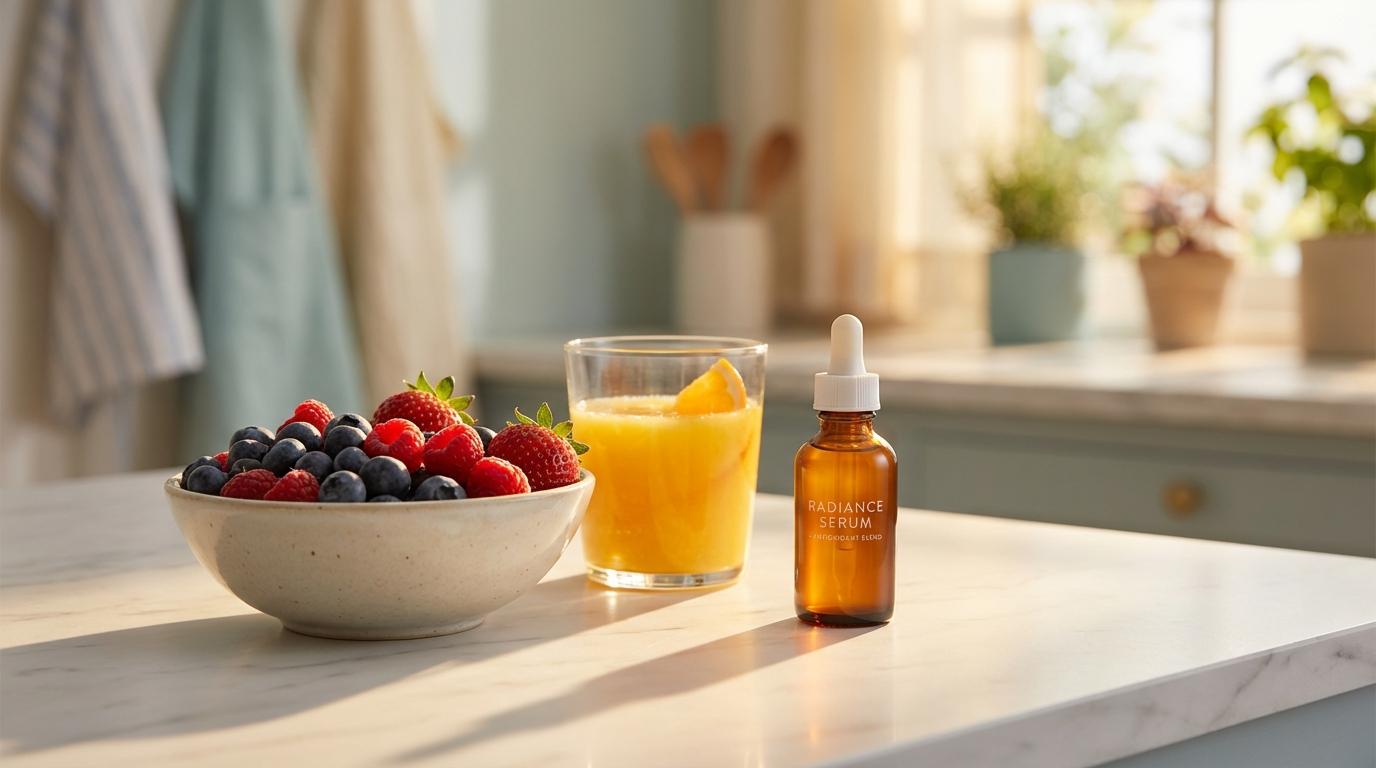
It feels like every wellness conversation eventually circles back to antioxidants, and for good reason. These protective compounds show up in your morning smoothie bowl and your evening serum, promising to shield your skin from the daily stressors of modern life. But when you’re trying to create a sustainable, mindful approach to skincare, a natural question arises: should you focus on eating antioxidant-rich foods, applying antioxidant serums, or embracing both?
The answer isn’t about choosing sides. It’s about understanding how each approach nourishes your skin differently and finding a gentle balance that works for your life.
How Your Body Processes Antioxidants From Food
When you eat a vibrant plate of berries, leafy greens, or colorful vegetables, your digestive system breaks down these foods and releases their antioxidant compounds into your bloodstream. From there, these nutrients travel throughout your entire body, supporting your heart, brain, immune system, and yes, eventually your skin.
The thing is, your skin often receives nutrients last. Your body prioritizes vital organs, so even if you’re eating plenty of antioxidant-rich foods, only a fraction of those protective compounds actually make it to your skin cells. Research suggests that the bioavailability of oral antioxidants for skin can be surprisingly limited.
This doesn’t mean dietary antioxidants are unimportant for skin health. Foods rich in vitamins A, C, and E, along with compounds like lycopene from tomatoes and anthocyanins from blueberries, create a foundation of internal protection. They support collagen production from within, help manage inflammation throughout your body, and contribute to that healthy glow that comes from genuine wellbeing.
Some of the most skin-supportive antioxidant foods include:
- Berries, especially blueberries and strawberries, packed with vitamin C and anthocyanins
- Leafy greens like spinach and kale, rich in lutein and zeaxanthin
- Orange and red vegetables (sweet potatoes, carrots, bell peppers) for beta-carotene
- Fatty fish containing astaxanthin, a particularly potent antioxidant
- Green tea, which provides protective polyphenols
- Nuts and seeds for vitamin E
What Happens When Antioxidants Go Directly On Your Skin
Topical antioxidant serums take a completely different route. Instead of traveling through your digestive system and bloodstream, these formulations deliver protective compounds directly to where you want them: your skin’s outer layers.
I covered rosemary antioxidant here.
This direct delivery means significantly higher concentrations can reach your skin cells. A well-formulated vitamin C serum, for example, can deliver far more of that antioxidant to your epidermis than any amount of orange juice ever could. Studies have shown that topical application allows for localized benefits that oral intake simply cannot match.
The stratum corneum, your skin’s protective outer barrier, is designed to keep things out. This is generally helpful, but it means that topical products need careful formulation to actually penetrate and work. The most effective antioxidant serums use specific concentrations, pH levels, and sometimes advanced delivery systems like liposomal technology to ensure the active ingredients actually reach the cells that need them.
Common topical antioxidants include:
- Vitamin C (L-ascorbic acid) for brightening and collagen support
- Vitamin E (tocopherol) for moisturizing and barrier protection
- Niacinamide for calming and evening skin tone
- Resveratrol for anti-aging benefits
- Green tea extract for soothing and protection
- Ferulic acid, which enhances the stability of other antioxidants
Which Approach Serves Which Purpose
Understanding the strengths of each method helps you make thoughtful choices rather than anxiously trying to do everything.
Dietary antioxidants excel at providing systemic, whole-body protection. They support your skin’s health from a foundational level, reduce internal inflammation that can manifest as skin issues, and contribute to long-term resilience. If you’re dealing with skin concerns that seem connected to overall health, stress, or inflammation, focusing on nutrition often makes sense.
Related: free radical damage.
Eating well also supports your skin in ways that go beyond individual nutrients. A diet rich in colorful plants provides fiber for gut health (which connects to skin health in fascinating ways), healthy fats for your skin barrier, and the kind of sustained energy that shows up as vitality in your complexion.
Topical antioxidants, meanwhile, are your targeted protectors. They’re particularly effective for:
- Daily defense against environmental stressors like pollution and UV exposure
- Addressing specific concerns like hyperpigmentation or fine lines
- Boosting your skin’s morning protection before you head outside
- Providing immediate, localized antioxidant activity
If you’re looking to understand skincare ingredients better, knowing the difference between internal and external antioxidant support is genuinely helpful context.
The Case for Combining Both Strategies
Here’s the gentle truth: you don’t need to choose. The most balanced approach involves both nourishing your skin from within and protecting it from without. Research actually supports this combined strategy, with studies showing that using both oral and topical antioxidants together can provide greater protection than either approach alone.
One study examining lutein and zeaxanthin found that while both oral supplementation and topical application improved skin measures, the combination of both methods provided the most significant benefits. Your internal and external defenses work together, creating layers of protection.
This doesn’t mean you need an elaborate routine or an expensive supplement regimen. A less-is-more approach might look like:
- Eating a colorful, varied diet with plenty of vegetables, fruits, and healthy fats
- Using one well-formulated antioxidant serum in your morning routine
- Drinking green tea, which provides antioxidants both internally and creates a mindful pause in your day
The key is consistency rather than complexity. A simple vitamin C serum applied regularly will serve your skin better than an elaborate ten-step routine you abandon after two weeks.
Adjusting Your Approach When Traveling
Your antioxidant needs shift depending on your environment and circumstances. Travel presents interesting challenges that might prompt you to lean more heavily on one approach or the other.
When flying, your skin faces low humidity, recycled air, and potential disruption to your usual eating patterns. This is a time when topical antioxidants become especially valuable. A hydrating serum with vitamin E can help counteract the drying effects of airplane air, and you’re not dependent on finding nutritious food in airports.
If you’re traveling somewhere with different cuisine, you might find yourself eating fewer of your usual antioxidant-rich foods. In these situations, your topical routine provides consistent protection while you explore new culinary experiences without stress.
Conversely, if you’re on a retreat or vacation focused on wellness and whole foods, you might find your diet naturally becomes more antioxidant-rich. This is a lovely time to keep your topical routine simple while your nutrition does more of the heavy lifting.
Beach vacations or trips to sunny destinations warrant extra attention to both approaches. UV exposure increases your skin’s antioxidant needs significantly. Green tea extract, whether consumed as a beverage or applied topically, offers wonderful protective benefits during sun-intensive travel.
Listening to What Your Skin Actually Needs
Rather than following rigid rules about antioxidant intake, consider developing a responsive relationship with your skin. Some seasons of life might call for more attention to nutrition, while others benefit from targeted topical support.
During stressful periods, when your body’s antioxidant reserves get depleted more quickly, both approaches become more important. Stress increases oxidative damage throughout your body, so eating plenty of protective foods while maintaining your topical routine creates a supportive buffer.
If you notice your skin looking dull despite a good topical routine, it might be a gentle signal to examine your diet. Are you eating enough colorful vegetables? Getting adequate vitamin C from fruits? Including healthy fats that help transport fat-soluble antioxidants?
Similarly, if you’re eating beautifully but your skin still seems to need more protection from environmental stressors, that’s a sign that topical support could help bridge the gap.
Practical Suggestions for Your Routine
If you’re starting from scratch or simplifying your approach, here’s a grounded place to begin:
For nutrition: Focus on adding rather than restricting. Include one additional serving of colorful vegetables or berries in your daily eating. Swap your afternoon coffee for green tea a few times a week. Add a handful of nuts to your snacks. These small additions accumulate into meaningful antioxidant support without requiring dramatic dietary changes.
For topical care: A vitamin C serum in the morning provides a foundation of antioxidant protection for the day ahead. Apply it after cleansing and before moisturizer and sunscreen. If your skin tolerates it well and you want to add more, consider a product with vitamin E or green tea extract for your evening routine.
Remember that antioxidant serums can sometimes cause sensitivity, especially vitamin C formulations. Start with lower concentrations and pay attention to how your skin responds. A gentle approach that your skin welcomes will always serve you better than an aggressive routine that causes irritation.
Finding Your Balance
The conversation about antioxidant foods versus antioxidant serums isn’t really an either-or question. Both have their place in a mindful approach to skin health, and understanding their different strengths helps you create a sustainable practice.
Your diet builds a foundation of internal wellness that radiates outward. Your topical products provide targeted, localized protection where your skin meets the world. Together, they create complementary layers of care.
Trust that you don’t need to optimize every aspect of antioxidant delivery. A varied diet that brings you pleasure and a simple, consistent skincare routine will serve you well. The most effective approach is always the one you can maintain with ease, without stress or overwhelm.
Your skin is resilient and responsive. Give it good nourishment, gentle protection, and patient attention, and it will find its balance. That’s really all any of us are doing, isn’t it? Finding balance, one small choice at a time.