
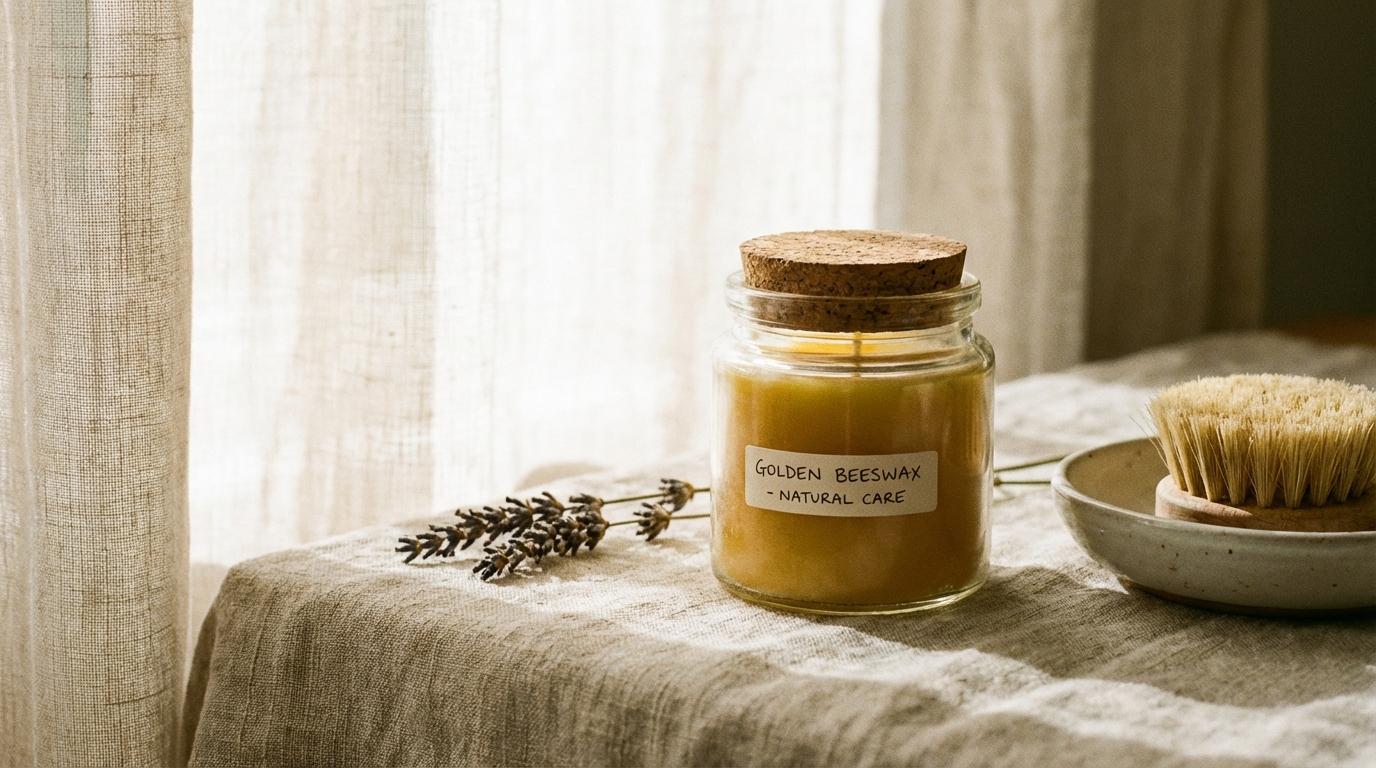
Winter mornings reveal something interesting about skin: the way cheeks flush red from cold, how lips crack at the corners, the tight feeling that arrives before you even reach for moisturizer. These small observations remind us that our skin needs protection from the elements, and traditional ingredients often provide exactly that.
Beeswax has been used in skincare preparations for thousands of years, appearing in ancient Egyptian cosmetics and Greek medicinal salves. Its staying power across cultures and centuries speaks to something genuinely useful about this substance. But what exactly does beeswax do, and is it right for everyone?
How Beeswax Seals in Moisture
Beeswax works as an occlusive, which means it creates a physical barrier on the skin surface. Unlike humectants that draw water to the skin or emollients that soften, occlusives simply prevent what’s already there from escaping. Think of it as a gentle seal rather than a moisture magnet.
Related: post-BC routine.
The waxy coating forms a breathable layer that allows skin to function naturally while protecting against environmental moisture loss. This makes beeswax particularly valuable in products meant for harsh conditions: lip balms for winter, hand creams for frequent washers, and protective balms for exposed skin.
Beeswax also contains natural vitamin A, which supports skin cell turnover, and has mild antibacterial properties. The combination of protection and these gentle active benefits explains why beeswax appears in so many traditional healing preparations.
When Beeswax Works Best
Understanding when to reach for beeswax-based products helps you use them more intentionally:
- Dry, cold weather: When environmental humidity drops and heating systems pull moisture from the air, occlusive protection becomes more important
- Compromised skin barrier: If your skin is recovering from irritation, overexfoliation, or environmental damage, beeswax helps retain moisture while healing occurs
- Lip care: The thin skin on lips lacks oil glands and benefits enormously from occlusive protection
- Hands and feet: Areas prone to cracking and roughness respond well to beeswax-based balms, especially overnight
- Over other treatments: Applying a thin beeswax-containing product over serums or lightweight moisturizers can help seal active ingredients in place
Beeswax works less well for oily or acne-prone skin on the face, where heavy occlusives can contribute to clogged pores. The ingredient has a comedogenic rating of 2-4 depending on the source, meaning it may cause breakouts for some people. If you tend toward congestion, test any beeswax product carefully before committing to regular use.
Combining Beeswax with Your Routine
The beauty of occlusive ingredients lies in their simplicity. You don’t need complex layering strategies or pH considerations. Simply apply your usual serums and lighter moisturizers, then follow with a thin layer of beeswax-containing product to seal everything in place.
For extremely dry patches or cracked skin, try the “slug life” approach: apply a generous layer of balm to problem areas before bed and let it work overnight. Your pillow might need a towel, but your skin will thank you.
Beeswax pairs naturally with other nourishing ingredients. Look for products that combine it with plant oils like jojoba, olive, or coconut for additional emollient benefits. Some formulations include honey, which adds humectant properties to draw moisture while the beeswax seals it in. If you’re interested in how different ingredients work together, the article on green tea extract explores another traditional ingredient worth understanding.
Vegan Alternatives to Beeswax
For those who prefer plant-based skincare or avoid animal-derived ingredients for ethical reasons, several alternatives provide similar occlusive benefits:
Candelilla wax comes from the leaves of a Mexican shrub and is probably the most popular beeswax substitute in natural formulations. It offers similar barrier protection with a lighter texture, making it particularly suitable for oily or combination skin. The finish tends to be slightly less glossy than beeswax.
Carnauba wax derives from Brazilian palm leaves and is the hardest natural wax available. It provides excellent protection and creates a subtle shine, which is why it appears in many natural lip products. The texture is firmer than beeswax, so formulations often combine it with softer ingredients.
Berry wax comes from the Japanese sumac tree and offers a softer consistency than other plant waxes. It gives products a pleasant glide and works especially well in balms and ointments where smooth application matters.
Shea butter technically isn’t a wax but provides occlusive benefits while also functioning as an emollient and humectant. For those seeking simplicity, a pure shea butter can serve many of the same protective purposes as beeswax-based balms.
Recent cosmetic research has developed synthetic beeswax alternatives that closely mimic the original’s properties. These lab-created versions offer consistent performance without the environmental variability of natural beeswax, though they may feel less appealing to those seeking purely natural options.
Choosing Quality Beeswax Products
Not all beeswax is created equal. The quality depends on the bees’ environment, the plants they visit, and how the wax is processed after harvest. Here’s what to consider:
Yellow vs. white beeswax: Yellow beeswax retains more of its natural compounds, including propolis and pollen traces. White beeswax has been filtered and bleached, resulting in a purer but potentially less beneficial product. For skincare, yellow beeswax typically offers more therapeutic value.
Organic certification: Because bees forage over large areas, organic certification means the surrounding environment is free from pesticides and pollutants. This can affect both the quality of the wax and your exposure to potentially harmful substances.
Sourcing transparency: Small-batch beeswax from ethical apiaries tends to be higher quality than industrial sources. Brands that name their suppliers or describe their sourcing practices typically invest more in ingredient quality.
A Simple Approach
Beeswax reminds us that effective skincare doesn’t require complexity. Sometimes skin simply needs protection, a gentle barrier against the world while it does its own healing work. This ingredient has provided that service for millennia, and continues to do so in countless balms, salves, and protective formulations today.
Whether you choose traditional beeswax or one of its plant-based alternatives, the principle remains the same: seal in moisture, protect from environmental stressors, and let skin find its own balance beneath that gentle covering. Not every ingredient needs to actively transform your skin. Sometimes the kindest thing is simply to create space for your skin to restore itself.
If you’re drawn to natural, minimal ingredients, beeswax and its alternatives represent that philosophy beautifully. They do one thing well, without pretense or complicated mechanisms. In a skincare world full of promises and innovations, there’s something refreshing about an ingredient that simply protects.