
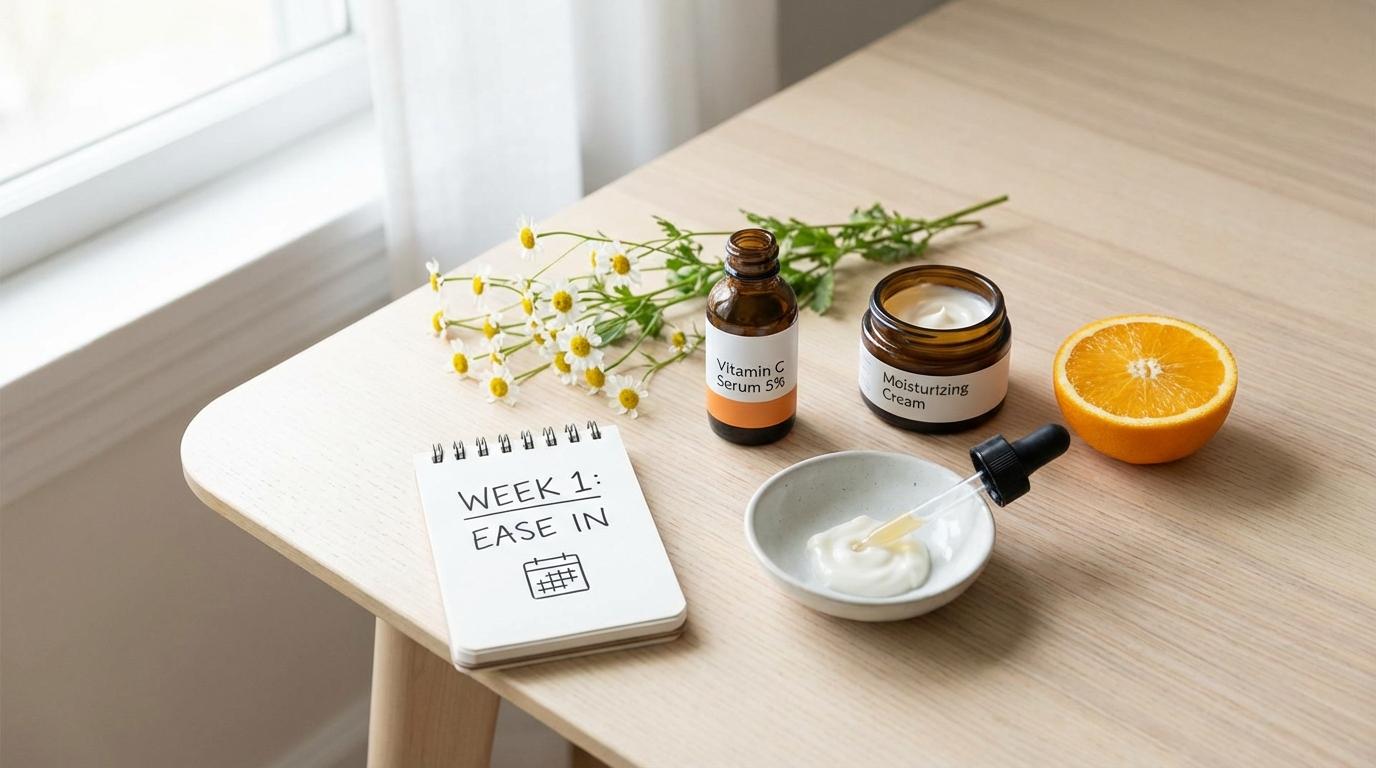
The desire for brighter, more even-toned skin is one of the most common skincare goals. But here’s something that often gets overlooked in the rush to achieve glowing skin: most brightening ingredients are also irritating ones. Vitamin C, AHAs, retinoids, even niacinamide at higher concentrations can all cause redness, peeling, and sensitivity if you approach them too aggressively.
I’ve seen so many people give up on brightening their skin because they went too hard, too fast, and ended up with irritation that made everything worse. The truth is that slow and gentle always wins when it comes to brightening. Let me show you how to build a routine that actually works without destroying your skin barrier in the process.
Understanding Why Brightening Can Go Wrong
Brightening ingredients work by affecting melanin production, speeding up cell turnover, or both. This means they’re active ingredients that cause real changes in your skin. Real changes require adjustment periods. When you pile on multiple brightening products or start with high concentrations, your skin doesn’t have time to adapt.
The result? Inflammation. Ironically, inflammation can trigger more melanin production, which means over-aggressive brightening can actually cause more hyperpigmentation. It’s a frustrating cycle that’s entirely avoidable with a gentler approach.
Your skin barrier also plays a crucial role here. Brightening acids and active ingredients can compromise barrier function if used too frequently or in too high concentrations. A damaged barrier leads to increased sensitivity, dryness, and vulnerability to environmental stressors. Protecting your barrier isn’t just about comfort. It’s essential for achieving the results you want. Be sure to check out caring for sensitive skin.
The Gentle Brightening Ingredients to Start With
Not all brightening ingredients are created equal when it comes to irritation potential. Some are gentle enough for beginners, while others require more caution.
Niacinamide: The Gentle Workhorse
Niacinamide (vitamin B3) is one of the most well-tolerated brightening ingredients available. It works by inhibiting melanin transfer to skin cells, reducing the appearance of dark spots over time. Most people can use it twice daily without issues. Start with a product containing 5% niacinamide. You can work up to 10% if your skin tolerates it well, but higher isn’t necessarily better.
Niacinamide has the added benefit of strengthening your skin barrier, which makes it an excellent foundation for a brightening routine. It plays well with almost every other ingredient, making it easy to incorporate.
Alpha Arbutin: Gentle Yet Effective
Alpha arbutin is a derivative of hydroquinone that inhibits tyrosinase, the enzyme responsible for melanin production. It’s significantly gentler than hydroquinone itself while still delivering noticeable brightening over time. Look for products with 1-2% alpha arbutin for a good balance of efficacy and gentleness.
Tranexamic Acid: The Underrated Option
Tranexamic acid is becoming more popular in skincare, and for good reason. It targets hyperpigmentation through a different pathway than most brightening ingredients, making it a good option if you’re sensitive to others. It’s particularly effective for melasma and hormonal pigmentation. Most people tolerate it well, even with daily use. Learn more about how tranexamic acid fights dark spots.
Vitamin C: Proceed with Caution
Vitamin C is one of the most effective brightening ingredients, but it’s also one of the most irritating for sensitive skin. If you want to incorporate it, start with a stable derivative like ascorbyl glucoside or magnesium ascorbyl phosphate rather than pure L-ascorbic acid. These derivatives are gentler while still providing antioxidant and brightening benefits. Be sure to check out caring for sensitive skin.
Once your skin is used to gentler forms, you can consider trying L-ascorbic acid at low concentrations (10% or less). Higher isn’t better if your skin can’t tolerate it.
Building Your Brightening Routine: The First Month
Patience is everything when building a brightening routine. The first month is about introducing one new product at a time and watching how your skin responds.
Week 1-2: Foundation
Start by making sure your basic routine is solid. You need a gentle cleanser, a good moisturizer, and sunscreen (more on sunscreen later, as it’s non-negotiable for brightening). If your current routine is already causing any irritation, fix that before adding brightening products.
During this phase, introduce a niacinamide serum in the evening. Apply it after cleansing, before moisturizer. Use it every other night for the first week, then every night during week two if your skin responds well.
Week 3-4: Adding Your First Active
Once you’ve confirmed your skin tolerates niacinamide, you can add a second brightening ingredient. Choose either alpha arbutin or tranexamic acid, not both. Apply this in the morning while keeping niacinamide in your evening routine.
Watch for any signs of irritation: increased redness, stinging, dryness, or flaking. If these appear, reduce frequency. There’s no prize for using products daily if your skin can’t handle it.
The Buffering Technique: Your Secret Weapon
Buffering means applying a layer of moisturizer before your active ingredient rather than after. This reduces the intensity of the active without completely eliminating its benefits. It’s perfect for introducing potentially irritating ingredients like vitamin C or AHAs into a brightening routine.
Here’s how to do it: After cleansing, apply a thin layer of your regular moisturizer. Wait a minute for it to absorb partially. Then apply your brightening serum on top. Finish with more moisturizer if needed.
The moisturizer creates a buffer that slows absorption, giving your skin more time to adjust to the active ingredient. As your tolerance builds, you can transition to applying the serum directly to clean skin.
Signs You’re Overdoing It
Learning to recognize over-exfoliation and irritation is crucial for long-term brightening success. Here are the warning signs.
Your skin feels tight and uncomfortable, even after applying moisturizer. Healthy skin should feel comfortable, not like it’s being stretched.
You notice increased redness that wasn’t there before. A little flushing immediately after applying an active is normal and temporary. Lasting redness throughout the day is not.
Your skin becomes more reactive to products that never bothered it before. This is a classic sign of a compromised barrier.
You’re experiencing more breakouts than usual. Irritation can trigger inflammatory breakouts, especially in acne-prone skin.
Your skin looks dull rather than brighter. This seems counterintuitive, but damaged skin often appears duller because the barrier isn’t functioning properly.
If you notice any of these signs, it’s time to scale back. Stop all actives and focus on barrier repair with gentle cleansing and rich moisturization for at least a week before trying again at a lower frequency.
Sunscreen: The Non-Negotiable Step
I cannot emphasize this enough: sunscreen is the most important part of any brightening routine. UV exposure triggers melanin production. Every minute of unprotected sun exposure can undo days or weeks of progress from your brightening products.
Use a broad-spectrum SPF 30 or higher every single day, even when it’s cloudy, even when you’re staying indoors near windows. Reapply every two hours if you’re outside. This isn’t optional. Without consistent sun protection, your brightening products are essentially useless.
Some sunscreens now include niacinamide or other brightening ingredients, which can simplify your routine while adding extra protection against pigmentation.
Patience: The Hardest Part
Here’s the uncomfortable truth about brightening: it takes time. A lot of time. Melanin is produced deep in the skin and takes weeks to migrate to the surface. Even after you stop the production of excess melanin, existing pigmentation takes time to fade as your skin naturally turns over.
Expect to wait at least 8-12 weeks before seeing significant results from a brightening routine. Some stubborn hyperpigmentation can take six months or longer to improve noticeably. This timeline is normal. It doesn’t mean your products aren’t working.
The temptation when you don’t see immediate results is to add more products, higher concentrations, or more frequent applications. Resist this temptation. More aggressive treatment doesn’t speed up results. It just increases your risk of irritation.
What Not to Combine
Some brightening ingredients don’t play well together, especially when you’re just starting out.
Vitamin C and AHAs can both be irritating, and using them at the same time can overwhelm sensitive skin. If you want to use both, apply vitamin C in the morning and AHAs in the evening.
Retinoids and AHAs together increase irritation risk significantly. Use them on alternating nights, not the same night.
Multiple exfoliating acids (glycolic, lactic, salicylic) at once is unnecessary and harsh. Choose one and use it consistently.
High-concentration vitamin C with benzoyl peroxide can cause instability in the vitamin C, reducing its effectiveness.
A Sample Gentle Brightening Routine
Morning
Rinse with water or use a gentle cleanser. Apply a niacinamide or alpha arbutin serum. Follow with moisturizer. Finish with SPF 30+ sunscreen.
Evening
Cleanse thoroughly. Apply vitamin C serum (buffer if needed). Follow with moisturizer.
2-3 Times Per Week (Evening)
Replace vitamin C with a gentle AHA like lactic acid or mandelic acid for enhanced cell turnover.
Long-Term Brightening Success
Building a brightening routine without irritation isn’t glamorous. It doesn’t involve dramatic before-and-after photos in two weeks. It requires patience, restraint, and a willingness to listen to your skin.
But the results are worth it. Gradual brightening that comes from consistent, gentle use of well-tolerated ingredients lasts longer and comes without the setbacks of irritation and barrier damage. You’re not just treating pigmentation. You’re building healthier skin overall.
Start slow. Buffer when needed. Watch for warning signs. Wear your sunscreen. And give it time. Your future self will thank you for taking the gentle path to brighter skin.