
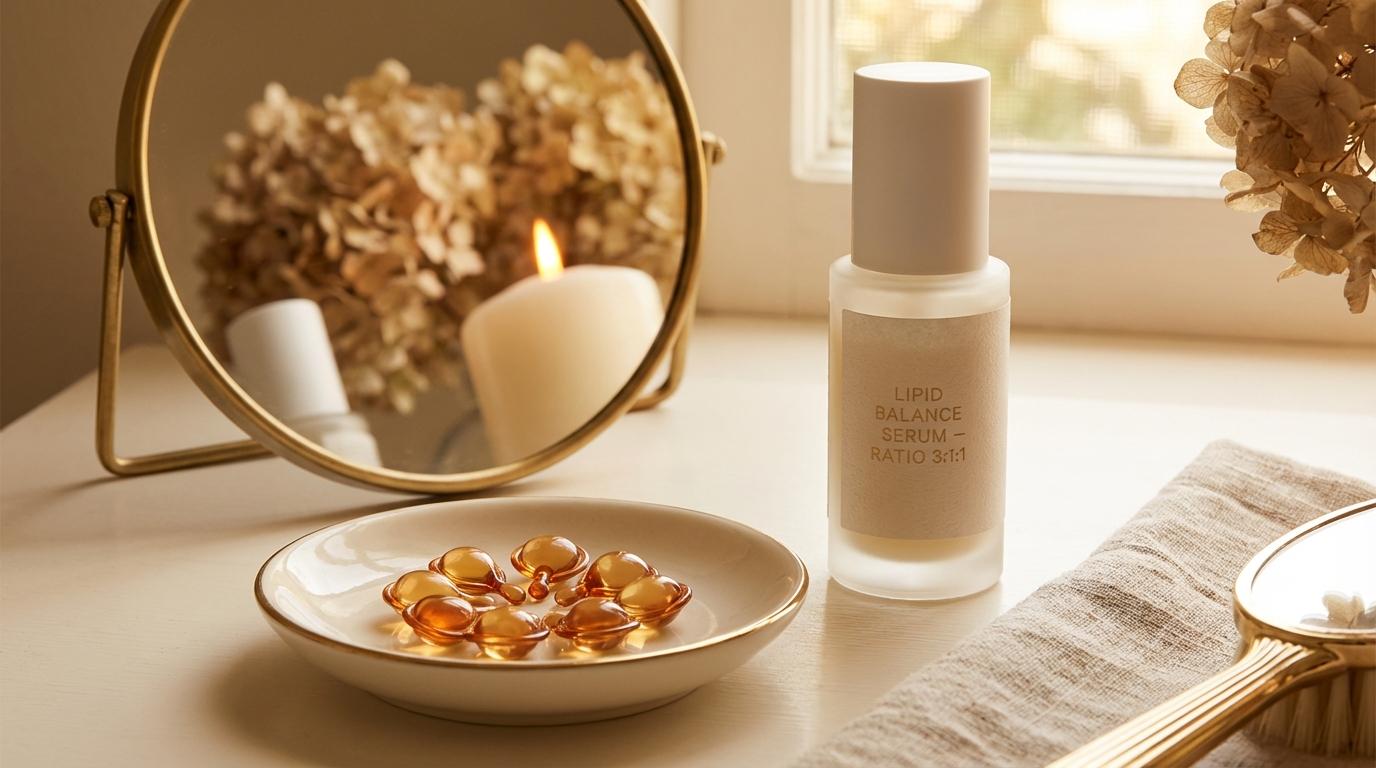
About 50% of your skin barrier is made of ceramides, with cholesterol and fatty acids splitting the remaining half. These three lipids work together like mortar between bricks, and when their proportions shift even slightly, the whole structure weakens. Understanding why these ratios matter helps you pick products that actually repair damage rather than just sitting on top of your skin doing nothing useful.
What Your Skin Barrier Is Actually Made Of
The stratum corneum, your outermost skin layer, contains a specific blend of lipids that keep moisture in and irritants out. The breakdown looks roughly like this: ceramides make up around 50%, cholesterol accounts for about 25%, and free fatty acids contribute the remaining 15-20%. There’s minimal phospholipid content, which sets skin lipids apart from cell membranes elsewhere in your body.
These aren’t random proportions. Your skin evolved this particular combination because each component serves a distinct function. Ceramides form the primary water-holding structure. Cholesterol maintains membrane fluidity, preventing your skin from becoming either too rigid or too permeable. Fatty acids fill gaps and provide additional moisture retention.
When any one of these drops below normal levels, problems cascade quickly. Low ceramides mean increased transepidermal water loss. Cholesterol deficiency makes your barrier too rigid to flex with movement. Fatty acid depletion creates microscopic gaps where irritants sneak through.
The Research Behind the 3:1:1 Ratio
Researchers have spent decades figuring out the optimal ratio for topical barrier repair products. The landmark finding came from studies showing that a 3:1:1 molar ratio of ceramides to cholesterol to fatty acids accelerated barrier recovery compared to other combinations. This specific proportion mimics what healthy skin produces naturally.
The molar ratio distinction matters here. Weight ratios and molar ratios differ because these molecules have different molecular weights. A product claiming “equal parts” by weight might actually deliver the wrong proportions at the cellular level. The research specifically used molar ratios, meaning equal numbers of molecules rather than equal masses.
Studies found that this 3:1:1 ratio performed better than equimolar mixtures (1:1:1) or single-lipid applications. When researchers applied ceramides alone, barrier recovery stalled. Same with cholesterol or fatty acids in isolation. The combination proved essential, and the ratio proved optimal for most skin types.
Why Aged Skin Might Need Different Proportions
Interesting wrinkle in the research: chronologically aged skin responds differently. Studies on older skin found that a cholesterol-dominant blend actually worked better than the standard ceramide-heavy ratio. At 3 and 6 hours post-application, aged skin showed faster barrier recovery when cholesterol led the formula.
This makes biological sense. Older skin produces less cholesterol naturally, so supplementing more of what’s missing yields better results. The skin already has some ceramide production capacity, but cholesterol synthesis drops significantly with age.
Similarly, eczematic skin tends to be specifically ceramide-deficient, which explains why ceramide-dominant formulas work particularly well for atopic dermatitis. The lipid barrier maintains its function only when you address what’s actually depleted, not just apply a generic blend.
What Concentration Actually Works
Ratio matters, but so does total concentration. The research that established the 3:1:1 standard used about 1.6% total lipid content in the formula. Within that, ceramides comprised around 0.3-0.7% of the finished product.
This information helps you evaluate products making barrier-repair claims. A moisturizer listing ceramides as the eighth ingredient probably contains less than 0.1%, which falls below the threshold where meaningful effects occur. Products positioning ceramides, cholesterol, and fatty acids prominently in the first third of their ingredient lists likely approach therapeutic concentrations.
Some brands now disclose percentages. SkinCeuticals Triple Lipid Restore explicitly states its 2:4:2 ratio of ceramides, cholesterol, and fatty acids. That cholesterol-dominant formulation aligns with the research on aged skin. CeraVe’s approach includes three specific ceramide types (1, 3, and 6-II) alongside cholesterol and fatty acids, though they don’t publish exact ratios.
Products That Actually Get the Balance Right
A few formulas stand out for transparency about their lipid content. The ceramide category has improved dramatically since dermatologists started emphasizing these ratios publicly.
CeraVe Moisturizing Cream uses patented MVE technology to release its ceramide complex slowly over time. The sustained delivery means your barrier receives lipids continuously rather than in one burst that overwhelms absorption capacity. The formula includes the three ceramides most prevalent in healthy skin.
La Roche-Posay Toleriane Double Repair combines ceramides with niacinamide, adding anti-inflammatory benefits to the barrier repair function. The lightweight texture works for people who find heavier ceramide creams too occlusive for daytime use.
For those dealing with chronic barrier dysfunction, pairing ceramides with calming ingredients like centella or oat can address both repair and inflammation simultaneously. The lipid ratio handles structural repair while soothing agents quiet the immune response that often accompanies barrier damage.
How To Tell If Your Products Are Working
Barrier repair takes time, usually 2-4 weeks of consistent use to see measurable changes. The first sign is often reduced sensitivity, less stinging when you apply other products. Next comes improved moisture retention, where your skin stays hydrated longer between applications.
If you’re not seeing improvement after a month, consider whether your product actually contains effective concentrations or if the ratio matches your specific needs. Someone with aged skin using a ceramide-heavy formula might switch to a cholesterol-dominant option. Someone with eczema history might need higher ceramide proportions than a standard barrier cream provides.
The science is clear: your skin barrier depends on specific lipid ratios, and products mimicking those proportions outperform random combinations. Knowing what to look for transforms barrier care from guesswork into targeted repair.