
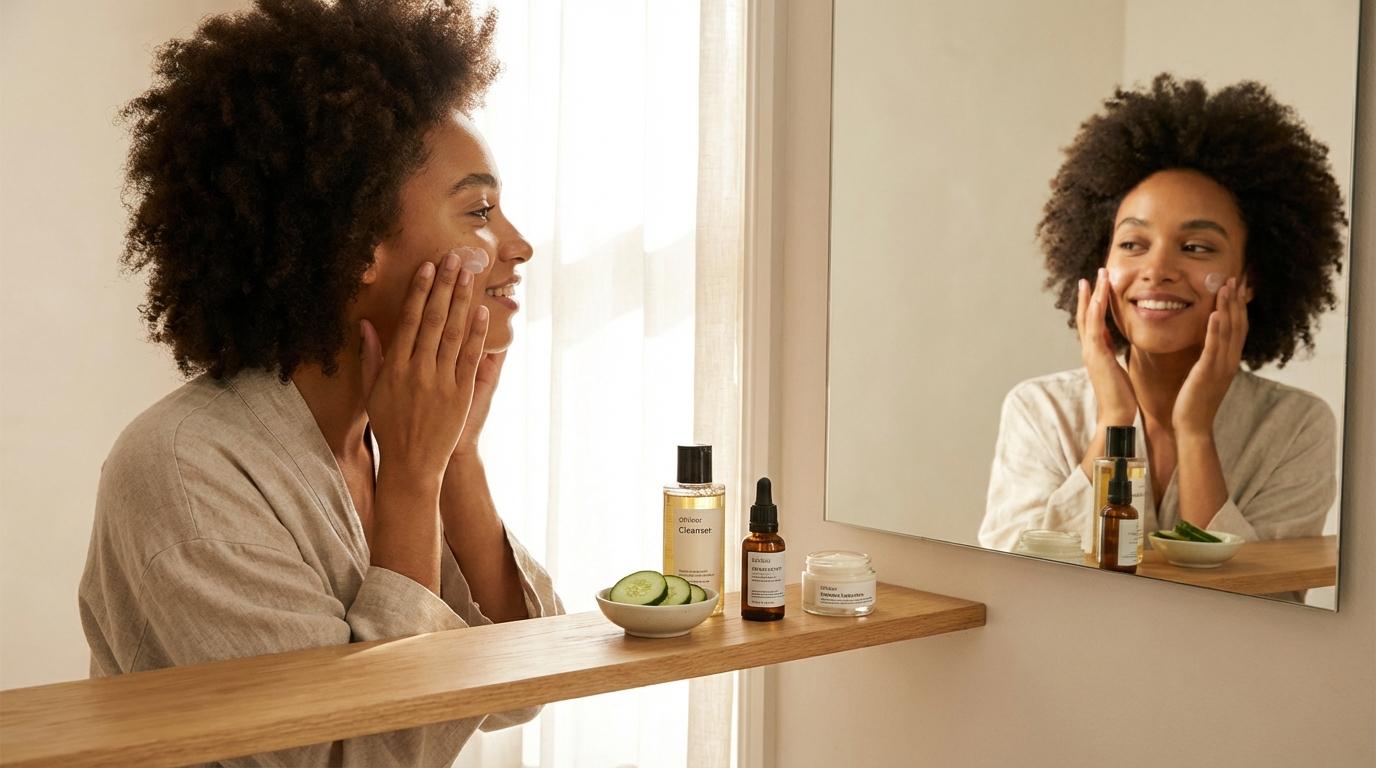
You have a big event coming up. A wedding, a job interview, a date, whatever. You want your skin to look good. Not Instagram-filtered good, just real-life-clear-skin good. Here is exactly how to make that happen without any last-minute disasters.
One Week Out: Set the Foundation
A week before your event is when you lock in your routine. This means sticking to products you know work for you. Your skin needs consistency right now, not experiments.
Keep doing your basics: gentle cleanser, moisturizer, sunscreen during the day. If you use a retinoid, this is your last chance to apply it before the event. Skip it after the five-day mark to avoid any potential peeling or sensitivity.
Hydration matters more than you think. Drink water. Your skin reflects what is happening internally, and dehydrated skin looks dull and emphasizes fine lines. Aim for at least eight glasses daily.
This is also a good time for one gentle exfoliation session. A mild AHA like lactic acid can help cell turnover without irritation. But just once. Do not overdo it. According to the American Academy of Dermatology, over-exfoliation is one of the most common skincare mistakes.
The No-New-Products Rule
I cannot stress this enough. Do not try anything new in the week before your event. Not that serum your friend recommended. Not that mask you saw on TikTok. Nothing.
New products are unpredictable. Even products labeled “for sensitive skin” can cause reactions. Breakouts. Redness. Irritation. These things do not follow convenient timelines.
I learned this the hard way before a college graduation. Tried a new vitamin C serum three days before. Woke up with tiny bumps all over my cheeks. Not ideal for family photos.
Your skin is not a test subject right now. Save the experimentation for after the event when a bad reaction will not ruin your week.
Day-Of: Keep It Simple
Wake up early enough to not rush. Stress shows up on your face, literally. Harvard Health confirms that cortisol from stress can trigger inflammation and breakouts.
Your morning routine should be boring and reliable. Gentle cleanser. Hydrating toner or essence if you use one. Light moisturizer. Sunscreen if you will be outside.
Skip any actives. No vitamin C, no niacinamide, no acids. These are great for your regular routine but can cause unpredictable interactions with makeup or cause flushing.
If your skin feels puffy, a refrigerated jade roller or cold spoons can help temporarily. The cold constricts blood vessels and reduces swelling. It is not magic, but it helps.
Wait at least 15 minutes after skincare before applying makeup. This lets products absorb properly and prevents pilling.
What to Avoid in the Final Hours
Some things can sabotage your skin at the last minute. Avoid these:
Salty foods the night before. Sodium causes water retention. You will wake up puffy. A study from the National Institutes of Health shows clear links between sodium intake and facial swelling.
Alcohol. It dehydrates your skin and can cause redness and inflammation. If you must have a drink, match each one with a glass of water.
Picking at your skin. You see a tiny bump and think you can just extract it quickly. You cannot. Picking causes inflammation, scabbing, and potentially scarring. Leave it alone. A dab of hydrocolloid patch overnight can help reduce a pimple without trauma.
Sleeping on your face. Try to sleep on your back the night before. Side sleeping can cause creasing and puffiness on one side.
Hot showers. Tempting, but hot water strips moisture and can leave skin red. Lukewarm is the way to go, especially on your face.
If Something Goes Wrong
Sometimes skin has its own agenda. A pimple appears overnight. Redness flares up. It happens.
For a sudden pimple, ice it for a few minutes to reduce swelling. A thin layer of hydrocortisone cream (1%) can help inflammation, but use sparingly. This is a spot treatment, not a routine product.
Redness responds to green color-correcting primer under makeup. It neutralizes the red tones without piling on concealer.
Dryness or flakiness? Skip makeup on those areas if possible, or use a hydrating primer and cream foundation instead of powder. Powder clings to dry patches and makes them obvious.
Most importantly, do not panic. A little imperfection is normal. Nobody looks airbrushed in real life, and that is fine.
The Bottom Line
Pre-event skincare is about damage prevention, not transformation. You cannot change your skin in a week. But you can absolutely make it look its best by not messing with what already works.
Stick to your routine. Avoid new products. Stay hydrated. Sleep well. That is the formula. Not glamorous, but effective.
Your skin knows what it is doing. Trust it, take care of it, and stop trying to force last-minute changes. The best version of your skin is the calm, consistent version.