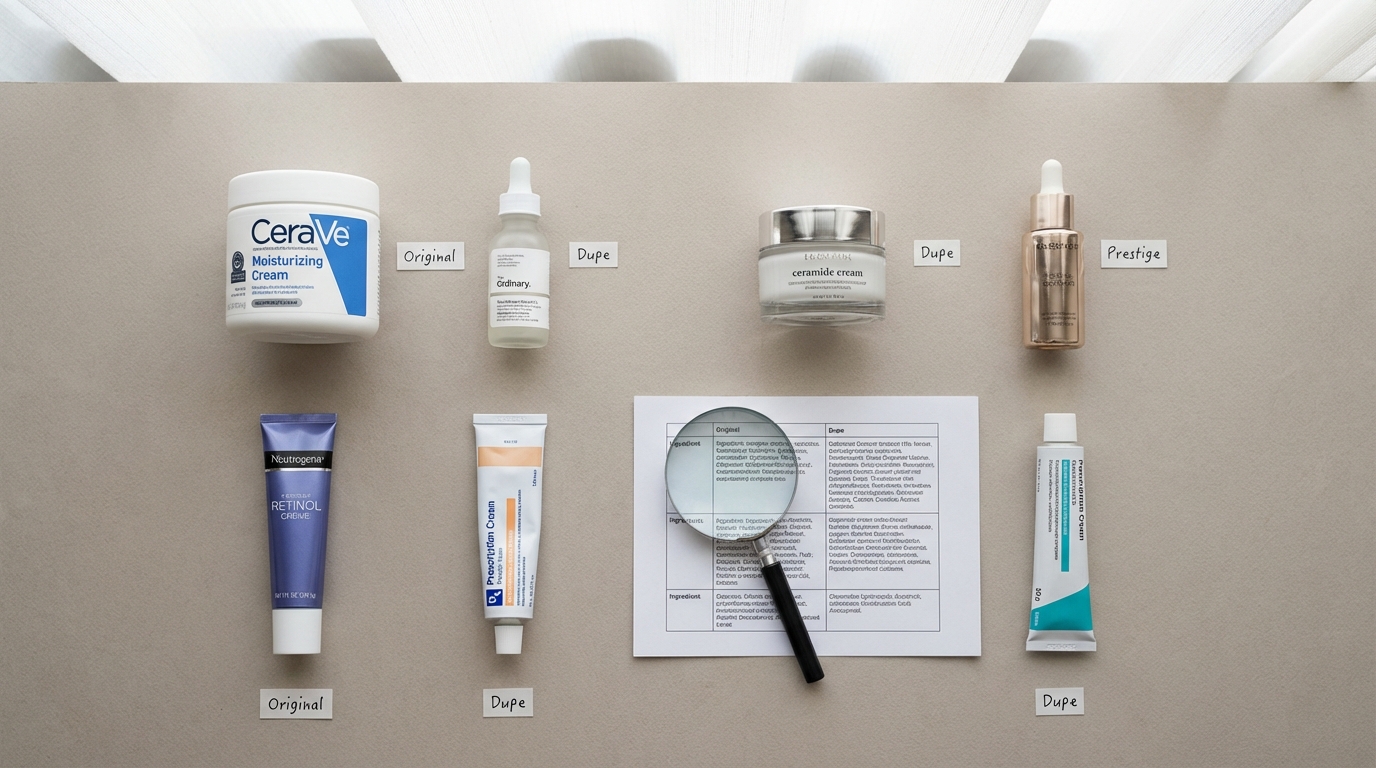
I spent my freshman year buying expensive serums I found on TikTok while eating instant noodles for dinner. Looking back, that was ridiculous. The truth is, most high-end skincare products have affordable counterparts that use the exact same active ingredients. The fancy packaging and celebrity endorsements are what cost extra, not the stuff that actually works on your skin.
After two years of comparing ingredient lists and testing drugstore alternatives, I can confidently say that your skin cannot tell the difference between a $15 moisturizer and a $150 one. What matters is the formulation, the concentration of active ingredients, and whether those ingredients actually reach your skin in a stable form. So let me break down the dupes I have personally tested and stand behind.
CeraVe vs. Luxury Ceramide Creams
Ceramides are lipids that make up about 50% of your skin barrier. When your barrier is compromised, you get dryness, irritation, and sensitivity. Fancy brands like to market their “proprietary ceramide complexes” at premium prices, but here is what they do not want you to know: ceramides work the same way regardless of the price tag.
CeraVe moisturizing cream contains three essential ceramides (ceramides 1, 3, and 6-II), hyaluronic acid, and cholesterol. Compare that to Dr. Barbara Sturm Face Cream ($230) or La Mer ($380), and you will find similar ceramide combinations. The CeraVe formula was actually developed with dermatologists at the University of Iowa.
What makes CeraVe work:
- MVE (MultiVesicular Emulsion) technology releases ingredients slowly over time
- Contains the same ceramide ratio found in healthy skin
- Fragrance-free and non-comedogenic
- A 19 oz tub costs around $18 and lasts months
I have used both La Mer and CeraVe on different sides of my face for a month (yes, I really did this). My skin looked identical on both sides. Save your $360.
The Ordinary: Prestige Serums Without the Prestige Price
The Ordinary basically exposed the entire skincare industry by selling pure active ingredients at their actual cost. When they launched, people lost their minds because suddenly everyone could see that a vitamin C serum does not need to cost $165.
The Ordinary Niacinamide 10% + Zinc 1% ($6) vs. Paula’s Choice 10% Niacinamide Booster ($46)
Both contain 10% niacinamide. Both help with pores, oil control, and uneven skin tone. The Paula’s Choice version has a few additional ingredients like vitamin C and licorice root, but studies show niacinamide at 4-5% concentration is already effective. Anything above that is bonus. I have used both, and while Paula’s Choice feels slightly more elegant, the results on my skin were the same.
The Ordinary Hyaluronic Acid 2% + B5 ($9) vs. SkinCeuticals Hydrating B5 Gel ($83)
SkinCeuticals is considered the gold standard, but when you compare ingredients, both products rely on hyaluronic acid and vitamin B5 (panthenol) as their stars. The main difference is molecular weight variety. SkinCeuticals has more research behind their specific formulation, but for basic hydration, The Ordinary delivers comparable results.
The Ordinary Glycolic Acid 7% Toning Solution ($9) vs. Drunk Elephant T.L.C. Framboos ($90)
The Drunk Elephant combines multiple AHAs and BHAs, so it is not a perfect 1:1 comparison. But if you just want glycolic acid for exfoliation and brightness, The Ordinary version works beautifully. I actually prefer it because it is simpler. I know exactly what I am putting on my face.
Neutrogena Retinol vs. Prescription Strength
This one is complicated because prescription retinoids (tretinoin, tazarotene) are genuinely different from over-the-counter retinol. They are stronger and have more research behind them for treating acne and aging. But here is the thing: retinol converts to retinoic acid in your skin, it just takes an extra step.
Neutrogena Rapid Wrinkle Repair ($25) contains stabilized retinol in a formulation that has been shown to work. A 2015 study in the Journal of Cosmetic Dermatology found that over-the-counter retinol products can produce results similar to prescription retinoids, they just take longer to show effects.
When drugstore retinol makes sense:
- You are new to retinoids and want to build tolerance
- You cannot access or afford a dermatologist appointment
- Your main concerns are prevention and mild texture issues
- You have sensitive skin that reacts to prescription strength
When prescription is worth it:
- You have moderate to severe acne
- You want faster, more dramatic results
- You have built up tolerance and drugstore no longer works
- Your insurance covers it (making it cheaper than OTC)
I started with Neutrogena and used it for a year before switching to tretinoin. The drugstore version taught my skin how to handle retinoids without the purging disaster that comes from jumping straight to prescription strength.
How to Compare Ingredient Lists Like a Pro
Not all dupes are created equal. Some products look similar on paper but perform totally differently. Here is how I evaluate whether a cheaper option is actually comparable.
Check the active ingredient and its concentration. Brands do not always list percentages, but they are required to list ingredients in order of concentration. If the active ingredient is in the first few spots on the expensive product but buried in the middle of the dupe, that is a red flag.
Look at the vehicle (the rest of the formula). A great ingredient in a bad base will not work well. Vitamin C needs to be in a stable, low-pH formula to absorb. Retinol needs protection from light and air. The supporting ingredients matter for stability and penetration.
Research the formulation technology. Some expensive products do have patented delivery systems that help ingredients penetrate better. CeraVe’s MVE technology is an example of a drugstore brand doing this well. When a luxury brand claims special technology, Google it. Sometimes it is real, sometimes it is marketing fluff.
Read reviews from people with similar skin to yours. Not influencer reviews. Look for real people on Reddit’s SkincareAddiction, the Skincare by Hyram Discord, or verified purchase reviews. Pay attention to people who have tried both the original and the dupe.
Give it enough time. Skincare takes weeks to months to show results. If you switch to a dupe and see no difference after 6-8 weeks, that is a good sign. If you break out or your skin gets worse, the formulation might not work for you specifically (not all dupes work for everyone).
One resource I recommend: INCIDecoder lets you paste any ingredient list and see what each ingredient does. It is free and will change how you shop for skincare.
The Bottom Line
Expensive skincare is not a scam exactly, but it is often unnecessary. The markup on luxury products goes toward packaging, advertising, and brand positioning, not better ingredients. Drugstore brands like CeraVe, The Ordinary, Neutrogena, and La Roche-Posay hire actual cosmetic chemists and dermatologists to formulate their products.
I still splurge occasionally on products I love, but now I do it knowing that I am paying for the experience, not superior results. Your skin responds to ingredients, not labels. If a $12 product has what your skin needs, use it without guilt. That extra money can go toward actual things that make you happy, like food that is not instant ramen.