
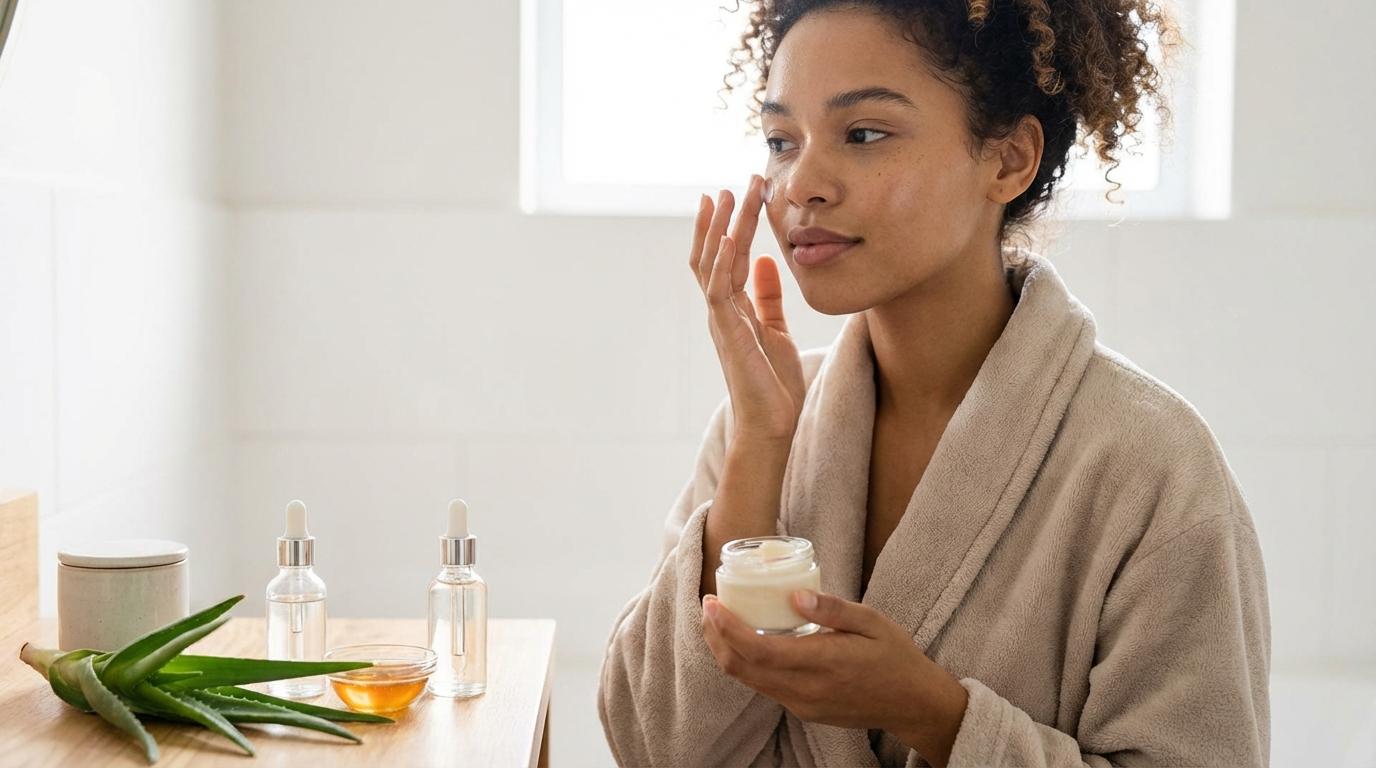
Okay, so you’re moisturizing. You’re drinking water (or at least trying to). You’re doing all the things you’re supposed to do, and your skin is still giving major Sahara Desert energy. I’ve been there, and honestly? The problem probably isn’t that you’re not doing enough. It’s that you’re missing one crucial piece of the puzzle.
Spoiler alert: it’s not another expensive serum. It’s understanding how moisture actually works.
Humectants vs Occlusives: The Duo You Didn’t Know You Needed
Here’s where things get interesting (and also where most skincare routines fall apart). There are two main types of moisturizing ingredients, and you need both of them. Not one. Both.
Humectants are the ingredients that pull water into your skin. Think hyaluronic acid, glycerin, and aloe vera. They’re like little moisture magnets, grabbing water from the air and from deeper layers of your skin and holding it in the outer layers where you can actually see the difference.
But here’s the catch (and nobody tells you this part): humectants can only do so much on their own. If you slap on a hyaluronic acid serum and call it a day, that moisture can actually evaporate right back out. In dry climates or heated indoor air, humectants might even pull moisture OUT of your skin. Rude, right?
This is where occlusives come in. These are the ingredients that create a physical barrier on your skin to lock moisture in. We’re talking about things like petrolatum, shea butter, squalane, and certain oils. They sit on top of your skin like a protective blanket, preventing all that precious hydration from escaping.
According to research published in the Journal of Clinical Medicine, combining humectants with occlusives is significantly more effective than using either alone. So if your routine has one but not the other, there’s your answer.
How to Layer for Maximum Moisture
Layering skincare isn’t just a TikTok trend (though yes, there are approximately 47 million videos about it). It actually matters, especially for dry skin.
The basic rule: thinnest to thickest, water to oil. Here’s what that looks like in practice:
- Cleanser that doesn’t strip your skin (more on sneaky drying products in a minute)
- Hydrating toner or essence while your face is still damp. This is prime humectant territory.
- Serum with hyaluronic acid or glycerin. Pat it in gently.
- Moisturizer that contains both humectant AND occlusive ingredients. Double duty.
- Optional: facial oil as the final seal. This is where the real magic happens for chronically dry skin.
The key is working quickly. Don’t let each layer fully dry before applying the next one. You want to trap moisture at every step, not give it time to escape.
When to Add an Oil (And Which Ones Actually Work)
Facial oils had their moment a few years ago, then everyone got scared they’d break out, and now they’re having a renaissance. But the truth is, oils aren’t for everyone, and not all oils are created equal.
If your skin is dry (as in lacking oil, not just dehydrated), adding a facial oil can be transformative. The best time to apply it is as the last step of your nighttime routine, after your moisturizer. A few drops pressed into your skin creates that occlusive seal we talked about.
Some oils worth considering:
- Squalane is lightweight and absorbs quickly. Great for people worried about feeling greasy.
- Rosehip oil has a nice balance of fatty acids and works well for most skin types.
- Marula oil is rich without being heavy. Good for very dry skin.
- Jojoba oil technically isn’t an oil (it’s a wax ester), but it closely mimics your skin’s natural sebum.
A quick note: if you have oily or acne-prone skin, you might want to skip this step or be very selective. Check comedogenicity ratings before trying new oils. Your face will appreciate the research.
Products That Secretly Dry Out Your Skin
This is the part where I get to be the annoying friend who tells you things you don’t want to hear. Some products in your routine might actually be making your dry skin worse. I know. I’m sorry.
Here are the usual suspects:
Foaming cleansers. That satisfying foam often comes from sulfates, which are really effective at removing oil. Too effective. If your face feels “squeaky clean” after washing, that’s not good. That’s your skin yelling at you.
Alcohol-heavy toners. Not all alcohols are bad (fatty alcohols like cetyl alcohol are actually moisturizing), but simple alcohols like denatured alcohol or isopropyl alcohol can be incredibly drying. Check your ingredient lists.
Overusing actives. Retinol, vitamin C, AHAs, BHAs… these are great ingredients, but using too many of them (or using them too often) can compromise your moisture barrier. If your skin is chronically dry, it might be time to scale back.
Clay masks too often. Once a week is fine. Every other day is a recipe for flaky, irritated skin. Clay is designed to absorb oil. Your dry skin doesn’t need that kind of enthusiasm.
If you’ve been doing everything “right” and still struggling, take a hard look at your cleanser first. Switching to a gentle, non-foaming formula (cream cleansers and oil cleansers are great options) often makes a bigger difference than adding ten new products.
The Bottom Line
Dry skin isn’t a character flaw. It’s not because you’re doing skincare wrong or because you haven’t found the perfect product yet. Sometimes it’s genetics, sometimes it’s your environment, sometimes it’s your habits.
But if you remember nothing else from this, remember this: humectants pull water in, occlusives keep it there. You need both. Layer them properly, check your current products for hidden drying ingredients, and give your skin some time to adjust.
And maybe stop touching your face so much. (I’m also talking to myself here.)
Your skin knows how to heal itself. You just have to give it the right support.