
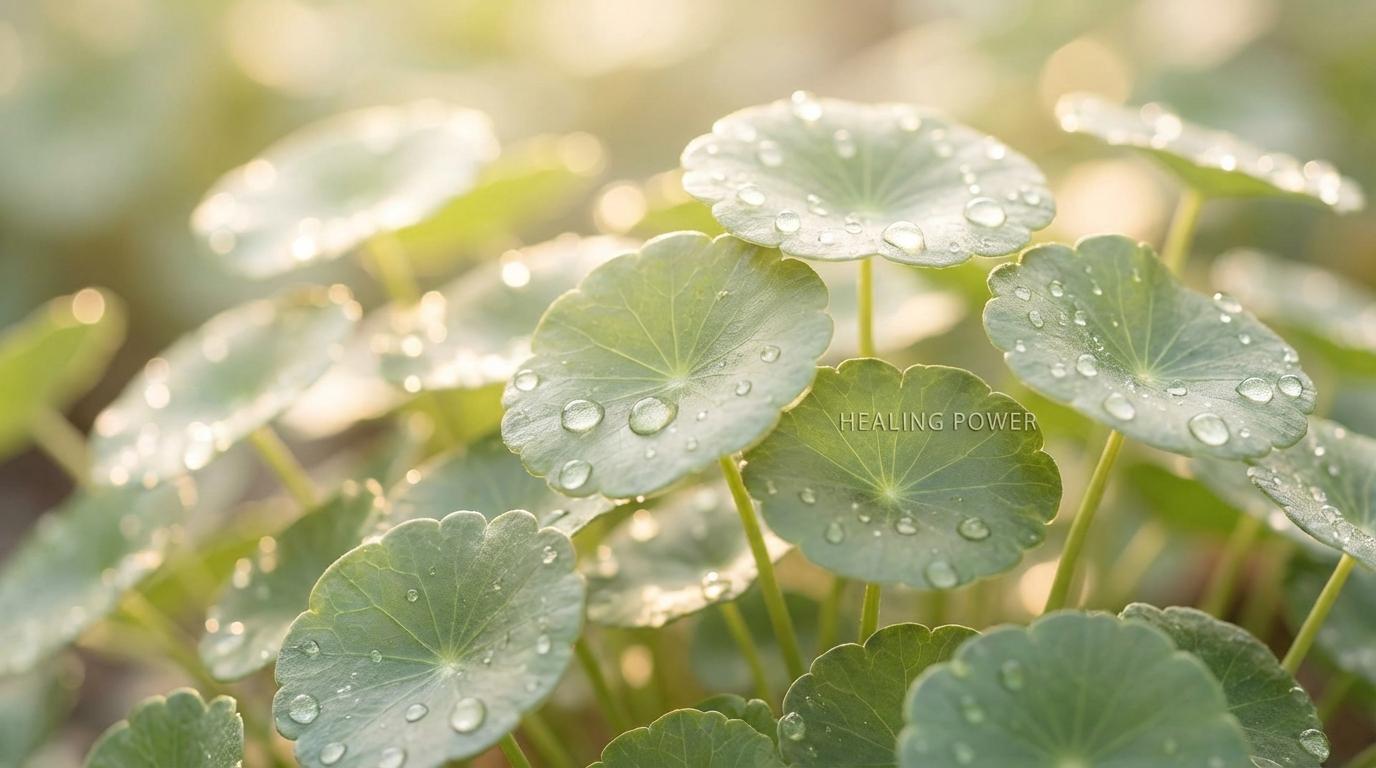
Reaching for a centella product after a breakout or a fresh peel feels almost instinctive at this point. There is something calming about knowing the ingredient you are applying has been used in traditional medicine for centuries, long before it showed up in your favorite Korean moisturizer. But what actually happens when centella asiatica touches damaged skin? The answer is more layered than most product labels let on, and it starts at the cellular level.
The Four Compounds That Matter
Centella asiatica is not a single-note ingredient. It contains four active compounds called pentacyclic triterpenes, and each one contributes something different to wound healing. The names are a mouthful: asiaticoside, madecassoside, asiatic acid, and madecassic acid. Together, these are sometimes labeled as “centella complex” or simply “cica” on product packaging.
Asiaticoside tends to get the most attention because it plays a direct role in collagen production. But the other three compounds are just as important. Madecassoside is a powerful calming agent that works on inflammation. Asiatic acid supports tissue remodeling. Madecassic acid contributes to both collagen synthesis and antioxidant protection. When you see a product using the full extract rather than an isolated compound, you are getting all four working together.
How Asiaticoside Boosts Collagen
Collagen is the structural protein your skin depends on for firmness and resilience. When your skin is wounded, whether by a cut, a popped pimple, or a chemical peel, collagen production needs to ramp up to rebuild the tissue. Asiaticoside helps this process by activating something called the TGF-beta signaling pathway. This is a communication chain inside your cells that tells fibroblasts (the cells responsible for making collagen) to get to work.
What makes asiaticoside particularly interesting is that it stimulates Type I collagen specifically. This is the most abundant type in your skin and the one most responsible for that plump, smooth texture. Research shows that asiaticoside can increase collagen synthesis in human fibroblast cultures, and it does so without overstimulating the cells into producing disorganized scar tissue. That balance between encouraging repair and keeping it controlled is a big part of why centella has gained popularity in post-procedure skincare.
Calming Inflammation Before It Gets Out of Hand
Wound healing is not just about building new tissue. It also involves managing the inflammatory response that kicks in the moment your skin is damaged. Some inflammation is necessary because it brings immune cells to the injury site. But too much inflammation, or inflammation that lingers too long, slows healing and can lead to scarring or hyperpigmentation.
Madecassoside and asiatic acid both work to reduce the production of pro-inflammatory molecules like TNF-alpha and IL-6. These are cytokines that your body releases at the wound site, and while they serve a purpose early on, an excess of them keeps your skin in a prolonged state of irritation. By dialing down these signals, centella helps your skin move from the inflammatory phase into the actual repair phase more efficiently.
This is also why centella works so well for redness-prone skin that is not technically wounded. Conditions like rosacea and post-inflammatory redness involve low-grade chronic inflammation. The same anti-inflammatory compounds that help a wound heal can also calm skin that stays red or reactive for no obvious reason.
Supporting Every Phase of Repair
Skin healing happens in overlapping stages: inflammation, proliferation, and remodeling. Most ingredients target one phase. Centella is unusual because its compounds show activity across all three.
During proliferation, centella promotes fibroblast growth and migration. Your fibroblasts need to multiply and move to the wound site before they can start laying down new collagen and elastin. Asiaticoside and asiatic acid both encourage this movement, which is why some dermatologists recommend cica-based products after procedures like microneedling or laser treatments.
During remodeling, the final phase, your skin is reorganizing the new collagen fibers it built. This can take weeks or months. Centella compounds help ensure that the collagen being deposited is organized and strong rather than haphazard, which is partly why they have been studied for their potential to reduce hypertrophic scarring. The tensile strength of newly formed skin improves with consistent centella application.
Why Cica Became a Skincare Staple
The popularity of cica in modern skincare started in Korean beauty around 2017 and has not slowed down. Part of the appeal is that centella works for a wide range of concerns. It is gentle enough for sensitive skin but effective enough to support recovery after aggressive treatments. You can layer it with niacinamide, ceramides, and peptides without worrying about interactions. It plays well with almost everything.
There is also the fact that centella addresses a real gap in many routines. Most people have a cleanser, a moisturizer, maybe an active like retinol or vitamin C. But very few have a dedicated repair ingredient. Centella fills that role, and it does so without irritation or a complicated application process. If you have ever noticed that your skin seems calmer and less reactive when you use a cica cream, that is the anti-inflammatory and barrier-supporting action at work.
The ingredient also fits a minimalist approach. You do not need five separate products to get the benefits of centella. A single well-formulated serum or moisturizer with a meaningful concentration of centella extract can deliver all four active compounds at once. If you are curious about how the naming conventions around this plant can get confusing, this breakdown clarifies the gotu kola vs. centella question.
What to Look for in Centella Products
Not all centella products are created equal. Some use only a trace amount of the extract, while others standardize their formulas to contain specific percentages of the four triterpenes. Products that list “centella asiatica extract” high in the ingredient list are a good start. Even better are formulas that specify the inclusion of madecassoside or asiaticoside as individual ingredients, because that means the manufacturer has standardized their extract.
Concentration matters. Many of the clinical studies that showed wound healing benefits used centella extracts at concentrations between 1% and 5%. It is hard to know the exact percentage in most consumer products, but looking for centella as one of the first five to ten ingredients gives you a reasonable indication that it is present in a meaningful amount.
Formulation also plays a role. Centella compounds are water-soluble, so serums and lightweight creams tend to deliver them more effectively than heavy occlusive balms. That said, some balm-style products use centella alongside ceramides and fatty acids, which creates a combination of barrier repair and active wound healing support. Both approaches work, and the right one depends on your skin type and what you need from the product. Understanding how other repair-signaling ingredients like peptides work can help you build a recovery routine that covers all the bases.
When Centella Makes the Biggest Difference
You will notice centella’s effects most during times when your skin is actively recovering. After a breakout that left red marks, after a chemical exfoliant session that went a little too strong, or after sun exposure that left your face irritated. These are the moments when having those anti-inflammatory and collagen-stimulating compounds on your skin makes a measurable difference.
For everyday use, centella acts more like a gentle maintenance ingredient. It keeps background inflammation in check and supports your skin’s ongoing turnover process. You may not see dramatic visible changes from using it on healthy, undamaged skin, but you are building a more resilient foundation over time. Think of it as quiet, consistent support rather than a flashy before-and-after transformation.
If your skin heals slowly or scars easily, centella is worth making a permanent part of your routine. The factors that affect healing speed are varied, but having an ingredient that actively supports every phase of the repair process puts you in a better position regardless of your skin type or age.