
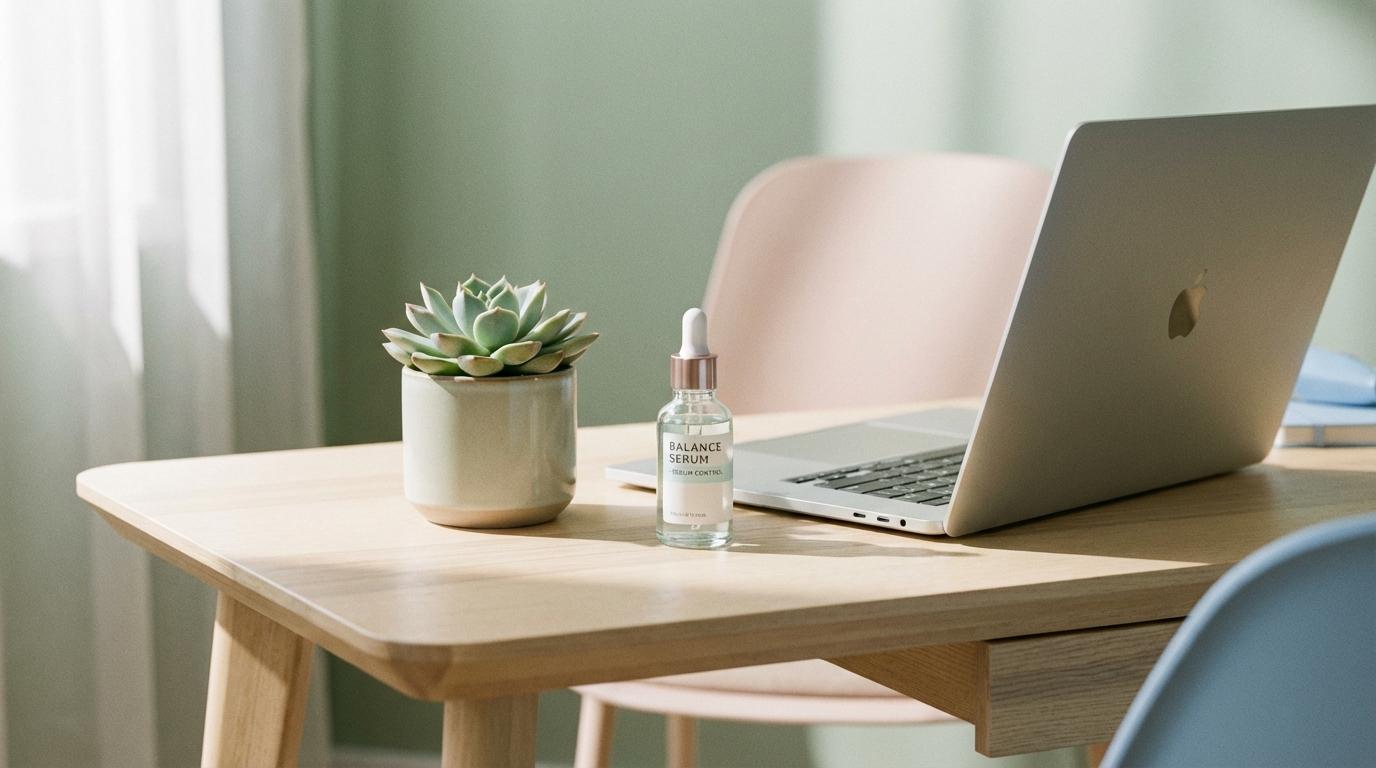
Have you ever wondered why your skin keeps producing oil even when you are doing everything “right” with your routine? You cleanse, you moisturize, you use blotting papers like they are going out of style, and yet by noon your face looks like it could fry an egg. If that sounds familiar, niacinamide might be the ingredient that actually explains why your sebaceous glands are doing the most, and how to get them to calm down.
Niacinamide (also called nicotinamide) is a form of vitamin B3, and it has become one of the most talked-about ingredients in skincare for good reason. But instead of just telling you “it works, trust me,” I want to walk you through the actual mechanisms behind how it tames oily skin, because understanding the why makes it so much easier to use it correctly.
Your Sebaceous Glands, Explained (Briefly, I Promise)
Your skin has these tiny glands called sebaceous glands attached to almost every hair follicle on your face. Their job is to produce sebum, which is the oily, waxy substance that keeps your skin lubricated and protected. Sebum is not inherently bad. You literally need it. It forms part of your skin’s protective barrier and keeps moisture from evaporating off your face.
The problem happens when these glands go into overdrive. Hormones, genetics, stress, and even using the wrong products can signal your sebaceous glands to produce more sebum than your skin actually needs. The result is that shiny, greasy feeling that shows up a few hours after washing your face, and sometimes, clogged pores and breakouts on top of it.
This is where niacinamide enters the picture.
How Niacinamide Actually Slows Down Oil Production
The mechanism behind niacinamide’s effect on sebum is genuinely interesting (I know, I know, but stay with me). There are a few pathways researchers think are involved, and they are not mutually exclusive.
First, niacinamide is part of the vitamin B3 family. Your body can convert niacinamide into niacin, and niacin activates something called HCA2 receptors on your sebocytes (the cells inside your sebaceous glands that actually produce the oil). When these receptors get activated, they trigger a calcium signal inside the cell that ultimately tells it to slow down sebum production. It is like a biochemical “hey, you can ease up now” message to your oil glands.
Second, niacinamide appears to influence the pathway that sebum takes to reach the skin’s surface. Some researchers believe it promotes a mild exfoliating effect within the duct that connects the sebaceous gland to the surface of your skin. This does not mean it is physically scrubbing anything, but rather that it may be helping to keep that pathway clear and functioning normally, which can affect how much oil ends up sitting on your face.
Third (and this one is a bit sneaky), niacinamide strengthens your skin barrier. Why does that matter for oiliness? Because when your barrier is compromised, your skin panics. It senses that it is losing moisture and not adequately protected, so it responds by ramping up sebum production to compensate. By reinforcing the barrier, niacinamide reduces that panic response. Your skin feels secure, so it stops overproducing oil as a defense mechanism. It is a surprisingly elegant feedback loop.
What the Clinical Studies Actually Show
This is not just theoretical. Clinical studies have tested niacinamide on real human faces and measured the results. A well-known Japanese study found that applying a 2% niacinamide formula significantly reduced sebum excretion rates after just two to four weeks of consistent use. The Cleveland Clinic notes that niacinamide helps regulate oil gland production and can benefit multiple skin concerns simultaneously.
Most dermatologists recommend concentrations between 2% and 5% for oil control. Going higher is not necessarily better and can sometimes cause irritation, which is kind of ironic because then your damaged barrier might make you produce even more oil. The sweet spot for most people seems to be around 4 to 5%.
The Pore Appearance Connection
If you have oily skin, you have probably noticed that your pores look larger than you would like (especially around your nose and cheeks). This is not your imagination. Excess sebum production stretches pore openings over time, and when that oil mixes with dead skin cells and debris, the pores look even more prominent.
Niacinamide addresses this from multiple angles. By reducing the volume of sebum flowing through your pores, it decreases the physical stretching. By keeping the pore lining healthy and promoting normal cell turnover within the follicle, it helps prevent the buildup that makes pores look congested. Studies have shown that consistent use of 5% niacinamide over two to three months can visibly minimize pore appearance.
I want to be honest here: niacinamide is not literally shrinking your pores. The physical size of a pore is largely determined by genetics. But it can make them appear significantly smaller by reducing congestion and oil buildup, which for practical purposes achieves the same visual result.
The Anti-Inflammatory Bonus
Oily skin and inflammation often travel together. Excess sebum feeds the bacteria that cause acne, and the resulting breakouts trigger an inflammatory response that makes everything worse (redness, swelling, post-acne marks, the whole package).
Niacinamide has documented anti-inflammatory properties. It inhibits certain inflammatory pathways in the skin, which means it can help reduce redness and swelling associated with acne breakouts. This is a big deal if you have oily, acne-prone skin, because you are getting oil control and inflammation control from the same ingredient. Less inflammation also means less post-inflammatory hyperpigmentation, those dark spots that linger after a breakout heals.
It also supports your skin’s production of ceramides, which are fatty molecules that are crucial for a healthy barrier. More ceramides means a stronger barrier, which circles back to that feedback loop I mentioned: stronger barrier equals less panic-driven oil production.
Why You Need to Be Patient
If there is one thing I wish someone had told me earlier about niacinamide, it is that you will not see dramatic results overnight. Or in a week. Possibly not even in two weeks.
The sebum regulation effects start to kick in around the two to four week mark, but the full benefits, including pore refinement and improved skin texture, usually take eight to twelve weeks of consistent daily use. Your skin cells have their own turnover cycle, and the sebaceous glands need time to recalibrate their output. Niacinamide is gradually retraining your skin’s behavior, not forcing an immediate shutdown of oil production.
This is actually a good thing. Ingredients that drastically cut oil production overnight (like some harsh astringents or high-percentage salicylic acid treatments) can trigger a rebound effect where your skin compensates by producing even more oil once you stop using them. Niacinamide’s gradual approach means the changes are more sustainable and less likely to backfire.
The temptation to give up after a week because you are still blotting your T-zone is real. Resist it. Set a reminder on your phone for the 8-week mark and evaluate your results then.
How to Use It Without Overcomplicating Things
Niacinamide plays well with most other skincare ingredients, which makes it refreshingly easy to incorporate. You can use it morning and night. It layers nicely under sunscreen in the morning and pairs well with moisturizer at night. It does not make your skin more sun-sensitive (unlike retinol), so there are no special precautions around daytime use.
A few practical notes: if you are using a niacinamide serum, apply it to clean skin before heavier products. If your moisturizer already contains niacinamide, you do not need a separate serum on top of it. And if you are combining it with vitamin C, despite what some outdated advice says, modern formulations of both ingredients work perfectly fine together.
For anyone interested in understanding how pore size works on a deeper level, including why genetics play such a large role, there is a good breakdown of why pore shrinking claims deserve some skepticism.
Niacinamide is not going to turn oily skin into dry skin, and that is not the goal anyway. What it does is bring your sebum production closer to a balanced baseline, reduce the visible side effects of excess oil, and support your skin’s overall health in the process. For an ingredient that is well-tolerated, affordable, and backed by solid research, that is a pretty strong case for giving it a fair shot.