
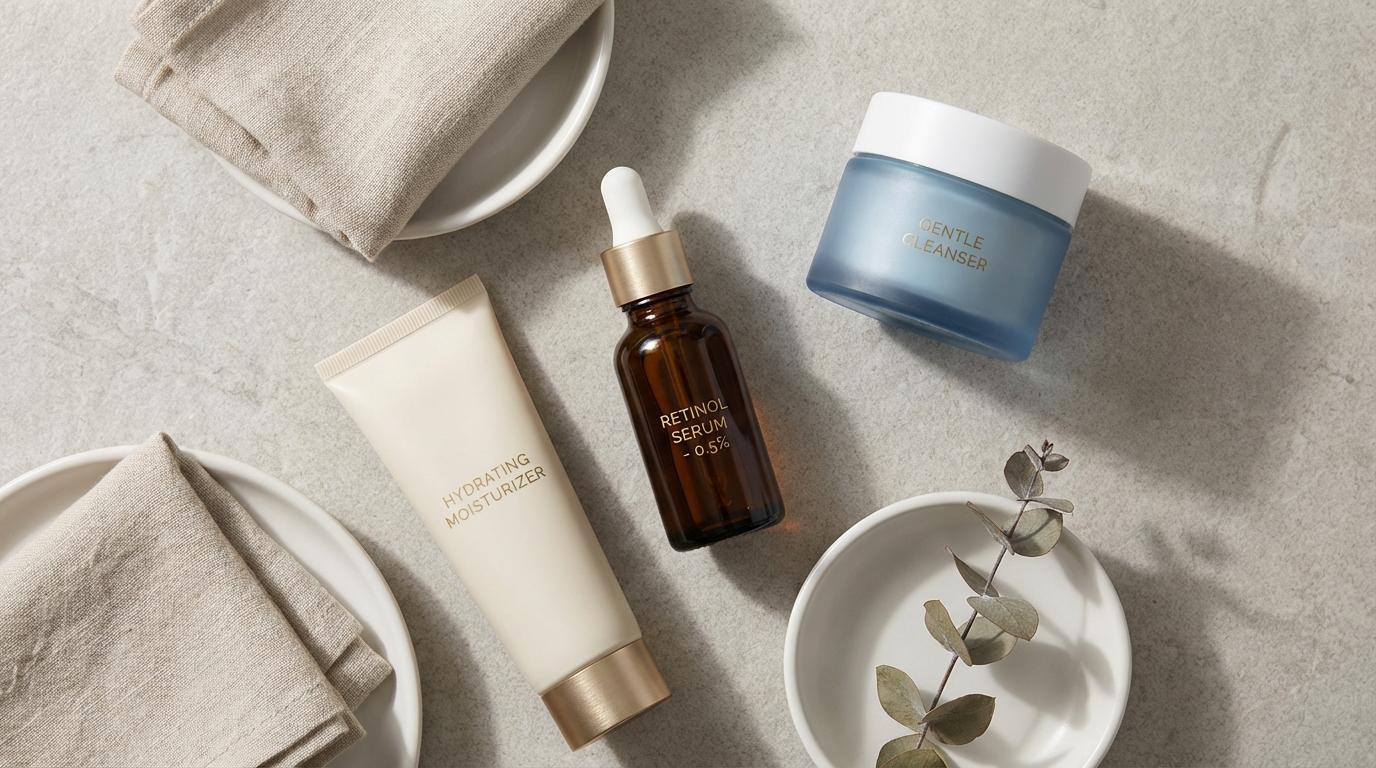
Retinol works by accelerating cell turnover deep within your skin, pushing fresh cells to the surface while signaling your body to produce more collagen. This process is incredibly effective for reducing fine lines and clearing up texture, but it also explains exactly why your skin might rebel during those first few weeks. Understanding the science behind retinol irritation is the first step to preventing it entirely.
The good news? You do not have to suffer through peeling, redness, and sensitivity to get results. With proper layering techniques and a bit of patience, your skin can adapt to retinol smoothly. Let me walk you through the methods that actually work, backed by what we know about how these ingredients interact with your skin barrier.
The Sandwich Method: What It Is and Why It Works
The sandwich method has become one of the most popular techniques for introducing retinol without the drama. The concept is simple: you apply moisturizer before and after your retinol, essentially creating a buffer that slows down penetration into your skin.
Here is how you do it properly:
- Cleanse your face and pat it completely dry
- Apply a thin layer of moisturizer and wait about 5-10 minutes for it to absorb
- Apply a pea-sized amount of retinol, avoiding the eye area, nostrils, and corners of your mouth
- Wait another 5-10 minutes
- Apply a second layer of moisturizer on top
Research presented at the American Academy of Dermatology 2025 meeting found something interesting about this technique. When you do an “open sandwich” (moisturizer either before OR after retinol, but not both), the retinoid maintains its full bioactivity. However, the full sandwich method reduces bioactivity by approximately three-fold. This reduction happens because the moisturizer creates both a dilutional effect and a penetration barrier.
This might sound like a downside, but for beginners and sensitive skin types, reduced potency is actually beneficial. You are essentially getting a gentler introduction while your skin builds tolerance. As your skin adjusts over time, you can gradually drop layers of the sandwich to increase the retinol’s effectiveness.
Ingredients That Should Never Touch Your Retinol
Certain ingredients interact poorly with retinol at the molecular level. Using them together does not just cause irritation; it can actually deactivate your retinol or compromise your skin barrier entirely.
Benzoyl peroxide is one of the biggest offenders. According to dermatologist Dr. Caroline Chang, benzoyl peroxide oxidizes retinol, rendering it essentially useless. If you are using both for acne, apply benzoyl peroxide in the morning and retinol at night, or alternate them on different days entirely.
AHAs and BHAs (like glycolic acid and salicylic acid) present another problem. Both exfoliate the skin, and when combined with retinol’s cell turnover effects, you are essentially triple-exfoliating. This overwhelms the skin barrier and dramatically increases sensitivity to UV damage. If you love your acids, consider using them on alternate nights from your retinol.
Vitamin C is tricky because it is such a beloved ingredient. While some newer formulations are designed to be used together, the traditional advice from dermatologists like Dr. Neera Nathan is to separate them: vitamin C in the morning for antioxidant protection, retinol at night for repair. They work beautifully on the same day, just not layered in the same routine.
Other ingredients to keep away from your retinol include high-alcohol products, copper peptides, and sulfur-based acne treatments. All of these can either destabilize the retinol molecule or combine to create excessive dryness and irritation.
Building Tolerance: The Slow and Steady Approach
Your skin needs time to upregulate the enzymes that process retinol efficiently. This adaptation period typically takes anywhere from 4-12 weeks, depending on your skin type and the strength of product you are using. Rushing this process is the number one reason people give up on retinol.
Start with a low concentration. Over-the-counter retinol products range from about 0.25% to 1%, and if you are new to this ingredient, start at the lower end. Prescription retinoids like tretinoin are significantly stronger, and even experienced retinol users can experience irritation when switching to prescription strength.
Begin by using retinol just two to three nights per week. Your skin cells need recovery time between applications, especially in the beginning. After two to three weeks of consistent use without irritation, you can add another night. Continue this gradual increase until you are using it every night, if that is your goal.
Watch for signs of over-use:
- Persistent redness that does not fade by morning
- Flaking or peeling that seems to be getting worse rather than better
- A tight, uncomfortable feeling even after moisturizing
- Increased sensitivity to other products that never bothered you before
If you experience any of these symptoms, scale back immediately. Skip a few nights, focus on repairing your skin barrier with ceramides and hyaluronic acid, and resume at a lower frequency once your skin has calmed down.
The Right Ingredients to Partner with Retinol
While some ingredients clash with retinol, others actually support your skin through the adjustment period. These are the ones you want in your routine.
Hyaluronic acid is a perfect partner because it hydrates without adding any active ingredients that might interact poorly. Apply it on damp skin before your moisturizer to help combat the dryness that retinol can cause.
Ceramides are lipids that naturally occur in your skin barrier. Retinol can temporarily weaken this barrier during the adaptation phase, so using a ceramide-rich moisturizer helps reinforce what retinol might be compromising. Look for them in your sandwich method moisturizer.
Niacinamide is another great option. It soothes irritation, strengthens the barrier, and has its own benefits for pores and texture. Many people successfully layer niacinamide directly with retinol without any issues.
Squalane provides lightweight moisture that does not clog pores. It is especially helpful during winter months when retinol-related dryness tends to be more pronounced.
Timing and Application Tips
Always apply retinol at night. Sunlight can degrade the molecule and reduce its effectiveness, plus retinol increases photosensitivity, making daytime use counterproductive and potentially harmful.
Wait until your skin is completely dry after cleansing. Applying retinol to damp skin increases penetration, which sounds like a good thing but actually increases the likelihood of irritation. Give your skin a full 10-15 minutes after washing before applying retinol, or use the sandwich method to create a buffer.
A pea-sized amount is genuinely enough for your entire face. Using more will not give you faster results; it will just irritate your skin more. Spread it evenly but avoid the corners of your nose, the area directly under your eyes, and the corners of your mouth. These areas have thinner skin and are more prone to irritation.
Sunscreen is non-negotiable when using retinol. Your skin is more vulnerable to UV damage during retinol use, so a broad-spectrum SPF 30 or higher every morning is essential. This is not optional, even on cloudy days or days when you are mostly indoors.
When to Adjust Your Strategy
Not everyone responds to retinol the same way, and sometimes your skin sends clear signals that you need to change your approach.
If you have been using the full sandwich method for over a month without any irritation, try dropping the bottom layer of moisturizer and applying retinol directly to clean skin, followed by moisturizer. This “half sandwich” increases the retinol’s bioactivity while still providing a buffer.
If you are tolerating your current concentration well after about three months, you might consider moving up to a higher percentage. Go slowly with this transition too. Your skin needs time to adapt to each new level.
For those who find that their skin never fully adjusts, prescription alternatives like adapalene might be worth discussing with a dermatologist. Adapalene tends to be better tolerated while still delivering similar benefits to tretinoin.
Some people also find that their skin tolerates retinol better in different seasons. If summer humidity helps your skin stay comfortable with nightly use, you might need to scale back to every other night during dry winter months. Listening to your skin and adjusting accordingly is always smarter than forcing a one-size-fits-all routine.
Making It Work Long Term
Retinol is one of the most evidence-backed ingredients in skincare. Studies consistently show its effectiveness for improving fine lines, texture, and even acne when used correctly. The initial adjustment period is worth getting through because the long-term benefits are real and cumulative.
The key is patience. Your skin is literally learning how to process this ingredient more efficiently, and that biological adaptation takes time. The sandwich method, careful ingredient pairing, and gradual frequency increases are not signs of having “sensitive skin” that cannot handle retinol. They are smart strategies that respect how your skin actually functions.
Once your skin has fully adapted, you will likely find that you no longer need the full sandwich method. Many long-term retinol users apply it directly to clean skin with just a simple moisturizer on top. But getting to that point requires the kind of methodical approach we have covered here. Skip the impatience, trust the process, and your skin will get there.