
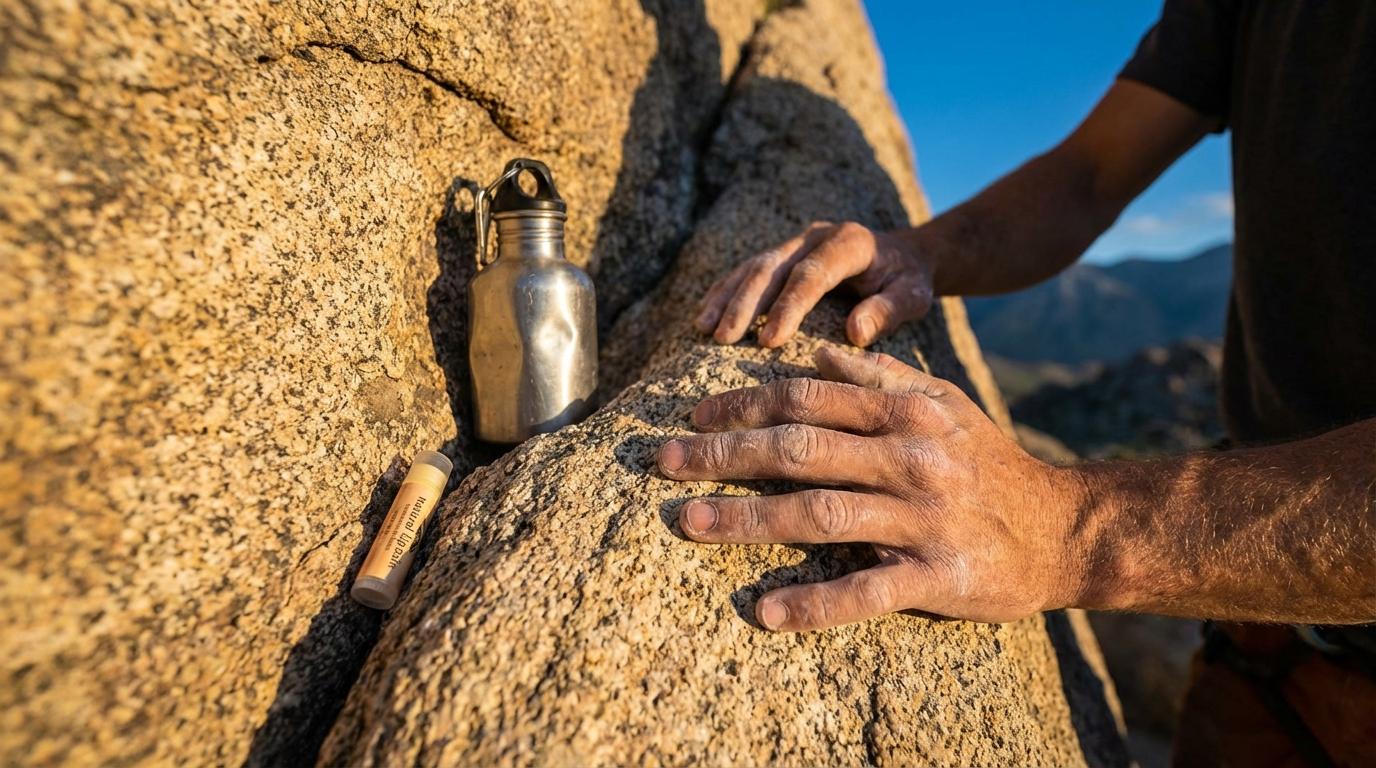
Roughly 9 million Americans go rock climbing each year, and most of them have no idea their sport is quietly destroying their skin. Between the chalk pulling moisture from your hands, hours of sun exposure on outdoor walls, and the general chaos of climbing gym sessions, your face and hands take a beating that your regular skincare routine was never designed to handle.
I’ve been there. Standing at the base of a climb with chalk-dusted hands, sunscreen long since sweated off, wondering why my skin looks like it aged five years over one climbing season. Figuring out how to protect my skin without sacrificing grip or hauling a full skincare cabinet to the crag took some trial and error. What I learned might save you from learning the hard way.
Chalk and the Dry Skin Problem
Climbing chalk is magnesium carbonate, and its entire purpose is absorbing moisture. That’s great for grip. Less great for the skin on your hands, which needs some moisture to stay healthy and functional. Every time you dip into that chalk bag, you’re not just coating your palms with friction-enhancing powder. You’re pulling water out of your skin cells.
Liquid chalk makes this worse. That alcohol base evaporates quickly, taking additional moisture with it. Your hands stay drier longer, which means better friction on holds, but it also means you’re accelerating the dehydration process with every application.
The problem extends beyond just dry skin. According to Climbing Magazine’s skincare guide, chronically dry skin becomes less elastic and more prone to splitting and tearing. Flappers aren’t just painful and annoying. They’re often the result of skin that’s become too dry and rigid to handle the stress of pulling on holds.
I covered outdoor SPF here.
Here’s what actually helps: timing your moisturizing strategically. Heavy creams and balms right before climbing will destroy your grip, but applying a climbing-specific salve or thick cream after every session gives your skin hours to recover overnight. Products from climbing-focused brands like Joshua Tree and Climb On were designed for exactly this purpose, formulating balms that repair without leaving residue that affects future sessions.
Sun Exposure on the Wall
Indoor climbers can skip this section. Everyone else needs to pay attention, because outdoor climbing creates a sun exposure situation your dermatolologist would cringe at.
Think about the typical outdoor climbing day. You arrive at the crag, apply sunscreen, then proceed to sweat through it within the first hour. Your hands are too chalky to reapply without creating a gritty mess. You’re focused on the climb, not on the fact that your face has been tilting toward the sun for hours while you belay.
Certain climbing environments amplify this. Multi-pitch routes mean extended hours with no shade breaks. High altitude climbing increases UV intensity. Reflective surfaces like snow or light-colored rock bounce additional UV rays onto your face from below. Some climbers spend entire seasons with a distinctive goggle tan from sunglasses, not realizing the rest of their face is accumulating serious sun damage.
The practical solution involves both products and clothing. Mineral sunscreens with zinc oxide work better for climbers because they’re less likely to drip into your eyes when you sweat. They also don’t require the 15-minute waiting period that chemical sunscreens need before becoming effective. Apply a solid layer before leaving your car, then accept that reapplication will be imperfect.
Sun-protective clothing fills the gaps. A lightweight long-sleeve shirt with UPF rating protects your arms without overheating you. Hats with brims shade your face during belays and between climbs. Buff-style neck gaiters can be pulled up to cover your face during long sun-exposed sections. These physical barriers don’t sweat off or require reapplication.
Don’t forget lip protection. SPF lip balm is easy to stash in a pocket and reapply between routes. Your lips have minimal melanin and burn faster than the rest of your face.
(See more.)
A Minimal Routine That Actually Works for Climbers
Nobody’s doing a ten-step skincare routine at the crag. The best routine for climbers is one that’s simple enough to actually happen, because the alternative is no routine at all.
Morning before climbing: Wash your face with a gentle cleanser to remove overnight oil and product buildup. Apply a lightweight moisturizer. If climbing outdoors, follow with mineral sunscreen, letting it absorb before you start sweating. That’s it. Three products, maybe five minutes.
At the gym or crag: Keep your face-touching to a minimum. Those chalky hands transferring powder to your face creates localized dryness and can clog pores. If you need to wipe sweat, use your shirt or a clean towel rather than your chalk-covered palms.
Post-climbing: This is where most of your skin recovery happens. Wash your face thoroughly to remove any transferred chalk, sweat, and sunscreen residue. Your skin was under stress all day and needs proper cleansing.
Follow with a moisturizer appropriate for your skin type. If your skin runs dry, especially after outdoor days, a routine that hydrates without overloading gives your moisture barrier the support it needs to recover. Those with oilier skin might need something lighter but should still prioritize hydration after climbing sessions.
Evening skincare can be more elaborate if you want, but even just cleanser plus moisturizer accomplishes the basics. The goal is consistency, not complexity.
Hand Care That Extends to Your Face
Your hands and face are connected in more ways than you might think. The state of your hands affects your face, and the habits you build for one often translate to the other.
First, the direct transfer problem. Climbers touch their faces constantly without realizing it. Adjusting glasses, pushing back hair, wiping sweat. Every touch transfers chalk residue to your face. Chalk isn’t toxic, but it’s drying, and accumulated chalk dust can settle into pores and contribute to breakouts or irritation.
Building awareness of this habit helps both your face and your climbing. Keep your hands away from your face during sessions. When you need to touch your face, brush the chalk off your hands first or use the back of your hand rather than your chalk-coated palms.
Second, the hydration connection. If you’re diligent about moisturizing your hands after climbing to prevent splits and flappers, extend that habit to your face. The same post-climb window when you’re treating your hands is the perfect time to wash and moisturize your face. Build them into the same routine so one triggers the other.
Third, callus management principles apply to facial exfoliation. Climbers learn to sand down calluses to prevent flappers, removing just enough dead skin to keep edges smooth without thinning the protective layer. Your face benefits from similar moderate exfoliation, removing dead surface cells without stripping away necessary protection. A gentle chemical exfoliant once or twice a week keeps cell turnover healthy without making skin vulnerable.
Dealing with Specific Climbing Skin Issues
Certain skin problems show up more frequently in climbers than in the general population.
Acne mechanica is breakouts caused by friction, pressure, and heat. Climbing helmets create a perfect environment for this along the forehead and hairline. If you’re breaking out where your helmet sits, wash your face immediately after climbing and clean your helmet’s padding regularly.
Contact irritation from chalk affects some people more than others. If you notice redness or irritation on areas where chalk contacts your skin, you might be mildly reactive to one of the additives in your chalk brand. Switching to a different brand or pure magnesium carbonate sometimes helps.
Wind chapping on outdoor climbs dehydrates exposed skin rapidly. High altitude and desert environments are particularly harsh. A barrier balm on exposed skin before climbing and immediate moisturizing after can minimize the damage.
For persistent skin issues that don’t respond to basic care, targeted treatments can address specific concerns without overcomplicating your routine.
The Realistic Approach
Perfect skin protection while climbing isn’t possible. You’ll sweat off sunscreen. Chalk will transfer to your face. Long days on the wall mean extended environmental exposure. Accepting this reality lets you focus on harm reduction rather than perfection.
The climbers I know who maintain healthy skin aren’t doing anything elaborate. They’re consistent with basic protection and recovery: sunscreen before outdoor days, thorough cleansing after, hydration for both hands and face, and acceptance that some skin stress is unavoidable in an outdoor sport.
Your skin can handle climbing. It’s remarkably adaptable and recovers well when given proper support. The goal isn’t preventing all stress. It’s giving your skin what it needs to bounce back from the stress climbing creates.
That might mean spending fifteen dollars on a climbing-specific hand balm. It might mean keeping a mineral sunscreen stick in your chalk bag for easy reapplication. It might just mean washing your face thoroughly after sessions instead of crashing on the couch still coated in chalk dust.
Small, sustainable habits beat elaborate routines you’ll abandon after two weeks. Figure out what you’ll actually do consistently, and that becomes your climbing skincare routine. Everything else is optional.