
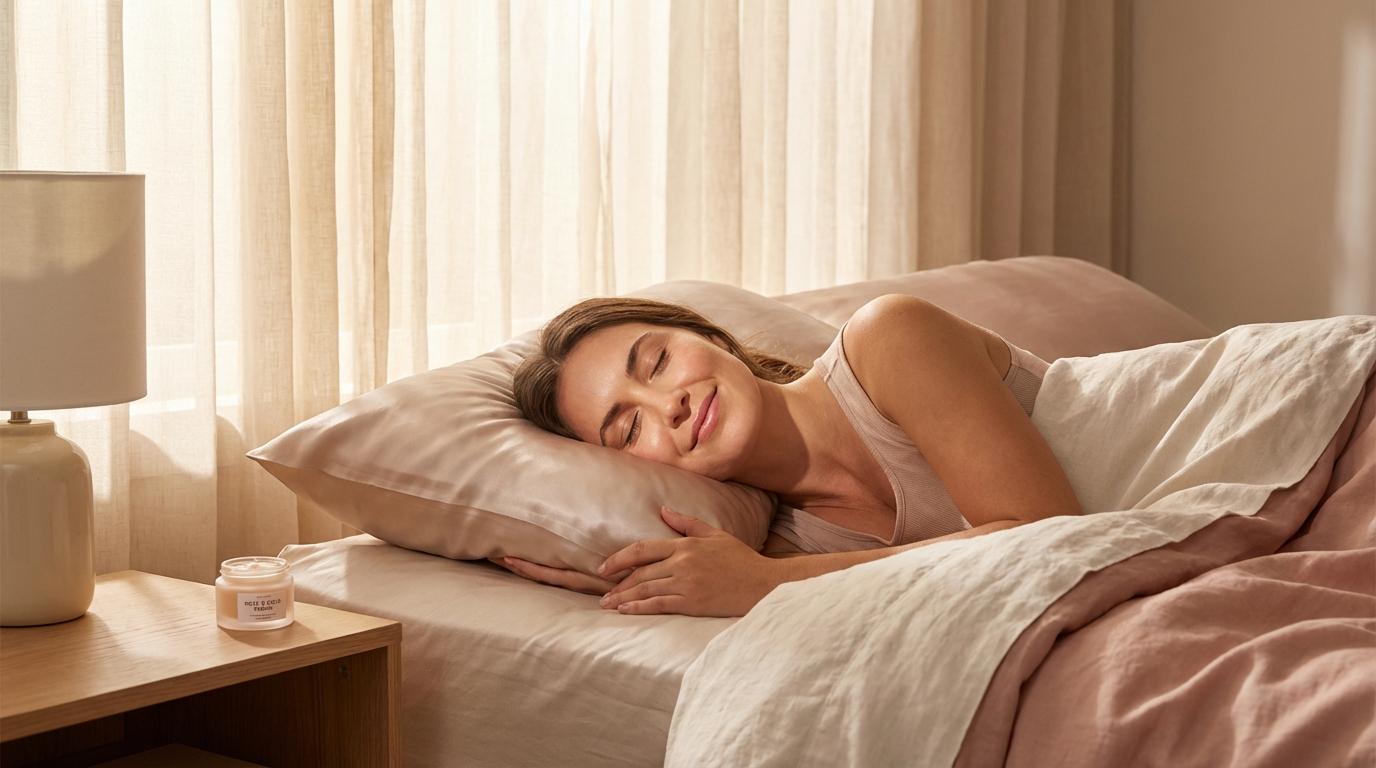
Every night for roughly eight hours, you press your face into a pillow with the full weight of your head (that’s 8 to 10 pounds, by the way). Do that for decades and yeah, it’s going to leave marks. Sleep wrinkles are a real thing, and they’re different from the expression lines you get from smiling or squinting. Your side sleeper habit might literally be reshaping your face while you dream about that guy from accounting.
Compression Wrinkles: The Overnight Skin Smush
Sleep wrinkles happen when your skin gets compressed, stretched, and sheared against your pillow. Unlike expression wrinkles that form perpendicular to muscle movement (think crow’s feet from squinting), sleep wrinkles form in the direction of the pressure. That means vertical lines on your cheeks, diagonal creases near your mouth, and those mysterious forehead wrinkles that don’t match any expression you make.
The research on this is actually kind of wild. A 2016 study in Aesthetic Surgery Journal documented all the ways sleeping deforms faces: flattening of the forehead, blunting of the angle between the nose and forehead, deepening of nasolabial folds, and yes, crow’s feet. The researchers concluded that sleeping causes “irreversible damage to the dermis and adipose tissues.” Fun!
What makes sleep wrinkles extra annoying is that they don’t respond to Botox. Neuromodulators work by relaxing muscles, but sleep wrinkles aren’t caused by muscles. They’re caused by mechanical force. You’re essentially ironing creases into your face every single night.
Side vs Back: The Sleep Position Showdown
Dermatologists can literally tell which side you sleep on by looking at your face. Dr. Erum Ilyas, a board-certified dermatologist, says she regularly identifies preferred sleep positions during skin exams based on asymmetric aging patterns. If you’ve ever wondered why one side of your face has more wrinkles than the other, congratulations, you just learned you’re a dedicated side sleeper.
The positions that cause the most damage are side sleeping and stomach sleeping. Both press your face directly into the pillow. Back sleeping is the dermatologist-approved position because your face doesn’t touch anything. It just… floats there. Sleeping in its own gravity-neutral bubble of anti-aging bliss.
Here’s the problem though: most people can’t just decide to become back sleepers. Sleep positions are ingrained habits. You might fall asleep on your back and wake up in the fetal position with your face shmushed into the pillow like always. Some people even feel anxious or have trouble sleeping on their backs. Telling a lifelong side sleeper to “just sleep on your back” is about as useful as telling someone with insomnia to “just sleep.”
Pillow Pressure Points: Where the Damage Happens
When you sleep on your side, specific areas of your face take the brunt of the pressure. The cheekbone and temple area get compressed directly. The nasolabial fold (that line from your nose to the corner of your mouth) gets pushed and deepened. The delicate skin around your eyes creases against the pillow.
As we age, we also shift positions less frequently during the night. Research shows we go from an average of 27 position shifts per night when younger to about 16 when older. That means longer periods of sustained pressure in one position, giving those compression wrinkles more time to really set in.
And then there’s the pillow material factor. Cotton pillowcases are absorbent, which sounds nice until you realize they’re absorbing moisture from your skin and potentially dehydrating it. They also create more friction than silk or satin, meaning more tugging and creasing as you move during the night.
Sleep Wrinkle Prevention That Actually Works
Silk or satin pillowcases: These reduce friction against your skin. Board-certified dermatologist Dr. Miriam Hanson specifically recommends silk and satin because they minimize friction and moisture loss. Cotton absorbs moisture from skin, potentially contributing to dehydration and wrinkle formation. Is a silk pillowcase going to reverse existing wrinkles? No. But it might slow down the formation of new ones and feel fancy while doing it.
Anti-wrinkle pillows: These exist and they’re… polarizing. Some are U-shaped to cradle your face while side sleeping, minimizing contact with the pillow surface. Some are designed to encourage back sleeping. One study found that specially designed pillows reduced wrinkle density by up to 12% in 28 days. Whether that’s worth the investment (these pillows run anywhere from $50 to over $200) depends on how seriously you take sleep wrinkle prevention.
The enVy pillow, for example, is designed to minimize face-to-pillow contact for side sleepers. The JuveRest pillow has contours that support your head while keeping your face elevated. The Nurse Jamie Beauty Bear has a U-shape that works for both back sleepers and side sleepers. I personally haven’t tried any of these because I’m too attached to my regular pillow, but the concept is sound.
Back sleeping training: If you really want to commit, there are products designed to help train yourself to sleep on your back. Tennis balls sewn into the back of shirts (to make side sleeping uncomfortable), wedge pillows, even wearable devices that vibrate when you roll onto your side. Most people give up on these pretty quickly, but some swear by them.
The Skincare Connection
Your nighttime skincare doesn’t directly prevent sleep wrinkles, but it can support your skin’s ability to bounce back from overnight compression. Hydrated, well-moisturized skin is more resilient. A healthy lipid barrier helps skin maintain its structure under pressure.
Retinoids can help by boosting collagen production, which gives skin more structural support. Peptides may strengthen the skin matrix over time. But these aren’t sleep wrinkle cures. They’re general anti-aging strategies that can somewhat offset the mechanical damage happening every night.
One underrated tip: apply your nighttime moisturizer more generously on the side of your face you sleep on. That extra layer of protection can reduce friction and keep skin more pliable during the night.
Realistic Expectations Time
If you’re in your twenties, your skin still has enough collagen and elasticity to bounce back from overnight compression. The lines you wake up with fade within an hour or two. Sleep wrinkles are a cumulative problem, getting worse over decades of repeated compression.
If you’re already seeing permanent sleep wrinkles, prevention strategies will slow further progression but won’t reverse existing damage. For that, you’re looking at professional treatments like fillers or laser resurfacing, and even those have limits with mechanically induced wrinkles.
The honest truth: sleep wrinkles are probably going to happen to some degree unless you can successfully train yourself to be a lifelong back sleeper. Side sleeping is comfortable. It’s also just how a lot of people’s bodies want to rest. A silk pillowcase and a good night cream can help, but they’re not going to completely counteract eight hours of face smushing.
My take? Sleep however lets you actually sleep. Sleep deprivation ages you way more dramatically than compression wrinkles ever will. Chronic stress from fighting your natural sleep position is bad for your skin and your sanity. If you want to try a specialty pillow or silk pillowcase, go for it. But if you’re a dedicated side sleeper, maybe just accept that one side of your face will age slightly faster than the other and call it character.