
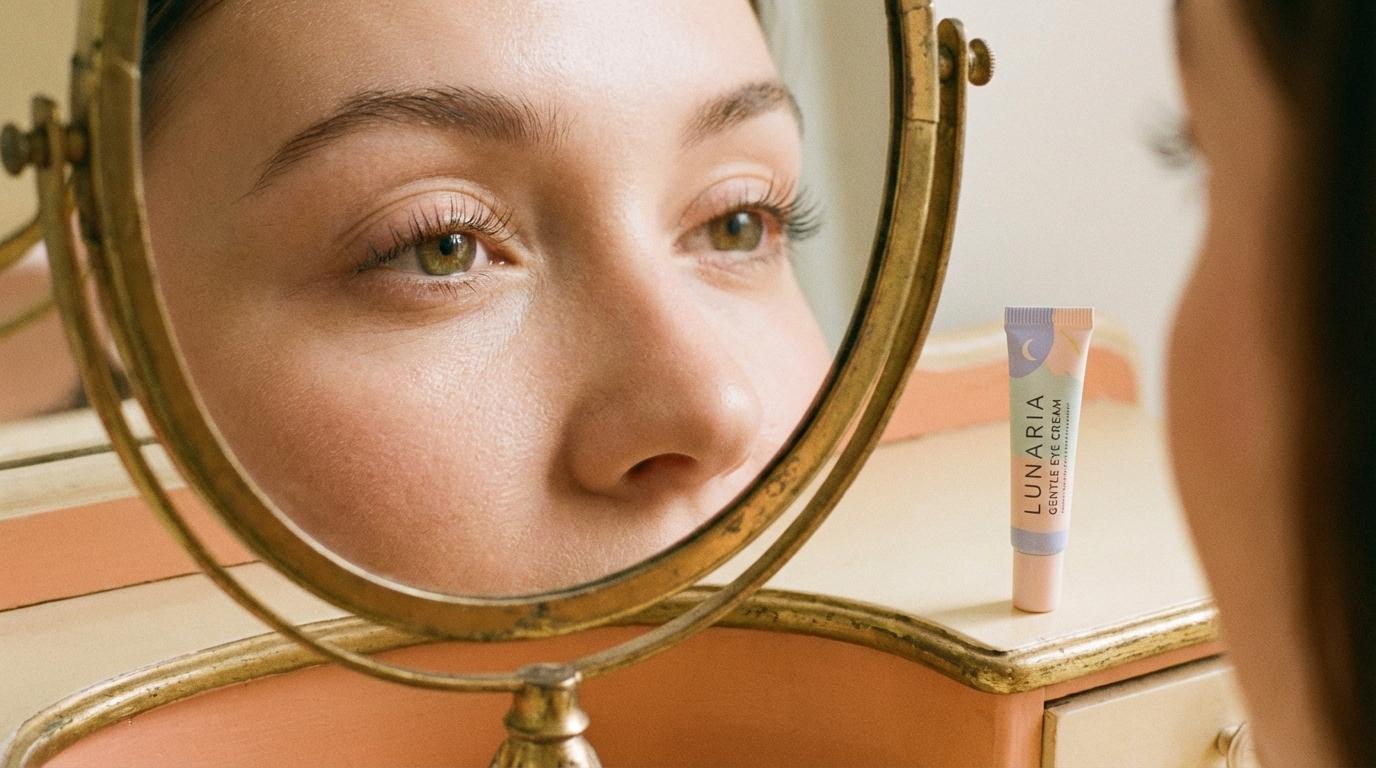
Those tiny white bumps under your eyes aren’t acne, and squeezing them won’t do a thing. If you’ve been staring in a magnifying mirror trying to figure out what these stubborn little dots are, you’re dealing with milia. They look like whiteheads, they act nothing like whiteheads, and they require a completely different approach.
What Milia Actually Are
Milia are small cysts filled with keratin, the same protein that makes up your hair and nails. When dead skin cells get trapped beneath the surface instead of shedding normally, keratin accumulates in a tiny pocket and forms a hard, pearl-like bump. They typically show up around the eyes, on the cheeks, and across the forehead.
They’re not pimples. There’s no bacteria involved. There’s no inflammation, no redness, no pus. Just a firm little bump sitting right under the surface of your skin, completely unbothered by your attempts to extract it.
You can have one or you can have a dozen. They don’t discriminate by skin type or age, though they’re extremely common in newborns (and clear up on their own in babies within a few weeks).
Why They Form Around the Eyes
The skin around your eyes is the thinnest on your entire face. It has fewer oil glands, less collagen, and a weaker barrier. That makes it more vulnerable to keratin getting trapped.
A few common triggers:
Heavy eye creams. Rich, occlusive products can block the natural shedding process. If you started using a new eye cream and noticed bumps appearing a few weeks later, that’s probably not a coincidence.
Sun damage. UV exposure thickens the outer layer of skin over time, making it harder for dead cells to shed properly. This is one of the reasons milia become more common as you get older.
Skin trauma. Burns, rashes, blistering, or even aggressive treatments like microdermabrasion can damage the skin enough to disrupt normal cell turnover. Milia that form after injury are called secondary milia.
Steroid creams. Long-term use of topical corticosteroids thins the skin in some ways but can actually impair the skin’s ability to shed dead cells efficiently.
What Won’t Work
Picking at them. Seriously. Milia sit in a hard little capsule under the skin. Unlike a pimple, there’s no opening for the contents to come out. You’ll just end up with irritated, possibly scarred skin and the milia will still be there, completely unfazed.
Acne treatments aren’t particularly effective either. Benzoyl peroxide targets bacteria, and there’s no bacteria in milia. Salicylic acid spot treatments designed for active breakouts won’t penetrate deep enough to dissolve a keratin cyst.
Pore strips, suction tools, and those extraction videos you’ve watched on social media? Not the move for milia. These bumps are sealed shut.
Prevention Strategies That Actually Help
You can reduce the chances of new milia forming with a few simple adjustments.
Use lighter products around the eyes. Swap thick creams for gel-based eye treatments. If a product feels heavy or greasy on the eye area, it might be too occlusive for that delicate skin. A minimal routine often works better around the eyes than layering multiple products.
Gentle exfoliation. A low-percentage AHA (think 5% lactic acid or glycolic acid) used a couple of times a week can help keep dead skin cells moving. Don’t go aggressive here. The eye area can’t handle strong acids or physical scrubs. Apply carefully, avoiding the immediate under-eye and eyelid.
Wear sunscreen every day. Sun damage is one of the biggest contributors to milia formation. A lightweight SPF that doesn’t sit heavy on the skin will protect against UV-related cell buildup.
Don’t over-apply skincare. More products doesn’t mean better skin. Around the eyes especially, less is more. A moisturizer, an SPF, and maybe a gentle retinol at night is plenty.
When Professional Removal Makes Sense
If milia are bothering you cosmetically, a dermatologist can remove them quickly and safely. The process is straightforward: they use a sterile needle or small blade to make a tiny incision in the skin, then gently extract the keratin plug. It takes seconds per bump.
Some dermatologists also use:
Cryotherapy. Freezing the milia with liquid nitrogen. Effective but can sometimes leave temporary discoloration, especially on darker skin tones.
Chemical peels. Professional-strength glycolic or lactic acid peels can help resolve milia over a series of treatments by accelerating skin cell turnover.
Topical retinoids. A prescription retinoid like tretinoin can help prevent new milia from forming by increasing cell turnover. Your derm might suggest this if you’re prone to recurring milia.
Don’t try to DIY the extraction at home. The eye area is not the place for amateur needle work. You risk scarring, infection, and damage to skin that’s already thin and fragile.
Milia vs. Other Bumps
It’s easy to confuse milia with other conditions. Here’s a quick breakdown.
Milia vs. whiteheads: Whiteheads are soft, come to a head, and respond to acne treatments. Milia are firm, have no opening, and don’t respond to typical acne products.
Milia vs. syringomas: Syringomas are benign sweat duct growths that can look similar to milia but tend to be slightly larger and more skin-colored. A dermatologist can tell the difference.
Milia vs. xanthelasma: These are yellowish fat deposits near the eyes, often linked to high cholesterol. They’re flat or slightly raised and have a different texture than milia.
If you’re not sure what you’re looking at, the American Academy of Dermatology has a solid visual guide, or just book an appointment with your derm.
Living With Milia
Milia aren’t harmful. They don’t indicate a skin disease. They won’t spread to other people. They’re a cosmetic annoyance at most.
Some people find that milia come and go on their own, especially with consistent gentle exfoliation and lighter products. Others deal with stubborn, recurring milia that need professional attention.
Either way, the worst thing you can do is treat them like acne. They’re not acne. Once you accept that, you can stop wasting time and money on products that were never going to work and start addressing the actual issue.
Keep your eye area routine simple. Protect your skin from the sun. And if a bump is really bugging you, let a professional handle it. That’s it. No 12-step milia protocol needed.