
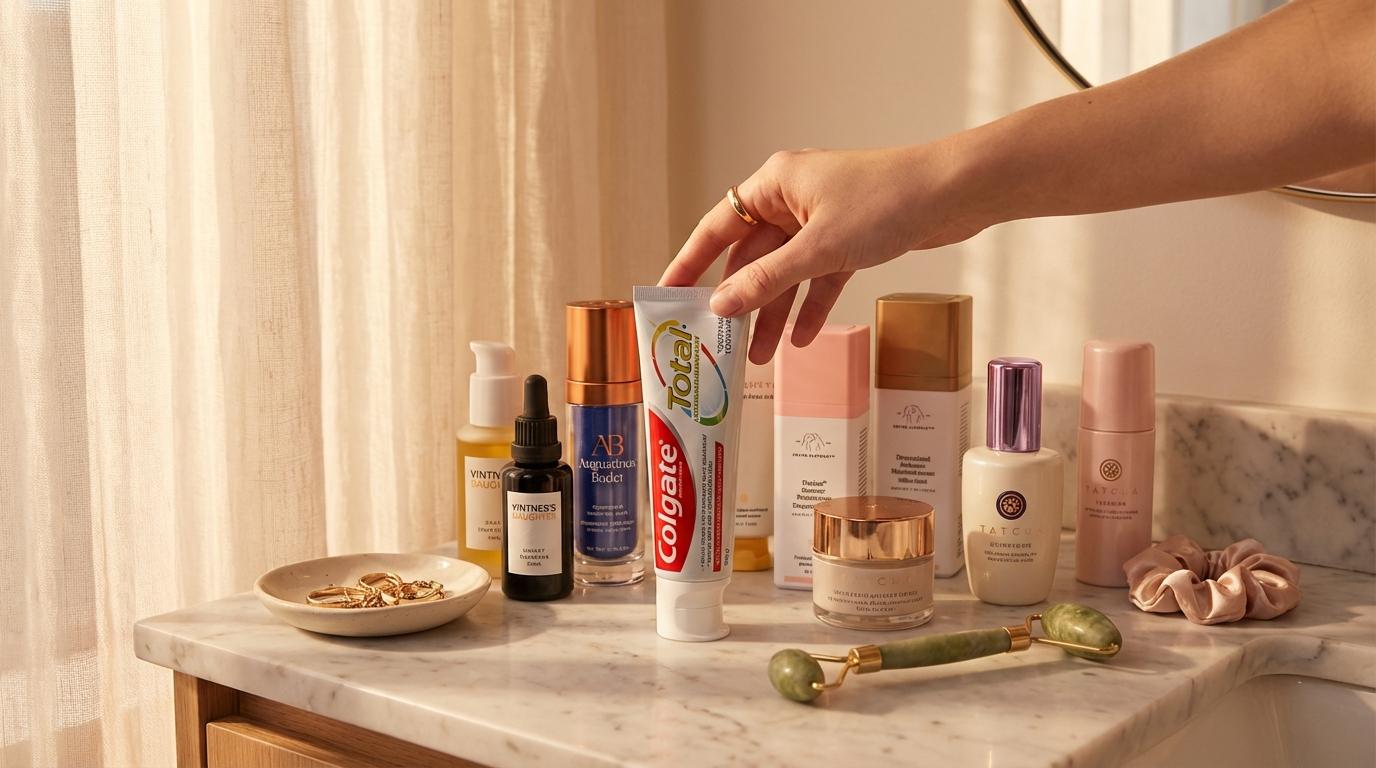
Slathering toothpaste on a pimple feels like using a fire extinguisher on a candle. Sure, it might seem like an aggressive solution to a small problem, but the reality is you’re probably going to cause more damage than the original issue ever would have.
I’ve been there. College me thought toothpaste was basically free skincare sitting right there on the bathroom counter. White, minty, dries stuff out? Perfect for zapping that chin zit before a presentation. Spoiler alert: it was not perfect. It was, in fact, terrible.
Why This Myth Refuses to Die
The toothpaste-on-pimples advice has been circulating since before Instagram existed. Your mom probably heard it from her mom. The logic seems reasonable enough on the surface: toothpaste contains ingredients that dry things out, pimples are full of oil and gunk, therefore toothpaste should dry out pimples. Math checks out, right?
Wrong. This myth persists because of a few key misunderstandings about how pimples work and what toothpaste actually does. People see that toothpaste leaves their skin feeling dry and assume that dryness equals healing. But acne treatment is way more nuanced than just removing moisture from your face.
Back in the day, some toothpaste formulas contained triclosan, an antibacterial ingredient that theoretically could have helped with bacteria-related breakouts. But triclosan was banned from consumer antiseptic washes by the FDA in 2016, and most toothpaste brands reformulated long before that. The toothpaste sitting on your bathroom sink right now is not the same formula your grandmother was using.
Another Myth Busted has more.
What Toothpaste Actually Does to Your Skin
Modern toothpaste is formulated for one thing: cleaning teeth. The ingredients that make it effective at scrubbing plaque and freshening breath are actively hostile to facial skin. We’re talking about a product designed for the enamel on your teeth, which is literally the hardest substance in your body. Your face is not equipped for that level of aggression.
Sodium lauryl sulfate (SLS) is in most toothpastes and it’s a known skin irritant. It strips natural oils aggressively, which can actually trigger your skin to produce more oil in response. So you might be making your acne worse in the long run while also irritating your skin in the short term.
The menthol and peppermint in toothpaste create that cooling, tingly sensation in your mouth. On your face? That’s irritation. That tingling feeling isn’t medicine working. It’s your skin saying “what is happening to me right now?”
Related: when to see a derm.
Fluoride is great for preventing cavities. On your face, it can cause perioral dermatitis, which is basically a rash around your mouth that looks suspiciously like more acne. So you’re trying to fix one problem and potentially creating another that’s even harder to get rid of.
Hydrogen peroxide (in whitening formulas) can actually bleach your skin. Not in a good way. We’re talking uneven skin tone, potential chemical burns on sensitive skin, and hyperpigmentation that takes months to fade.
The Aftermath: What Can Actually Happen
When you put toothpaste on a pimple, a few things might occur. In the best-case scenario, absolutely nothing changes except your pillowcase smells like mint. In more realistic scenarios:
- The skin around the pimple becomes red, dry, and irritated
- You develop contact dermatitis (fancy term for an angry rash)
- The pimple scabs over improperly, increasing scarring risk
- Your skin overcompensates for the dryness by producing more oil
- You develop post-inflammatory hyperpigmentation (dark spots that last for months)
I learned this the hard way during finals week sophomore year. I had a pimple that needed to be gone by my study group presentation. Toothpaste went on before bed. By morning, the pimple was still there, but now it had a friend: a dry, red, peeling patch of skin surrounding it like a bullseye. I looked like I had a target on my chin. The pimple took another week to heal, and the dry patch took even longer.
What Actually Works for Spot Treatment
The good news is that real spot treatments exist, and most of them are just as affordable as that tube of toothpaste you were eyeing. They’re formulated for facial skin, which means they target the actual problem without creating five new ones.
Benzoyl peroxide is probably the most well-researched spot treatment out there. It kills acne-causing bacteria and helps unclog pores. Start with 2.5% concentration if you’re new to it. Higher percentages aren’t necessarily more effective, but they are more irritating. You can find benzoyl peroxide spot treatments at any drugstore for under ten dollars.
Salicylic acid is a beta-hydroxy acid that penetrates into pores to dissolve the gunk causing the clog. It’s gentler than benzoyl peroxide and works well for smaller, surface-level pimples. If you’re weighing your options, this comparison of salicylic acid and benzoyl peroxide breaks down which might work better for your specific situation.
Sulfur has been used for acne treatment for literally centuries. It reduces inflammation and absorbs excess oil without completely demolishing your skin barrier. Many overnight spot treatments contain sulfur, and it tends to be less irritating than benzoyl peroxide.
Hydrocolloid patches are having a moment right now, and honestly, they deserve it. These little stickers absorb fluid from pimples, protect the area from picking (be honest, you were going to pick at it), and create a moist healing environment that reduces scarring. They don’t work on deep cystic acne, but for surface-level whiteheads, they’re kind of miraculous.
The Budget Breakdown
One argument I hear for the toothpaste method is that it’s free. But let’s be real: that tube of toothpaste cost money, and the skin damage from using it improperly costs even more in the long run. Dark spots require vitamin C serums. Irritation requires barrier-repair products. The math doesn’t actually work out in toothpaste’s favor.
A tube of benzoyl peroxide spot treatment runs about four to eight dollars and lasts for months because you only need a tiny amount per pimple. Hydrocolloid patches cost roughly the same and come with enough patches to last through multiple breakouts. These aren’t luxury products. They’re drugstore basics that cost less than a fancy coffee.
If money is genuinely tight (and I get it, college budgets are brutal), there are still better options than toothpaste. Witch hazel is cheap and reduces inflammation. Tea tree oil, diluted properly, has antibacterial properties. Ice reduces swelling and redness temporarily. All of these are gentler than toothpaste and won’t leave you with a chemical burn the morning of your job interview.
When to Actually See a Professional
If you’re reaching for toothpaste regularly because you’re dealing with constant breakouts, that’s a sign to level up your approach. Occasional pimples happen to everyone, but persistent acne needs actual treatment strategies, not bathroom cabinet hacks.
A dermatologist can prescribe topical retinoids, which are proven to reduce acne long-term. They can also rule out hormonal causes or recommend prescription-strength treatments that work faster than over-the-counter options. Many offer telehealth appointments now, which makes the whole process way less intimidating.
Even without a dermatologist, building a consistent basic routine helps prevent breakouts in the first place. Cleanser, moisturizer, sunscreen. That’s it. If your skin is oily, there are routines specifically designed for oily skin that won’t strip your face and trigger more oil production.
The Verdict on Toothpaste
Toothpaste belongs on your teeth. Full stop. The ingredients that make it effective at cleaning your mouth make it actively harmful on your face. The drying effect people chase is actually irritation that can worsen acne and cause lasting damage.
Real spot treatments exist for a reason. They’re formulated with appropriate concentrations of actual acne-fighting ingredients, pH-balanced for skin, and won’t leave you with a red ring of regret around an otherwise manageable pimple.
The next time you’re tempted to reach for the Colgate at midnight, remember: your future self will thank you for grabbing that hydrocolloid patch instead. Your skin barrier is precious. Protect it. Use products that are designed to be there.
Trust me on this one. I’ve been there, done that, and spent way too much time explaining to people why I had a chemical burn on my face during presentation day. Learn from my mistakes. Your pimples deserve better, and so does the rest of your skin.