
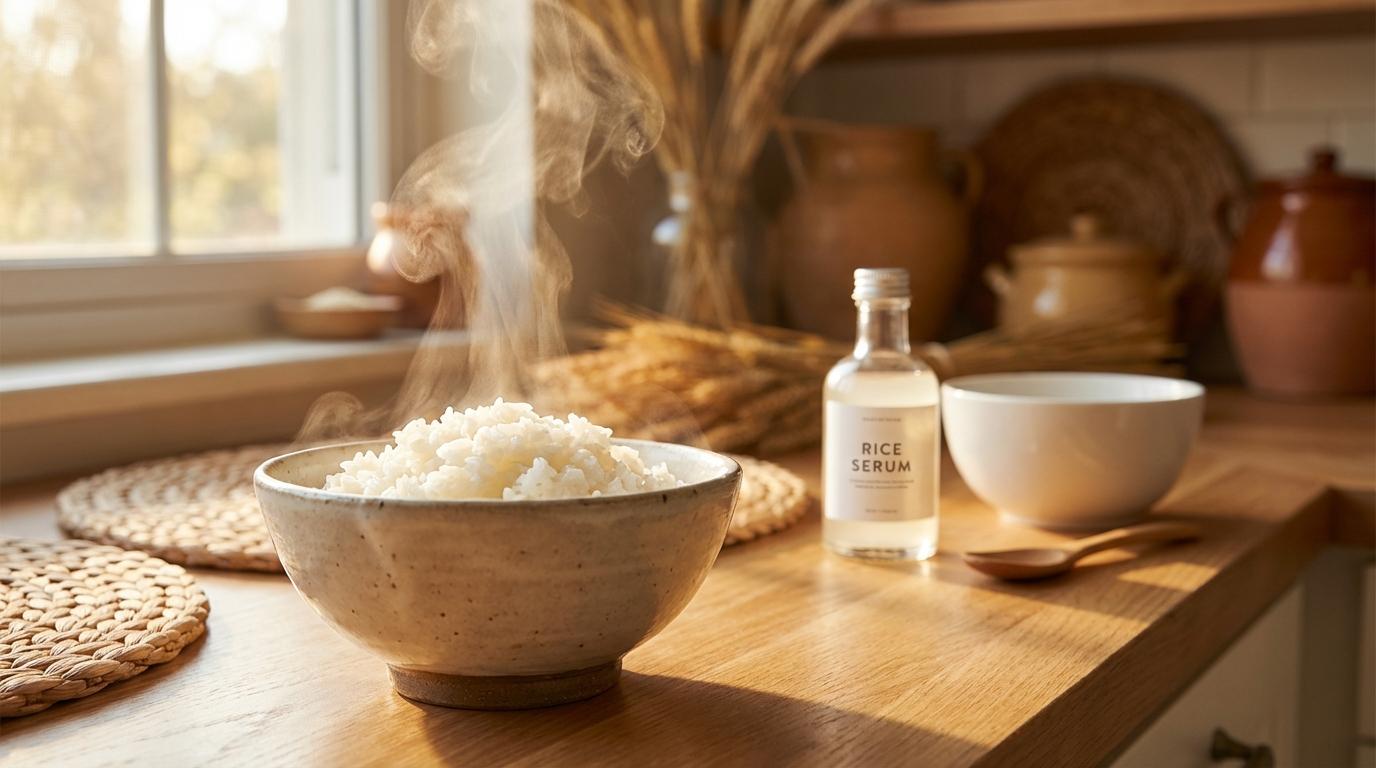
Rice extract has been a staple in Asian skincare for centuries, and there’s real science behind why it works. From Japanese sake brewers with notoriously smooth hands to Korean beauty brands building entire lines around it, this ingredient earned its reputation the old-fashioned way: through actual results.
If you’ve ever wondered why so many K-beauty and J-beauty products list some version of rice on their ingredients, this is your breakdown. No fluff. Just facts about what rice does for your skin and whether it’s worth adding to your routine.
What Rice Actually Does for Skin
Rice contains compounds that genuinely benefit your skin. We’re talking about ferulic acid, gamma-oryzanol, vitamin E, and amino acids. Together, these work to brighten skin, soften texture, and protect against environmental damage.
The brightening effect is probably the most talked-about benefit. Rice inhibits tyrosinase, the enzyme responsible for melanin production. Translation: it can help fade dark spots and even out your skin tone over time. This isn’t overnight magic. You’re looking at consistent use over several weeks to see real changes.
Rice also provides solid hydration without feeling heavy. The amino acids and sugars in rice act as natural humectants, pulling moisture into your skin and keeping it there. Good news if you have oily skin and think you can’t use anything that hydrates.
There’s an antioxidant angle too. Research published in PubMed confirms that rice derivatives contain protective compounds that help neutralize free radicals. This matters for preventing the kind of damage that leads to premature aging.
Rice Water vs Rice Bran vs Fermented Rice
Not all rice extracts are created equal. The skincare world uses several different forms, and they’re not interchangeable.
Rice Water is the simplest form. It’s literally the starchy water left over after rinsing or cooking rice. DIY enthusiasts love it because you can make it at home. It contains some vitamins and minerals, but the concentration is relatively low. Think of it as a gentle toner that provides mild brightening and softening. Nothing dramatic, but nothing irritating either.
Rice Bran Extract comes from the outer layer of the rice grain. This is where most of the good stuff lives: vitamin E, ceramides, squalene, and fatty acids. Rice bran is richer than rice water and works particularly well for barrier repair. If your skin feels tight or stripped, products with rice bran extract can help rebuild that protective layer.
One caveat: rice bran oil can be too rich for acne-prone or very oily skin. If that’s you, look for products that use rice bran extract in a lightweight formula rather than straight rice bran oil.
Fermented Rice Extract is the powerhouse of the group. Fermentation breaks down rice compounds into smaller, more bioavailable molecules. Your skin absorbs them more easily. Fermented rice also develops additional beneficial compounds during the fermentation process, including more amino acids and antioxidants.
According to a review in Cosmetics journal, fermentation enhances rice’s bioactive potential significantly. This is why high-end K-beauty products often feature fermented rice prominently.
The famous SK-II Pitera essence? That’s a fermented rice product. The story goes that scientists noticed sake brewery workers had remarkably youthful hands despite their age. They traced it back to the fermented rice they handled daily.
How Different Skin Types Can Use It
Rice works for most skin types, which is part of why Asian skincare embraced it so thoroughly. But how you use it matters.
Dry Skin: Go for rice bran oil or rich creams containing rice extract. The fatty acids and ceramides will help lock in moisture. Layer it over a hydrating toner or serum for maximum benefit.
Oily Skin: Stick to rice water toners or lightweight fermented rice essences. These deliver brightening benefits without adding extra oil. Skip products where rice bran oil is high on the ingredients list.
Sensitive Skin: Rice is generally calming and well-tolerated. Start with rice water or a gentle rice essence. Fermented products can sometimes cause reactions in very sensitive skin, so patch test first.
Combination Skin: You have options. Use a rice water toner all over, then add a richer rice bran product only on dry areas.
Whatever your skin type, rice plays nicely with most other ingredients. It won’t interfere with your retinol, vitamin C, or acids. If anything, the hydrating and barrier-supporting properties can help buffer irritation from stronger actives.
Getting Started with Rice in Your Routine
You don’t need to overhaul everything. Pick one rice product and use it consistently for at least six weeks before judging results.
Easiest Entry Point: A rice water toner. Use it after cleansing, before your serums. Pat it in rather than wiping. This adds a layer of hydration and preps your skin to absorb whatever comes next.
More Commitment: A fermented rice essence. These go after toner but before serum. They’re more expensive but deliver more concentrated benefits. Popular options include I’m From Rice Toner (which is actually more of an essence despite the name) and SK-II Facial Treatment Essence if budget isn’t a concern.
Targeted Treatment: Look for rice-based sheet masks for a weekly boost. They’re particularly good before events when you want that soft, bright look. The concentrated formula sits on your skin longer, giving ingredients more time to absorb.
For budget-friendly options, many drugstore K-beauty brands now offer rice products. The Face Shop, TonyMoly, and Innisfree all have affordable rice lines.
DIY Rice Water: Worth It or Waste of Time
Making rice water at home is simple: rinse half a cup of rice, soak it in two cups of water for 30 minutes, strain, and use. Some people ferment it by leaving it at room temperature for 24 to 48 hours before refrigerating.
Is it worth the effort? Honestly, it depends on your goals.
Homemade rice water is gentler and less concentrated than commercial products. It’s fine as a simple toner for mild brightening and softening. It costs almost nothing, which is a win.
The downsides: it spoils quickly (use within a week even refrigerated), you can’t control the concentration, and unfermented rice water is the weakest form of rice extract. You won’t get the same results as a properly formulated fermented rice product.
If you’re curious, try it. It won’t hurt anything and might leave your skin feeling softer. Just don’t expect dramatic transformation.
What Rice Cannot Do
Rice is effective but not miraculous. Setting realistic expectations matters.
It won’t fix deep wrinkles. The anti-aging benefits are more preventive than corrective. Rice helps protect against future damage more than reversing existing damage.
Severe hyperpigmentation needs stronger actives. Rice provides gentle brightening, but stubborn melasma or post-inflammatory hyperpigmentation usually requires ingredients like tranexamic acid, vitamin C, or prescription treatments. Rice can support these treatments but probably won’t replace them.
Acne treatment isn’t rice’s specialty either. While it won’t cause breakouts for most people, it’s not going to clear existing acne. If that’s your concern, you need actual acne-fighting ingredients.
Rice is a supporting player, not the entire team. It’s excellent for overall skin health, brightness, and texture. Combine it with targeted treatments for specific concerns.
Reading Labels: What to Look For
Rice shows up under several names on ingredient lists. Here’s your cheat sheet:
- Oryza Sativa (Rice) Bran Extract or Oryza Sativa Bran Oil – rice bran products
- Rice Ferment Filtrate or Saccharomyces/Rice Ferment Filtrate – fermented rice
- Oryza Sativa (Rice) Extract – general rice extract
- Oryza Sativa (Rice) Water – rice water
Position on the ingredient list matters. Ingredients are listed by concentration, so rice extract near the top means more of it in the formula. Near the bottom? Barely there.
Watch out for products that market heavily on rice but bury it at the end of their ingredients. You’re mostly paying for the other stuff in the bottle.
Why Asian Skincare Got It Right
Asian skincare’s embrace of rice isn’t just tradition for tradition’s sake. It’s an ingredient that actually works, gentle enough for daily use, compatible with most other products, and backed by growing scientific research.
The dermatologist recommendations are catching up. Western brands are starting to formulate with rice more frequently. But K-beauty and J-beauty brands have decades of head start in figuring out the best ways to use it.
Whether you go the DIY route or invest in a fermented rice essence, this ingredient delivers on its promises: brighter skin, softer texture, better hydration. Not overnight. Not dramatically. But consistently and without irritation.
That’s exactly what good skincare should do.