
If your skin goes haywire every time pollen counts spike, you’re not imagining it. There’s actual science behind why allergy season turns your face into a reactive, itchy, irritated mess. And once you understand what’s happening, you can actually do something about it.
Let me break down exactly what’s going on and how to adjust your routine to fight back.
Why Pollen Wrecks Your Skin
Here’s the thing about pollen: it doesn’t just affect your sinuses. When those tiny particles land on your skin, they can trigger an inflammatory response even if you don’t have diagnosed allergies. Your skin’s immune cells recognize pollen as a foreign invader and respond accordingly, releasing histamines and inflammatory mediators.
The result? Redness, itching, increased sensitivity, and sometimes little bumps that look like a rash. If you already have conditions like eczema, rosacea, or sensitive skin, allergy season can amplify everything.
Studies show that airborne allergens can compromise the skin barrier function, making your skin more permeable to irritants and more prone to water loss. So not only is your skin inflamed, it’s also less able to protect itself.
Cleansing: Your First Line of Defense
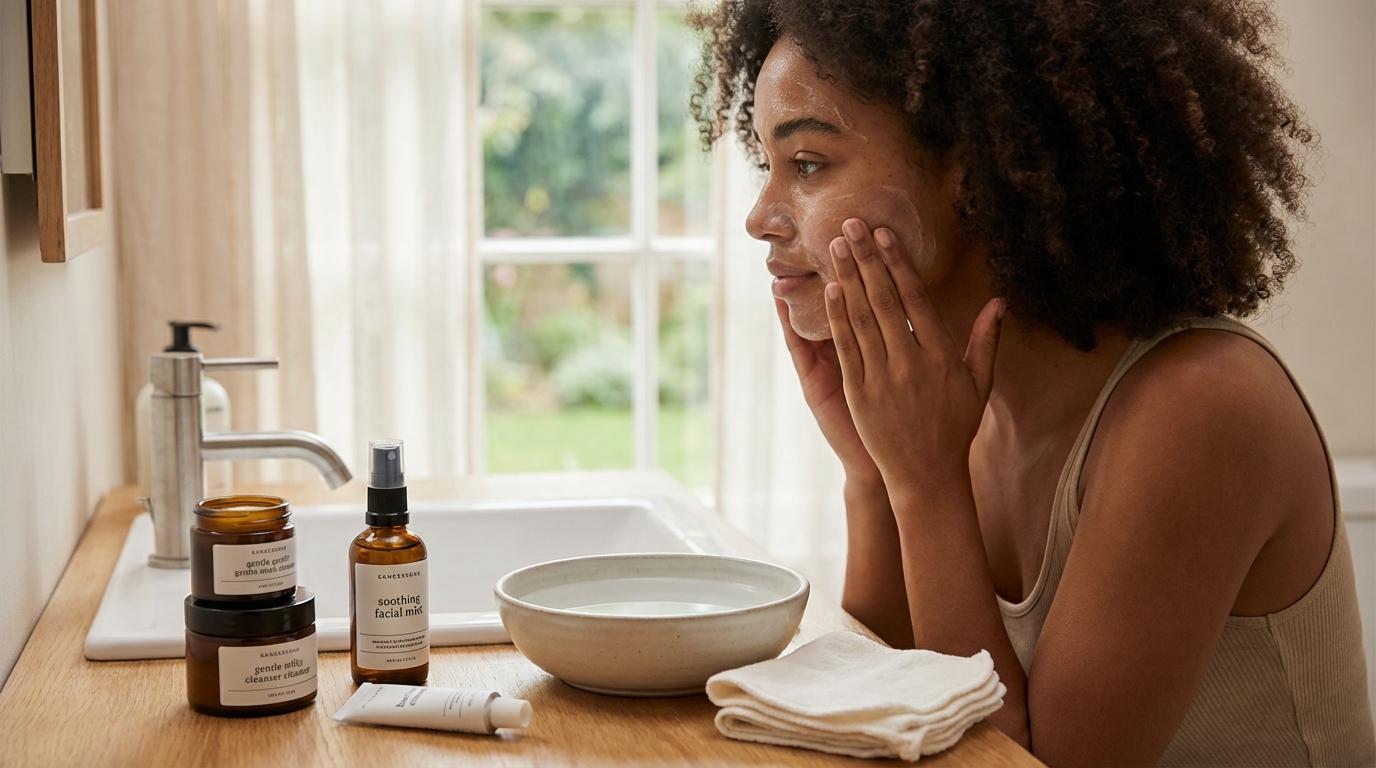
During allergy season, cleansing isn’t just about removing makeup or excess oil. It’s about getting those allergens off your face before they cause more inflammation.
The key is cleansing more frequently without over-stripping your skin. I recommend double cleansing in the evening. Start with a gentle micellar water or oil cleanser to physically remove pollen and debris, then follow with a hydrating cream or gel cleanser to actually wash your skin.
In the morning, even if you normally skip cleansing, consider at least a splash of water or a wipe with micellar water. If you went outside the day before or slept with windows open, there’s probably pollen on your pillowcase that transferred to your face overnight.
One product worth considering: cleansers with centella asiatica or green tea extract have anti-inflammatory properties that can help calm skin while cleaning it.
Calming Reactive Skin
When your skin is inflamed from allergens, you need to prioritize soothing ingredients over active treatments. This is not the time to push your retinol or try a new acid.
Ingredients that actually help calm allergic inflammation:
Centella Asiatica (Cica): This plant extract contains compounds called madecassoside and asiaticoside that have been shown to reduce inflammation and support skin healing. Look for it high on ingredient lists.
Niacinamide: At concentrations of 4-5%, niacinamide helps strengthen the skin barrier and reduce redness. It also has some anti-inflammatory properties that can help with histamine-related reactions.
Panthenol (Vitamin B5): Deeply hydrating and soothing, panthenol helps repair the skin barrier and calm irritation. It’s gentle enough for even the most reactive skin.
Colloidal oatmeal: There’s a reason oatmeal baths are recommended for itchy skin. Colloidal oatmeal has anti-inflammatory compounds called avenanthramides that specifically target histamine-related inflammation.
Building a Stronger Barrier
A compromised skin barrier lets more allergens in and more water out. During allergy season, barrier repair should be your priority.
Focus on moisturizers containing ceramides, cholesterol, and fatty acids in a ratio similar to what’s naturally in your skin. CeraVe and La Roche-Posay both make excellent options based on this principle.
Consider adding a thin layer of occlusive product at night. Pure petroleum jelly might not be glamorous, but it creates a physical barrier that protects your skin while you sleep. If that feels too heavy, look for moisturizers with dimethicone or squalane as occlusives.
During the day, sunscreen acts as an additional physical barrier between your skin and the environment. Mineral sunscreens with zinc oxide have the added benefit of being anti-inflammatory.
The Modified Allergy Season Routine
Morning:
- Gentle cleanse (even just micellar water counts)
- Soothing serum with niacinamide or centella
- Ceramide-rich moisturizer
- Mineral sunscreen (physical barrier plus protection)
Evening:
- Double cleanse to remove allergens thoroughly
- Soothing serum (same as morning or swap for something with panthenol)
- Heavier moisturizer or the same one with an occlusive layer on top
What to skip: Put your retinol, AHAs, BHAs, and vitamin C on hold until your skin calms down. These can all increase sensitivity, which is the last thing you need when allergens are already irritating your skin.
Beyond Skincare
Your skincare routine is only part of the equation. Some other strategies that can help:
Wash your pillowcases more frequently during peak pollen season. All that allergen buildup ends up on your face for eight hours every night.
Take a shower before bed, especially focusing on your hair. Hair traps a surprising amount of pollen throughout the day.
Keep windows closed during high pollen days, even if you love fresh air. Your skin will thank you.
If you take oral antihistamines for your allergies, they can help your skin too since they reduce the histamine response throughout your body.
When to See a Professional
If your skin reactions are severe, you develop hives, or your symptoms don’t improve with these adjustments, it might be worth seeing a dermatologist. They can prescribe stronger anti-inflammatories or help you figure out if something else is going on.
Allergy season is temporary, even when it feels endless. With the right adjustments to your routine, you can minimize how much it affects your skin and get through to the other side with your barrier intact.