
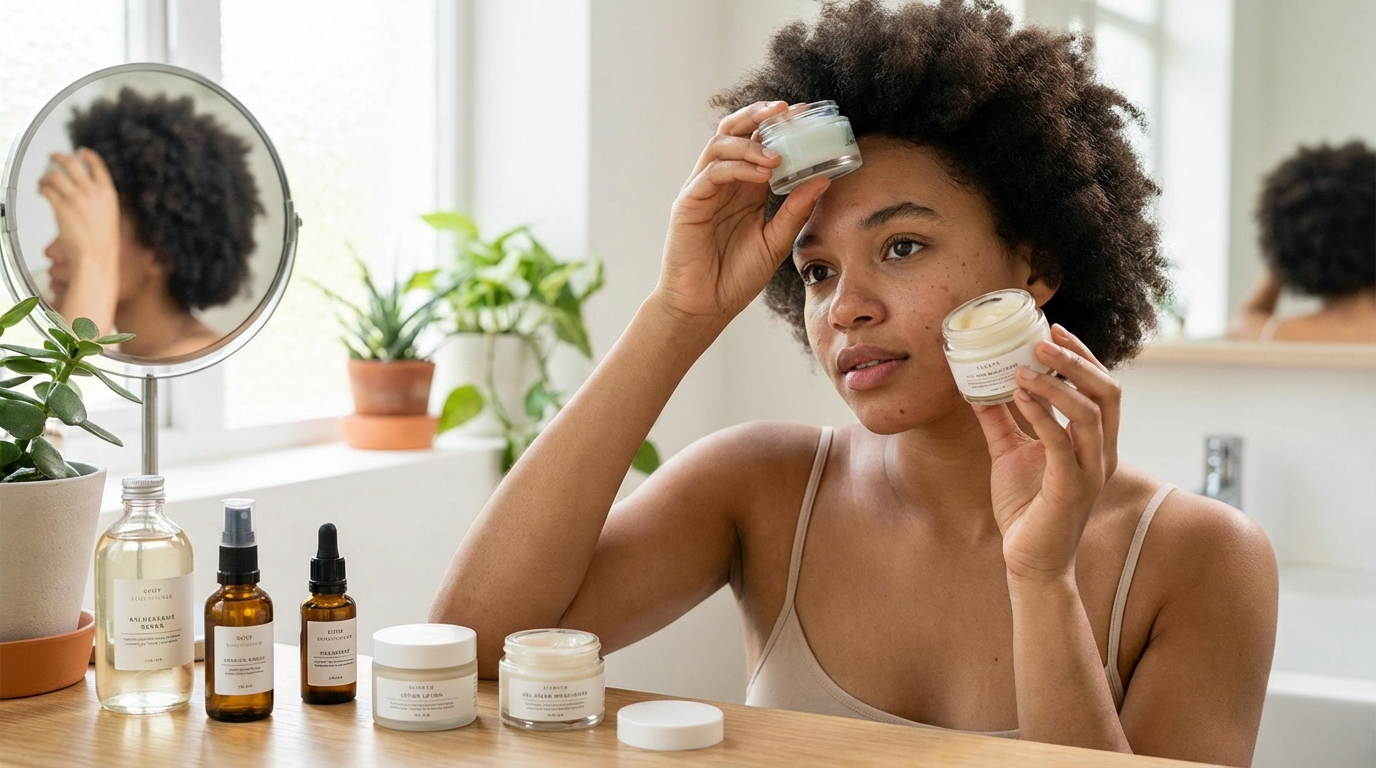
If your forehead looks like it could fry an egg by noon while your cheeks feel tight enough to crack, welcome to the combination skin club. You are not alone, and no, your skin is not broken. It just needs a little extra attention in different places.
I spent years slathering my entire face with the same heavy moisturizer, then wondering why my nose was a slip-n-slide while my cheeks still felt like sandpaper. Turns out, the solution is not finding one perfect product. It is treating your face like the complex landscape it actually is.
Why Your Face Has Multiple Personalities
Your T-zone (forehead, nose, and chin) naturally has five to ten times more oil glands than your cheeks. That is just biology, not a personal failing. These glands produce sebum, which keeps your skin protected and moisturized. But when some areas overproduce while others underproduce, you end up with this frustrating combination situation.
Several factors can make combination skin more pronounced: hormonal changes, weather shifts, using the wrong products, or stripping your skin with harsh cleansers. When you strip all the oil from your face, your T-zone often responds by producing even more sebum to compensate. Meanwhile, your cheeks just get drier. It is a vicious cycle.
The good news? Once you understand what is happening, you can work with your skin instead of against it.
The Multi-Zone Approach That Actually Works
Here is the strategy that changed everything for me: stop treating your face as one unit. You have at least two distinct skin types coexisting on one face, so why would one routine work for both?
This does not mean you need to double your skincare budget or spend an hour in the bathroom every morning. It means being strategic about where you apply certain products and choosing formulas that balance both needs.
Some products can go everywhere. Others need to be zone-specific. Once you figure out which is which, managing combination skin becomes surprisingly straightforward.
Morning Routine for Combination Skin
Step 1: Gentle Cleanser (Everywhere)
Start with a cleanser that will not strip your dry areas or leave your oily zones feeling untouched. Look for gel or cream cleansers labeled pH-balanced or gentle. Avoid anything that foams aggressively or contains sulfates, which can over-dry your cheeks while triggering more oil production in your T-zone.
CeraVe Hydrating Cleanser works well for this because it cleans without stripping, and you can find it at any drugstore for under fifteen dollars.
Step 2: Toner (Optional, But Helpful)
A good toner can help balance your skin pH after cleansing and prep it for the products that follow. For combination skin, look for hydrating ingredients like hyaluronic acid or soothing ones like rose water. Skip anything alcohol-based, which will just make your dry patches drier.
You can also use two different toners: an oil-controlling formula with niacinamide or witch hazel on your T-zone, and something more hydrating on your cheeks. But honestly, one balanced toner usually does the job.
Step 3: Lightweight Serum (Everywhere)
Hyaluronic acid serums are your best friend here. This ingredient pulls moisture into your skin without adding oil. It hydrates your dry cheeks while keeping your T-zone happy because it is water-based, not oil-based.
Apply a few drops to your entire face while your skin is still slightly damp from toner. This helps the hyaluronic acid work better since it needs water to do its job.
Step 4: Moisturizer (Zone-Specific)
This is where the multi-zone approach really shines. You have two options here:
Option A: Two Different Moisturizers
Use a lightweight, gel-based or water-based moisturizer on your T-zone. These formulas hydrate without adding shine or clogging pores. On your cheeks, use something richer, maybe a cream with ceramides or squalane that will actually sink in and provide lasting moisture.
Option B: One Balanced Formula
If maintaining two moisturizers sounds like too much, look for a gel-cream hybrid. These have a lightweight texture that will not overwhelm your oily areas but still provide enough hydration for dry patches. Apply a thin layer on your T-zone and a slightly thicker layer on your cheeks.
Step 5: Sunscreen (Everywhere, Non-Negotiable)
Sunscreen protects against premature aging and skin damage regardless of your skin type. For combination skin, look for lightweight, non-comedogenic formulas. Gel or fluid sunscreens tend to work better than thick creams because they do not leave your T-zone looking greasy.
SPF 30 is the minimum. Apply it as the last step of your morning routine, every single day, even when it is cloudy.
Evening Routine: When the Real Work Happens
Step 1: Remove Makeup and Sunscreen
If you wore makeup or sunscreen, start with an oil-based cleanser or micellar water to break down those products. This might seem counterintuitive when you have oily areas, but cleansing oils actually dissolve excess sebum more effectively than water-based cleansers alone.
Step 2: Second Cleanse
Follow up with your regular gentle cleanser. This double-cleansing method ensures you are actually getting your skin clean without having to scrub aggressively, which would irritate both your dry and oily areas.
Step 3: Targeted Treatments (Zone-Specific)
Evenings are when you can use your more active ingredients. On your T-zone, consider a BHA (beta hydroxy acid) like salicylic acid. It is oil-soluble, which means it can actually get into your pores and clear out the gunk that causes blackheads and excess shine. Use a low concentration, around 1-2%, to avoid irritation.
On your dry cheeks, skip the BHA and instead apply a hydrating treatment. A serum with niacinamide helps strengthen your skin barrier and retain moisture. You can also use a product with ceramides, which are like the mortar between your skin cells that keeps moisture locked in.
Step 4: Night Moisturizer
At night, you can afford to go a bit heavier since you are not worried about looking shiny during the day. Your T-zone still gets a lighter touch, but your cheeks can handle (and probably need) a richer night cream.
If you want to keep things simple, apply one moisturizer to your whole face but use a heavier hand on your cheeks and a lighter touch on your T-zone.
Weekly Treatments to Keep Things Balanced
Exfoliation: Once or Twice a Week
Chemical exfoliants are gentler and more effective than physical scrubs for combination skin. Those gritty scrubs can create tiny tears in your skin, which irritates dry areas and can trigger more oil production in your T-zone. Not ideal.
For your oily areas, AHAs (like glycolic or lactic acid) or BHAs work well. Start with lower concentrations and work your way up. Your dry areas might only need exfoliation once a week, while your T-zone might benefit from twice weekly.
According to Healthline guide on combination skin, over-exfoliating is one of the biggest mistakes people make. It strips your skin barrier and makes both oiliness and dryness worse.
Multi-Masking: Your New Favorite Thing
This is where having combination skin actually becomes kind of fun. Instead of choosing between a hydrating mask and a clarifying one, use both at the same time on different areas.
Apply a clay mask to your T-zone to absorb excess oil and unclog pores. At the same time, put a hydrating mask on your cheeks. Leave both on for 10-15 minutes, rinse, and your whole face gets exactly what it needs.
This approach is recommended by dermatologists and discussed in detail on Curology expert guide.
Ingredients to Look For (And What to Avoid)
Your New Best Friends
Hyaluronic Acid: Hydrates without adding oil. Works for every skin type and every zone on your face.
Niacinamide: This vitamin B3 derivative does almost everything. It helps regulate oil production in your T-zone while strengthening the moisture barrier on your dry areas. It is one of the few ingredients that genuinely helps both concerns.
Salicylic Acid: For oily areas only. Gets into pores and clears them out. Keep it at 2% or lower to avoid irritation.
Ceramides: These help repair and maintain your skin protective barrier. Great for dry cheeks.
Squalane: A lightweight oil that mimics your skin natural sebum. Despite being an oil, it does not clog pores and helps balance both dry and oily skin.
What to Avoid
Alcohol-based products: They might seem like they will help with oiliness, but they strip your skin and cause rebound oil production. Plus, they will wreck your dry areas.
Heavy coconut oil: Comedogenic, meaning it clogs pores. Your T-zone will not appreciate it.
Harsh foaming cleansers: If your cleanser makes your face feel squeaky clean, it is stripping your skin barrier. That tightness you feel is not cleanliness, it is damage.
Fragrance: Can irritate sensitive dry patches and is not doing anything good for your skin.
Budget-Friendly Products That Actually Work
You do not need to spend a fortune to manage combination skin. Here is a sample routine using drugstore products:
Cleanser: CeraVe Hydrating Facial Cleanser (around 5)
Toner: Thayers Witch Hazel Toner (around 0)
Serum: The Ordinary Hyaluronic Acid 2% + B5 (around )
T-Zone Moisturizer: Neutrogena Hydro Boost Water Gel (around 0)
Cheek Moisturizer: CeraVe Moisturizing Cream (around 6)
Sunscreen: La Roche-Posay Anthelios Clear Skin SPF 60 (around 5)
Total: under 00 for a complete routine that will last you months. As Annmarie Skin Care notes, effective skincare does not require expensive products, just the right approach.
Common Mistakes to Stop Making
Using one product everywhere: Your T-zone and cheeks have different needs. Treating them identically usually leaves one area unhappy.
Over-cleansing: Washing your face more than twice a day will not fix oiliness. It will make it worse.
Skipping moisturizer on oily areas: Your T-zone still needs hydration. When you skip moisturizer, your skin often produces more oil to compensate. Use a lightweight formula instead of nothing.
Switching products too often: Give new products at least 4-6 weeks before deciding they do not work. Skin takes time to adjust.
Ignoring your neck: Whatever you do to your face, extend it down your neck. Your neck ages too.
Seasonal Adjustments
Your combination skin will behave differently depending on the weather. In summer, you might find your T-zone gets oilier while your cheeks stay about the same. In winter, your cheeks might get significantly drier while your T-zone calms down.
Adjust your routine accordingly. Summer might mean lighter moisturizers everywhere and more frequent use of oil-absorbing products on your T-zone. Winter might mean richer creams on your cheeks and adding a hydrating serum to your routine.
Pay attention to what your skin is telling you and be willing to swap products as seasons change.
The Bottom Line
Managing combination skin is not complicated once you accept that your face needs a zoned approach. You are not looking for one perfect product. You are building a routine that addresses two different skin types living on the same face.
Start simple: a gentle cleanser, a lightweight hydrating serum, different moisturizers for different zones, and sunscreen. Add targeted treatments as you go. Pay attention to how your skin responds and adjust accordingly.
Your skin does not need to match some ideal of normal skin. It just needs the right care in the right places. And once you figure out that balance, combination skin becomes pretty easy to manage.