
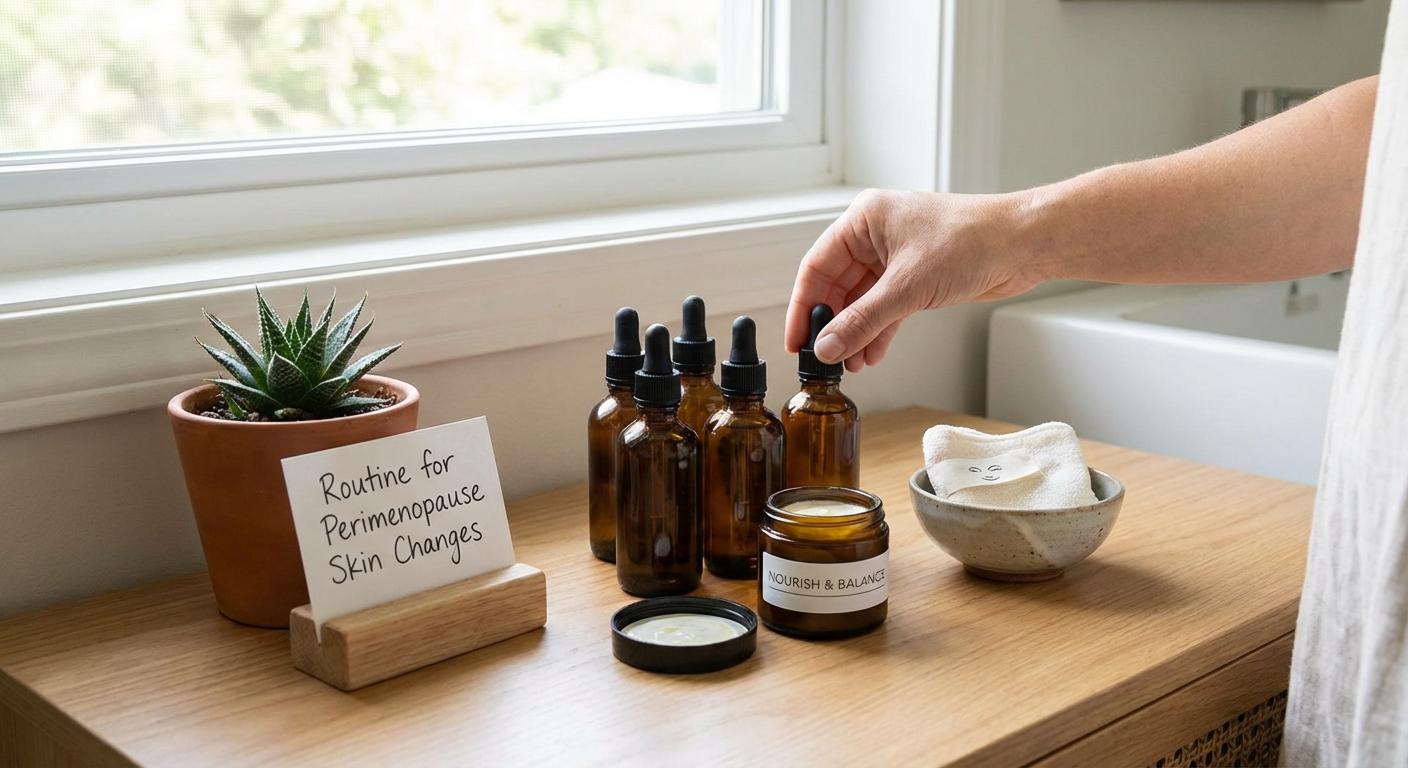
If your skin has suddenly started acting like it belongs to someone else, you’re not imagining things. Perimenopause, that transitional phase before menopause officially arrives, brings hormonal shifts that can completely change how your skin looks, feels, and behaves. I’m Priya, and as someone who studied biochemistry before becoming obsessed with skincare, I want to walk you through exactly what’s happening in your body and how to adapt your routine to work with these changes, not against them.
First, let’s acknowledge something important: this is a significant life transition, and it can feel disorienting when your skin suddenly doesn’t respond the way it used to. That frustration is completely valid. But understanding the science behind what’s happening can help you feel more in control and make smarter choices about your skincare.
What’s Actually Happening to Your Skin
During perimenopause, your estrogen levels begin a gradual (and sometimes not-so-gradual) decline. This isn’t just about hot flashes and mood changes. Estrogen plays a crucial role in skin health, and when levels drop, several things happen at the cellular level.
Estrogen stimulates collagen production, so when it decreases, your collagen levels follow. According to research published in the Dermatologic Clinics journal, women can lose up to 30% of their skin collagen within the first five years after menopause, with an additional 2% decline each year after that. This leads to thinner skin, increased fine lines, and loss of firmness.
But collagen isn’t the only thing affected. Your skin’s ability to retain moisture also decreases. The production of hyaluronic acid, ceramides, and sebum all slow down, which means your skin barrier becomes more vulnerable. Many women experience dryness they’ve never dealt with before, along with increased sensitivity and irritation.
And here’s something that catches many people off guard: while estrogen declines, androgens (male hormones that everyone has) become relatively more prominent. This hormonal shift can trigger acne, particularly along the jawline and chin, even if you haven’t had breakouts since your teenage years.
Building a Routine That Actually Helps
The good news is that adjusting your skincare routine can make a real difference in how your skin weathers this transition. The key is understanding which ingredients target which concerns, and being patient as you introduce them.
Morning Routine
Gentle Cleanser: Switch to a hydrating, non-foaming cleanser if you haven’t already. Your skin barrier is more fragile now, and harsh cleansers will only make dryness and sensitivity worse. Look for cream or milk cleansers with ingredients like glycerin or ceramides.
Vitamin C Serum: This antioxidant does double duty during perimenopause. It helps protect your remaining collagen from UV damage and environmental stressors, while also brightening hyperpigmentation that often increases during this time. The American Academy of Dermatology specifically recommends vitamin C for menopausal skin.
Rich Moisturizer: This is not the time for lightweight gels. Look for moisturizers containing ceramides, hyaluronic acid, squalane, or shea butter. These ingredients help reinforce your skin barrier and lock in hydration. Apply to slightly damp skin to maximize absorption.
Sunscreen: Non-negotiable, but you knew that already. Your skin is now more photosensitive, which means UV damage happens more easily and takes longer to repair. SPF 30 or higher, broad spectrum, every single day.
Evening Routine
Double Cleanse: If you wear makeup or sunscreen (which you should), start with an oil-based cleanser to dissolve it, then follow with your gentle water-based cleanser.
Retinoid: If there’s one ingredient dermatologists consistently recommend for perimenopause skin, it’s retinoids. As dermatologist Dr. Renita Ahluwalia notes, retinoids “remain the single best topical for structural anti-aging changes.” They stimulate collagen production, speed up cell turnover, and help with both fine lines and acne.
However, if you’re new to retinoids, start slowly. Begin with a low concentration two or three times per week, and gradually increase frequency as your skin adapts. If your skin is already very dry or sensitive, consider starting with retinaldehyde or bakuchiol, which are gentler alternatives.
Night Cream or Facial Oil: Layer a rich night cream or a few drops of facial oil over your retinoid once it’s absorbed. Look for products with niacinamide, which helps boost ceramide production and calm inflammation. Niacinamide is especially helpful for sensitive, perimenopausal skin because it reduces redness while strengthening the barrier.
Ingredients That Make a Difference
Let me break down the key players you should be looking for:
Ceramides: These lipids are essential for barrier function. When your natural ceramide production slows down, adding them topically helps reduce water loss and protect against irritants.
Hyaluronic Acid: A humectant that attracts and holds water in the skin. It provides immediate hydration and helps plump fine lines temporarily. Look for products with multiple molecular weights for better penetration.
Peptides: These small protein fragments signal your skin to produce more collagen. They’re a great option if retinoids are too irritating, though they work differently and more gradually.
Niacinamide: This form of vitamin B3 supports barrier function, reduces redness and blotchiness, and helps with uneven skin tone. It plays well with most other active ingredients.
Retinoids: The gold standard for collagen stimulation and cell turnover. Available over the counter as retinol, or by prescription as tretinoin. Start low and go slow.
When to Simplify
Here’s something important: if your skin becomes irritated or sensitized, less is more. Strip back to basics for a few weeks. That means gentle cleanser, hydrating serum, barrier cream, and sunscreen. Nothing else. Once the irritation calms down, reintroduce active ingredients one at a time, starting with the lowest concentration and using them only once or twice per week.
This isn’t failure. It’s responding to what your skin is telling you. Perimenopause makes skin more reactive, so even products you’ve used for years might suddenly cause problems. Pay attention and adjust accordingly.
Beyond Skincare: Working With Your Body
While topical products are important, they’re just one piece of the puzzle. What’s happening inside your body matters too.
Nutrition: Omega-3 fatty acids, particularly EPA, help regulate oil production and protect collagen. Fatty fish, walnuts, and flaxseeds are good sources. A diet rich in protein from lean meats, fish, eggs, and legumes provides the building blocks your body needs to produce collagen.
Hydration: Drink enough water. It sounds basic, but when your skin is already struggling to retain moisture, dehydration shows up faster.
Sleep: Your body does most of its repair work while you sleep. Prioritizing rest isn’t just good for your energy levels, it’s good for your skin.
Stress Management: Chronic stress affects hormone levels and can worsen skin issues. Whatever helps you decompress, whether that’s yoga, walking, reading, or something else entirely, matters for your skin too.
A Note on Professional Help
If you’re experiencing significant skin changes, it’s worth having a conversation with your healthcare provider. Some women benefit from prescription options like topical estriol, which can help restore moisture and support collagen production without the systemic effects of hormone replacement therapy. This is especially worth exploring if over-the-counter products aren’t providing enough relief.
For stubborn acne that doesn’t respond to regular skincare, a dermatologist can offer treatments like spironolactone or topical prescriptions targeted at hormonal breakouts.
Your Routine Is Going to Evolve
Perimenopause typically lasts four to eight years, and your skin’s needs will shift throughout this time. What works perfectly now might need adjustment in a year or two. That’s not a problem, it’s just the nature of this transition.
The most important thing is to approach your skincare with curiosity rather than frustration. Your skin isn’t betraying you. It’s responding to significant internal changes, and with the right support, it can still look and feel healthy throughout this phase of your life.
Start with the basics: hydration, barrier support, sun protection. Add targeted treatments like retinoids and vitamin C gradually. Listen to your skin when it asks for a break. And remember that taking care of yourself during perimenopause isn’t about fighting against your body. It’s about giving it what it needs to thrive.