
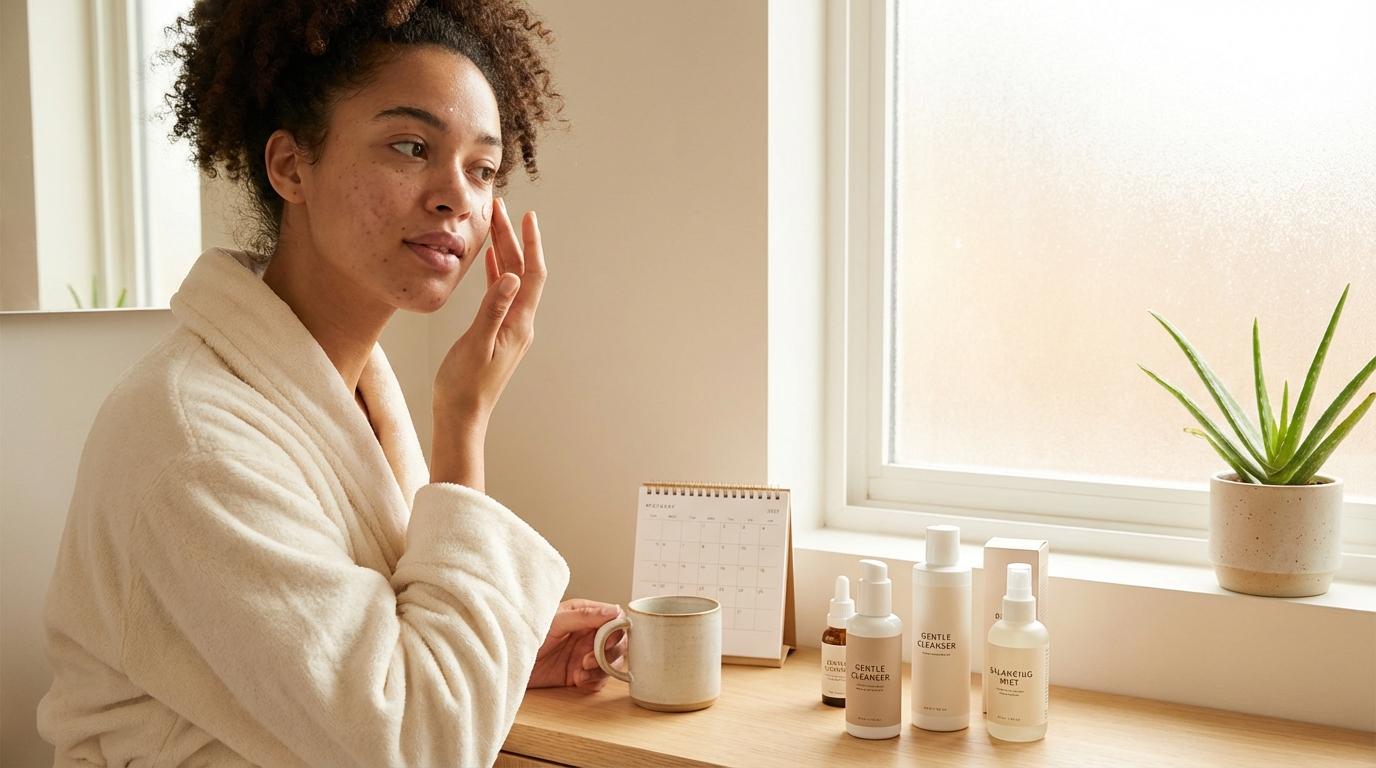
If your skin seems to have a mind of its own every month, you’re not imagining it. That breakout showing up like clockwork? The sudden dryness right when you need to look your best? It’s all connected to your menstrual cycle, and once you understand the pattern, you can actually work with it instead of against it.
Your hormones fluctuate throughout your cycle, and your skin responds to every shift. Estrogen, progesterone, and even testosterone levels rise and fall at different points, affecting everything from oil production to how well your skin holds onto moisture. The good news is that you can adjust your routine to match these changes and keep your skin calmer, clearer, and more comfortable all month long.
Understanding How Your Cycle Affects Your Skin
Before we get into specific routines, here’s a quick breakdown of what’s happening hormonally throughout your cycle:
- Days 1-5 (Period): Estrogen and progesterone drop to their lowest levels. Your skin barrier weakens, and you might notice more dryness, sensitivity, and even dullness.
- Days 6-14 (Follicular Phase): Estrogen rises steadily. This is when your skin typically looks its best, with better hydration and a natural glow.
- Days 14-16 (Ovulation): Estrogen peaks and testosterone surges. Oil production starts increasing, setting the stage for potential breakouts.
- Days 17-28 (Luteal Phase): Progesterone takes over, triggering more oil production and inflammation. This is when hormonal acne typically shows up, especially along the chin and jawline.
Now let’s break down exactly how to adjust your routine for each phase.
The Week Before Your Period: Preparation Mode
This is your luteal phase, and it’s when most people start noticing trouble brewing. Progesterone is running the show, which means your sebaceous glands are working overtime. Pores swell slightly from inflammation, making them easier to clog. It’s basically the perfect storm for breakouts.
Your focus during this week should be keeping pores clear and controlling oil without stripping your skin.
Morning routine:
- Cleanse with a gentle foaming or gel cleanser. You want something that removes excess oil without being harsh.
- Use a lightweight, oil-free moisturizer. Skipping moisturizer because your skin feels oily will backfire.
- Apply SPF. Non-negotiable, always.
Evening routine:
- Double cleanse if you wear makeup or sunscreen. An oil-based cleanser first, then your regular cleanser.
- This is the time to use your active treatments. Salicylic acid (BHA) is particularly helpful right now because it can get inside pores and clear out the gunk. Use it 2-3 times per week.
- A niacinamide serum can help regulate oil production and calm inflammation before it starts.
- Finish with a lightweight moisturizer.
If you’re prone to hormonal breakouts on your chin and jawline, you can apply a spot treatment with benzoyl peroxide or salicylic acid to those areas preventatively. According to dermatologist Dr. Sandra Lee, being proactive during this phase can significantly reduce the severity of period breakouts.
During Your Period: Gentle Support
When your period arrives, your hormones hit their lowest point. While this sounds like it might give your skin a break from oil and acne, it creates different challenges. Your skin barrier is at its weakest, meaning it doesn’t retain moisture as well and is more reactive to products and environmental stressors.
This is not the time to try new products or do aggressive treatments. Your skin needs gentle, supportive care.
Morning routine:
- Switch to a cream or milky cleanser. Anything too stripping will make things worse.
- Use a hydrating serum with hyaluronic acid or glycerin to help your skin hold onto moisture.
- A richer moisturizer than usual is a good idea, even if you normally lean toward lighter formulas.
- SPF, of course.
Evening routine:
- Gentle cleanse. If you double cleanse, make sure your oil cleanser is fragrance-free and non-irritating.
- Skip the actives. Seriously. Your skin barrier is compromised, and acids or retinoids can cause irritation that takes weeks to calm down. If you absolutely must use something, stick to low-percentage lactic acid, which is gentler and also hydrating.
- Focus on barrier-supporting ingredients like ceramides, squalane, or centella asiatica.
- Consider adding a facial oil on top of your moisturizer if your skin feels particularly parched.
If you have existing breakouts from the week before, resist the urge to attack them with every acne product you own. Gentle treatment with a hydrocolloid patch overnight is more effective and less damaging to your already stressed skin.
Post-Period: Recovery and Reset
Once your period ends, estrogen starts climbing again, and this is when your skin enters its best phase. You’ll probably notice improved hydration, fewer breakouts, and a more even tone. Your skin can handle more, so this is your window to address any concerns.
Morning routine:
- You can return to your regular cleanser.
- A vitamin C serum works well during this phase to brighten any post-inflammatory marks from last week’s breakouts.
- Your regular moisturizer and SPF.
Evening routine:
- This is the time to reintroduce your actives. Retinoids, glycolic acid, or vitamin C can all be used more freely now.
- If you’ve been meaning to do a chemical peel or try a new active, the follicular phase is the safest time for it.
- Focus on any textural issues or hyperpigmentation that needs attention.
According to dermatologist Dr. Alexis Granite, the rise in estrogen during this phase helps your skin produce more collagen and hyaluronic acid naturally, so you’re essentially working with your body’s own resources.
Around Ovulation: The Brief Glow
Mid-cycle is typically when your skin looks its best. Estrogen is at its peak, and everything just seems to work. This is often when people get compliments on their skin or feel comfortable going makeup-free.
Enjoy it, but don’t get complacent. Testosterone also spikes during ovulation, which kicks oil production into higher gear. What you do in the days right after ovulation can affect how bad your pre-period breakouts get.
Key adjustments:
- Continue using your actives, but start being more consistent with oil-controlling ingredients like niacinamide.
- If you use clay masks, this is a good time for one. They help absorb excess oil before it becomes a problem.
- Keep your pillowcases clean and change them frequently. The extra oil your skin is producing can build up.
Products That Work Throughout Your Cycle
You don’t need a completely different routine for each phase. A few strategic swaps and additions are enough. Here are the essentials:
- Salicylic acid cleanser or treatment: Your pre-period best friend. Something in the 0.5-2% range works for most people.
- Niacinamide serum: Helps with oil control and inflammation. Gentle enough to use throughout your cycle.
- Hyaluronic acid serum: Essential during your period when moisture retention drops.
- Ceramide-rich moisturizer: Great for barrier support during sensitive days.
- Hydrocolloid patches: For when breakouts happen despite your best efforts.
As noted by skincare experts at Tatcha, the goal isn’t to overhaul your routine constantly but to make small, strategic adjustments based on what your skin needs at any given time.
When Cycle Syncing Isn’t Enough
If you’re dealing with severe hormonal acne that doesn’t respond to topical treatments, or if your skin issues extend beyond the normal ups and downs of your cycle, it’s worth talking to a dermatologist. According to Dr. Dennis Gross, some people benefit from prescription treatments like spironolactone or hormonal birth control to manage hormone-related skin issues.
Cycle syncing works best for people with relatively normal skin that just gets a bit temperamental around their period. If you have persistent acne or other chronic skin conditions, a consistent routine prescribed by a dermatologist is usually more effective than trying to time everything with your cycle.
Tracking Your Skin Alongside Your Cycle
If you’re not already tracking your period, start. Most period tracking apps let you log skin symptoms, which can help you identify your personal patterns. Not everyone follows the textbook 28-day cycle, and your skin might react differently than what’s described here.
Pay attention to:
- When breakouts typically appear
- When your skin feels driest or most sensitive
- Which products seem to work better at different times
After a few months of tracking, you’ll have a much clearer picture of your skin’s unique rhythm and can adjust your routine accordingly.
The Bottom Line
Your skin is not betraying you every month. It’s responding to very real hormonal shifts that you can anticipate and prepare for. By being a little gentler during your period, more proactive in the week before, and taking advantage of your skin’s strongest phase to address concerns, you can maintain clearer, calmer skin throughout your entire cycle.
The key is consistency with the basics and flexibility with the details. Listen to your skin, track your patterns, and remember that some fluctuation is completely normal. You’re working with biology, not against it.