
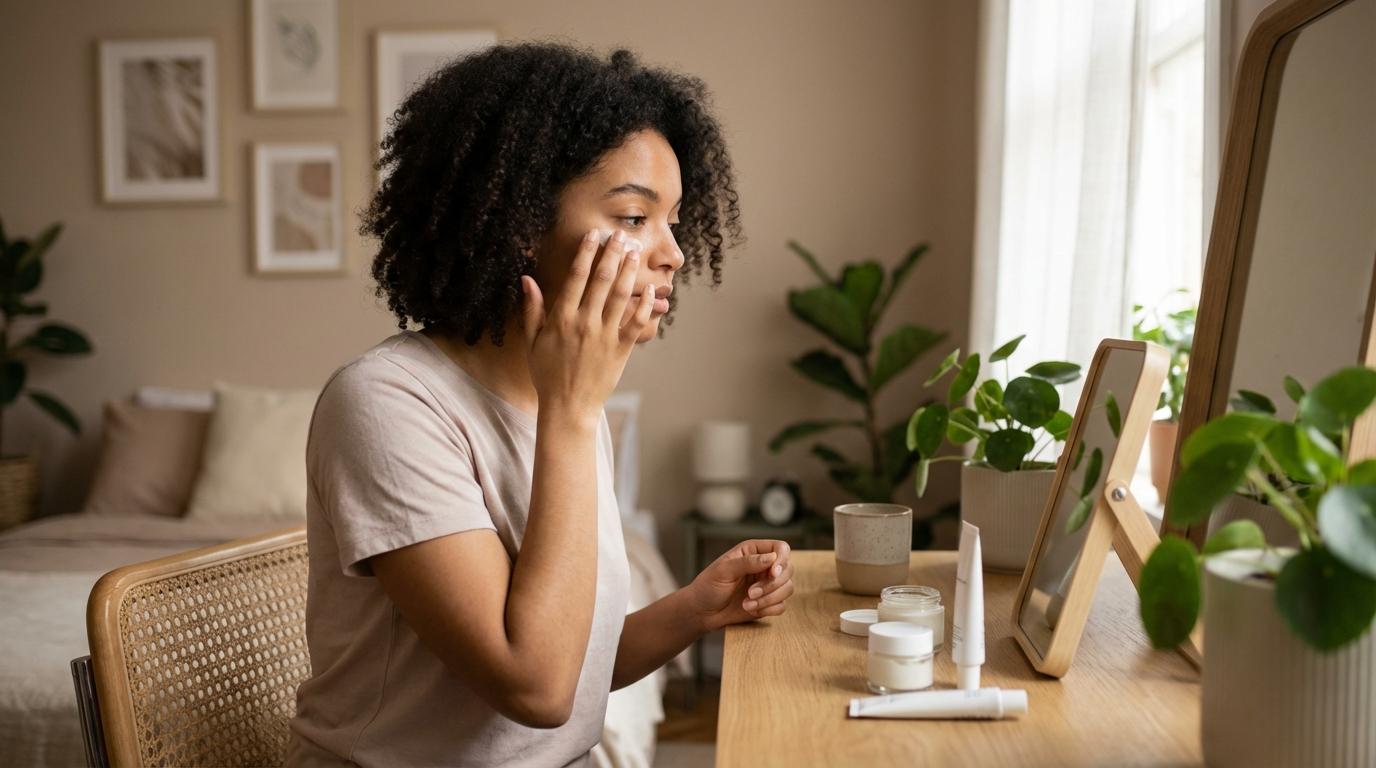
Dark circles have this annoying habit of making you look exhausted even when you slept eight solid hours. But here’s the thing most skincare advice gets wrong: not all dark circles are created equal. The reason your friend’s vitamin C eye cream worked wonders while yours did nothing? You probably have completely different types of under-eye darkness. Let me break down what’s actually going on beneath your eyes and how to build a routine that addresses YOUR specific situation.
The Four Types of Under-Eye Darkness
Before you buy another eye cream, you need to figure out which type of dark circles you’re dealing with. This matters because the treatment approach is totally different for each one.
Vascular dark circles show up as blue or purple shadows. They’re caused by blood vessels showing through thin under-eye skin or poor circulation in the area. If you press gently on the skin and the color fades temporarily, you’re likely dealing with this type. These tend to look worse when you’re tired, dehydrated, or have been staring at screens all day. According to the Cleveland Clinic, the skin under your eyes is some of the thinnest on your body, which is why blood vessels become visible so easily.
Pigmented dark circles appear brown or grayish and are caused by excess melanin production. These are more common in medium to deeper skin tones and can be triggered by sun exposure, chronic eye rubbing (yes, your allergies might be making things worse), or genetics. Unlike vascular circles, pressing on them won’t change the color at all.
Structural or shadow dark circles are caused by the natural anatomy of your face. A deep tear trough (that groove between your lower eyelid and cheek) creates shadows that look like dark circles even when there’s no actual pigmentation issue. These become more pronounced with age as we lose fat and collagen in that area.
Combination dark circles are the most common. Most people have some mix of the above, which is why a single-ingredient approach often falls flat.
What Actually Causes Under-Eye Darkness
Understanding the root cause helps you target your routine more effectively. Here are the main culprits:
Genetics plays a huge role. If your parents have dark circles, there’s a solid chance you inherited that tendency. The Mayo Clinic notes that periorbital hyperpigmentation often runs in families. This doesn’t mean you can’t improve the appearance, but it does mean you should set realistic expectations.
Aging thins the skin and causes volume loss. The fat pads under your eyes shrink, collagen breaks down, and suddenly those blood vessels become way more visible. This process accelerates in your late twenties and continues from there.
Lifestyle factors that make dark circles worse include lack of sleep (no surprise there), dehydration, excessive alcohol, smoking, high sodium intake, and allergies. These don’t cause dark circles on their own, but they definitely amplify whatever tendency you already have.
Sun exposure triggers melanin production and can worsen pigmented dark circles significantly. Your under-eye area needs sunscreen just like the rest of your face.
The Honest Truth About Products
I need to be upfront with you: eye creams cannot permanently eliminate dark circles. What they CAN do is temporarily reduce their appearance and, with consistent use, improve the overall skin quality in that area. That’s still valuable, but don’t expect a tube of cream to do what only fillers or laser treatments can accomplish.
That said, the right ingredients can make a noticeable difference. Here’s what the research actually supports:
Caffeine is one of the most effective ingredients for vascular dark circles. It constricts blood vessels and reduces fluid buildup, which is why your under-eyes often look better after your morning coffee (the topical version works too). Board-certified dermatologist Dr. Dendy Engelman calls caffeine one of her favorite ingredients for the eye area because it addresses puffiness and poor circulation simultaneously. Use caffeine products in the morning for best results.
Vitamin C works well for pigmented dark circles. It inhibits excess melanin production and provides antioxidant protection. A 2024 review in the Journal of Cosmetic Dermatology confirmed that vitamin C supports collagen synthesis, which helps thicken the thin skin under your eyes over time. Look for stable forms like ascorbic acid or sodium ascorbyl phosphate. Be sure to check out caring for sensitive skin.
Retinol addresses multiple concerns. It speeds up cell turnover, boosts collagen production, and helps with discoloration. The catch? The under-eye area is sensitive, so you need a formula specifically designed for that zone, used sparingly. Start with a low concentration and work up gradually.
Niacinamide is a gentler option for pigmentation. It can help decrease hyperpigmentation while strengthening the skin barrier. Good choice if retinol irritates you.
Hyaluronic acid won’t fix dark circles directly, but properly hydrated under-eye skin looks plumper and reflects light better, which reduces the appearance of shadows.
Building Your Under-Eye Routine
Here’s how to structure your approach based on dark circle type:
For vascular (blue/purple) dark circles:
- Morning: Caffeine eye cream or serum, then sunscreen
- Evening: Hydrating eye cream with hyaluronic acid
- Consider: Cold compresses in the morning (seriously, they help)
For pigmented (brown) dark circles:
- Morning: Vitamin C eye serum, then sunscreen (this is non-negotiable)
- Evening: Retinol eye cream (start 2-3x per week, build up gradually)
- Consider: Being extra diligent about sun protection on this area
For structural (shadow) dark circles:
- Topical products have limited impact here
- Focus on hydration to keep skin plump
- Consider: Consulting a dermatologist about fillers if it bothers you
For combination (most people):
- Morning: Caffeine plus vitamin C, then sunscreen
- Evening: Retinol eye cream or niacinamide if you’re sensitive
- Weekly: Consider a gentle eye mask for extra hydration
The Lifestyle Factors That Actually Move the Needle
Products help, but lifestyle changes often make more difference than any cream. I know that’s not what skincare marketing wants you to believe, but the research backs this up.
Sleep quality matters more than quantity. Seven to eight hours is the baseline, but how you sleep matters too. Sleeping on your back with your head slightly elevated prevents fluid from pooling around your eyes overnight. If you’re a side sleeper, you might notice one eye is consistently puffier than the other. For more details, the role of sleep in skin repair.
Hydration affects everything. Dehydrated skin looks thinner and sallower, which makes blood vessels more visible. Track your water intake for a week and see if increasing it helps.
Sodium and alcohol are sneaky culprits. Both cause fluid retention and puffiness, which casts more shadows under your eyes. You don’t have to eliminate them, but notice how your under-eyes look after a salty meal or a few drinks.
Allergies need treatment. If you’re constantly rubbing your eyes because of allergies, you’re triggering inflammation and potentially causing post-inflammatory hyperpigmentation. Address the allergies themselves, not just the dark circles they cause. UCLA Health confirms that allergic shiners (dark circles from allergies) are a real phenomenon.
Screen breaks reduce eye strain. Staring at screens causes you to blink less, which leads to eye strain and increased blood flow to that area. The 20-20-20 rule (every 20 minutes, look at something 20 feet away for 20 seconds) actually helps.
How Long Until You See Results
This is where patience becomes essential. Most eye creams need four to eight weeks of consistent use before you can fairly judge their effectiveness. Here’s why:
Your skin cells turn over approximately every 30 days. Any ingredient that affects cell turnover or collagen production needs at least one full cycle to show results. Expecting overnight changes from topical products just sets you up for disappointment.
Week 1-2: Hydration improvements might be visible. Puffiness from caffeine products may reduce.
Week 4-6: This is when most people start noticing changes in pigmentation or overall skin quality. If you’re using vitamin C or retinol, stick with it through this window.
Week 8-12: Clinical studies typically measure results at this point. If you’ve been consistent for two months with no improvement, the product probably isn’t right for your specific type of dark circles.
Here’s a hard truth: if your dark circles are primarily structural or genetic, topical products may only take you so far. That’s not a failure on your part. Some concerns respond better to professional treatments like fillers, laser therapy, or chemical peels.
When to See a Professional
Consider booking a dermatologist appointment if:
- Dark circles appeared suddenly with no obvious cause
- Only one eye is affected (could indicate an underlying issue)
- You’ve tried consistent topical treatment for 8+ weeks with zero improvement
- The darkness is accompanied by significant swelling or changes in vision
A dermatologist can determine your specific type of dark circles and recommend treatments that go beyond what’s available over the counter. Options like prescription retinoids, chemical peels, laser treatments, or hyaluronic acid fillers might be worth exploring depending on what’s causing your under-eye darkness.
Your Realistic Expectations
Here’s what I want you to take away: under-eye darkness is usually manageable but rarely completely fixable with topicals alone. The goal isn’t perfection. It’s improvement and healthy skin.
Start by identifying your type of dark circles. Choose products with ingredients that address your specific concerns. Give those products an honest eight weeks of consistent use. Pay attention to the lifestyle factors that amplify the problem. And if you’ve done all that and still want more improvement, know that professional options exist.
Your under-eye routine doesn’t need to be complicated or expensive. A caffeine serum, a good eye cream, and sunscreen can make a real difference when used consistently over time. Just don’t expect any product to override genetics or aging completely. That’s not defeatism. That’s just understanding how skin actually works so you can set yourself up for success rather than constant disappointment.