
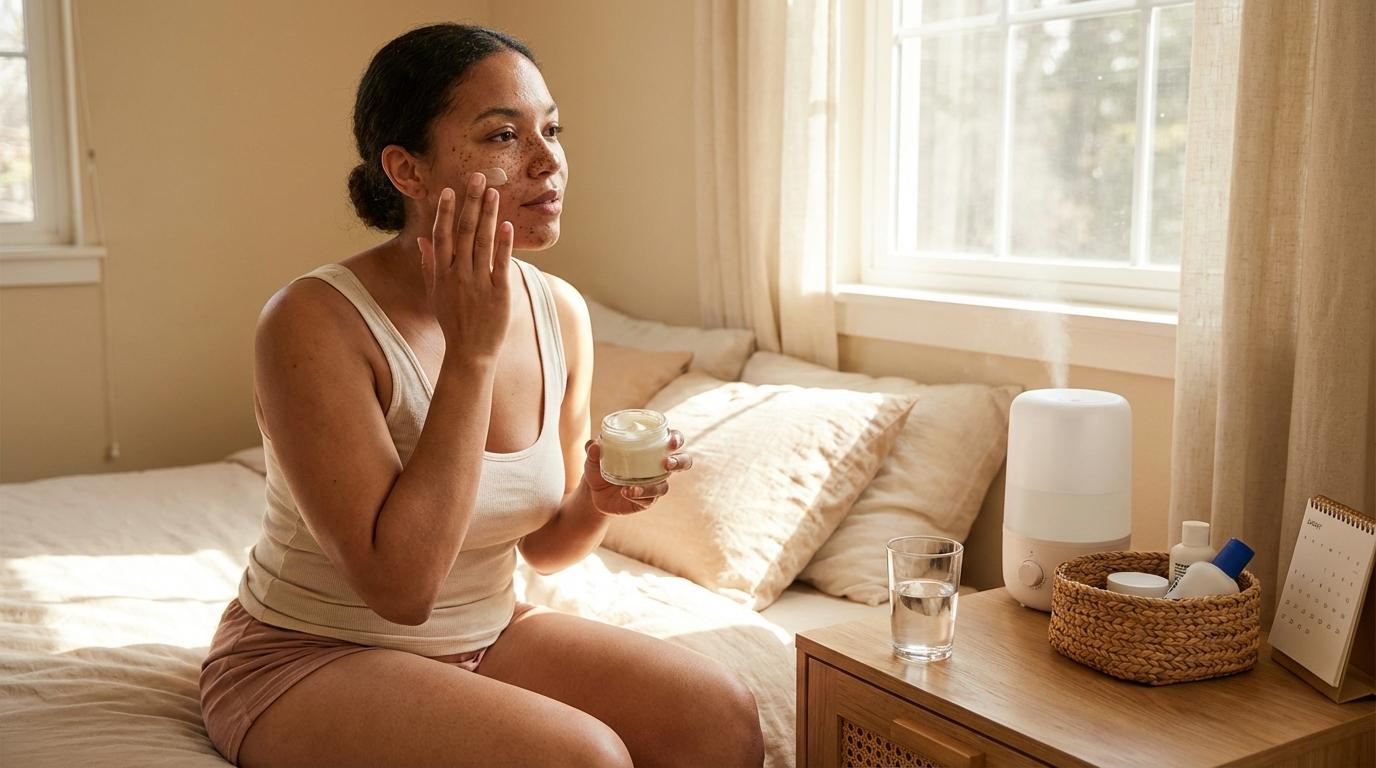
So you just moved to Arizona, New Mexico, Colorado, or somewhere else where the air feels like it’s actively trying to steal moisture from your face. First of all, welcome to your new home. Second, your skin is probably already staging a protest. That tight, flaky feeling? The sudden appearance of fine lines you swear weren’t there before? Totally normal. Your skin is just confused, and it needs you to help it figure out the new rules.
I’m going to walk you through exactly how to adjust your skincare routine for dry climates, why certain products become non-negotiable, and how long this whole transition actually takes. Spoiler: your skin is more adaptable than you think, but it needs a little patience and the right support.
Why Dry Climates Hit Your Skin So Hard
Let’s talk about what’s actually happening to your skin when you move from, say, Florida to Phoenix. The concept here is called transepidermal water loss, or TEWL if you want to sound fancy at parties. Basically, water naturally evaporates from your skin into the air. In humid environments, this happens slowly because the air already has moisture in it. In dry climates? The air is thirsty, and it pulls moisture from your skin way faster than normal.
Your skin’s outer layer, the stratum corneum, acts like a brick wall held together by mortar. The “bricks” are dead skin cells, and the “mortar” is a mixture of lipids including ceramides, cholesterol, and fatty acids. In dry air, this mortar can crack and weaken, leaving gaps that let even more water escape. It becomes a cycle: dry air causes damage, damage causes more water loss, more water loss causes more damage.
According to the American Academy of Dermatology, dry climates are one of the primary environmental triggers for compromised skin barriers. This isn’t just about comfort; a damaged barrier makes your skin more reactive to everything from retinoids to pollution.
The First Two Weeks: Damage Control Mode
When you first arrive in a dry climate, your skin is in shock. This isn’t the time to introduce new actives or experiment with that trendy serum you’ve been eyeing. This is the time to strip back and protect.
Start by swapping any foaming or gel cleansers for something creamy or milky. Foaming cleansers often contain sulfates that strip your skin’s natural oils, and while your skin could handle that in a humid climate, it can’t afford that loss anymore. Look for cleansers described as “hydrating,” “cream,” or “milk” formulas. CeraVe Hydrating Cleanser, La Roche-Posay Toleriane Hydrating Gentle Cleanser, and Vanicream Gentle Facial Cleanser are all solid, affordable picks.
Next, add an occlusive layer to your routine if you don’t already have one. Occlusives are ingredients that physically sit on top of your skin and prevent water from escaping. Think of them as a protective seal. Petrolatum (yes, plain Vaseline) is the gold standard, preventing up to 98% of water loss according to dermatological research. Other options include squalane, shea butter, and dimethicone. You can apply a thin layer of Vaseline or Aquaphor over your moisturizer at night, a technique sometimes called “slugging.”
During these first two weeks, pause any potentially irritating actives. Retinoids, AHAs, BHAs, and vitamin C can all increase sensitivity when your barrier is already stressed. I know it feels counterintuitive to stop using products that are “good” for your skin, but right now your priority is repair, not treatment.
Building Your Dry Climate Routine
Once the initial shock period passes, you’ll want to build a routine that’s specifically designed for low humidity. Here’s what that looks like:
Morning:
- Gentle cream cleanser (or just rinse with water if your skin is really dry)
- Hydrating toner or essence
- Hyaluronic acid serum, applied to damp skin
- Rich moisturizer with ceramides
- Sunscreen (still non-negotiable, even in winter)
Evening:
- Oil cleanser to remove sunscreen (double cleansing matters)
- Gentle cream cleanser
- Hydrating toner or essence
- Treatment products (once your barrier has healed)
- Rich moisturizer or sleeping mask
- Occlusive seal (Vaseline, Aquaphor, or similar)
The key differences from a routine you might have used in a humid climate: everything is heavier, and you’re layering hydration at multiple steps. Where you might have gotten away with a lightweight gel moisturizer before, now you need something with more substance.
Hyaluronic Acid: The Dry Climate Plot Twist
Here’s something that trips up a lot of people who move to dry climates: hyaluronic acid can actually make things worse if you use it incorrectly.
Hyaluronic acid is a humectant, meaning it draws water to itself. In a humid environment, it pulls moisture from the air into your skin. Beautiful. But in a dry environment, there’s no moisture in the air to pull. So what does it do instead? It can pull moisture from the deeper layers of your skin up to the surface, where it evaporates. Not so beautiful.
The solution isn’t to ditch hyaluronic acid entirely. The solution is to always apply it to damp skin and immediately seal it with a moisturizer and occlusive. Spritz your face with water or use a hydrating toner, apply your HA serum while your skin is still wet, then immediately layer your moisturizer on top. This gives the hyaluronic acid moisture to work with and prevents it from going rogue.
If you find that hyaluronic acid still doesn’t work for you in a dry climate, consider switching to other hydrating ingredients like glycerin, aloe, or polyglutamic acid, which some people find more forgiving in low humidity.
The Humidifier Situation
I’m going to be direct: if you’ve moved to a dry climate, a humidifier is not optional. It’s as essential as your moisturizer, maybe more so.
When you’re sleeping, you’re not actively applying products to your skin. If your bedroom air is at 10-20% humidity (common in desert climates, especially with heating or air conditioning running), your skin is losing moisture all night long. No amount of product can fully counteract eight hours of that environment.
A humidifier in your bedroom brings indoor humidity up to a healthier 40-60% range. This alone can make a significant difference in how your skin looks and feels. Dermatologist Dr. Whitney Bowe frequently recommends humidifiers as a first-line intervention for patients dealing with dry skin issues.
You don’t need anything fancy. A basic cool mist humidifier that you can pick up for under thirty dollars will do the job. Just make sure to clean it regularly to prevent mold and bacteria growth, and use distilled water if possible to avoid mineral buildup.
Some people also keep a small humidifier at their desk if they work from home, or use a portable one in hotel rooms when traveling. Your skin will thank you for the extra consideration.
Product Texture Upgrades You’ll Need to Make
One thing I see a lot is people clinging to their lightweight, “barely there” products when they move to dry climates. I get it. Those products feel elegant and don’t leave you feeling greasy. But your skin’s needs have fundamentally changed.
Here’s a general guide for upgrading textures:
If you were using: Gel cleanser. Switch to: Cream or milk cleanser.
If you were using: Water-based toner. Switch to: Hydrating essence or milky toner.
If you were using: Lightweight serum. Switch to: Serum plus a facial oil, or a richer serum formula.
If you were using: Gel moisturizer. Switch to: Cream moisturizer or barrier repair cream.
If you were using: Nothing at night. Switch to: Sleeping mask or occlusive.
Look for moisturizers that specifically mention “barrier repair” or contain ceramides, which help rebuild that lipid “mortar” I mentioned earlier. Some affordable options include CeraVe Moisturizing Cream, Vanicream Moisturizing Cream, and Eucerin Original Healing Cream. For something a bit more elegant, consider La Roche-Posay Cicaplast Baume B5 or First Aid Beauty Ultra Repair Cream.
The Transition Timeline: What to Expect
Your skin doesn’t adapt to a new climate overnight. Here’s a realistic timeline of what to expect:
Week 1-2: Peak dryness and potential flaking. Your skin is in shock. Focus on gentle hydration and protection. You might look a little dull or feel tight despite your efforts. This is normal.
Week 3-4: Your skin starts to adjust. Flaking should decrease, and you’ll have a better sense of what products are and aren’t working in your new environment. You can slowly start reintroducing gentle actives if your barrier feels stable.
Month 2-3: Most people find their skin has largely adapted by this point. You’ll have established a new baseline for what your skin needs. Some dryness may persist, especially in winter or when AC is running heavily, but it should be manageable with your adjusted routine.
Long term: Your skin’s oil production may actually increase slightly over time as it tries to compensate for the dry environment. Some people who were oily in humid climates become more “normal” or balanced in dry ones. Others stay dry year-round. Pay attention to seasonal changes, as winter in a dry climate can be particularly brutal.
Throughout this transition, resist the urge to over-exfoliate or use harsh treatments to deal with flaking. I know it’s tempting to scrub away dry patches, but that just damages your barrier further. Gentle chemical exfoliation once a week max, or just let your moisturizers do the work.
Lifestyle Adjustments That Actually Help
Your skincare routine is only part of the equation. Some other changes that make a real difference:
Drink more water than you think you need. You’re losing moisture through your skin faster than before, plus dry climates often mean more sun exposure and sweating. Hydration from the inside supports hydration on the outside.
Take shorter, cooler showers. Hot water strips your skin’s natural oils. I know a long hot shower feels amazing, but try to keep it under ten minutes and use lukewarm water, especially on your face.
Apply moisturizer immediately after washing. You have about three minutes after cleansing before your skin starts to lose significant moisture. Don’t wait until you’ve done your whole bathroom routine; get that moisturizer on while your skin is still slightly damp.
Watch out for indoor heating and AC. Both of these dry out the air significantly. If you can’t control the temperature in your environment, focus even more on humidifiers and occlusive products.
Protect your lips and hands. These areas have thinner skin and fewer oil glands, so they often suffer the most in dry climates. Keep a good lip balm with you at all times, and apply hand cream after every wash.
When to See a Dermatologist
Most people can manage the transition to a dry climate with over-the-counter products and patience. But there are some situations where you should seek professional help:
- Your skin is cracking or bleeding
- You’re experiencing persistent itching that disrupts your sleep
- You develop eczema flares or other skin conditions that weren’t present before
- Over-the-counter products aren’t making any difference after 4-6 weeks
- You have signs of infection (increased redness, warmth, pus, or pain)
A dermatologist can prescribe stronger barrier repair products, recommend specific treatments for conditions like eczema, and help you create a personalized plan for your new environment. Don’t suffer unnecessarily if your skin isn’t responding to basic interventions.
The Bottom Line
Moving to a dry climate is a significant environmental change for your skin, but it’s absolutely something you can adapt to. The key is understanding why your skin is reacting the way it is and giving it what it needs: gentler cleansing, heavier moisturizers, occlusive seals, and environmental support like humidifiers.
Be patient with the process. Your skin needs time to adjust, and pushing it too hard with actives or exfoliation will only prolong the transition. Listen to what your face is telling you, and don’t be afraid to simplify your routine during the adjustment period.
Welcome to dry climate life. It’s not all bad. Think of it this way: you’ll never have to deal with humidity-induced frizz again. Your skin just needs a few months to get on board with the program.