
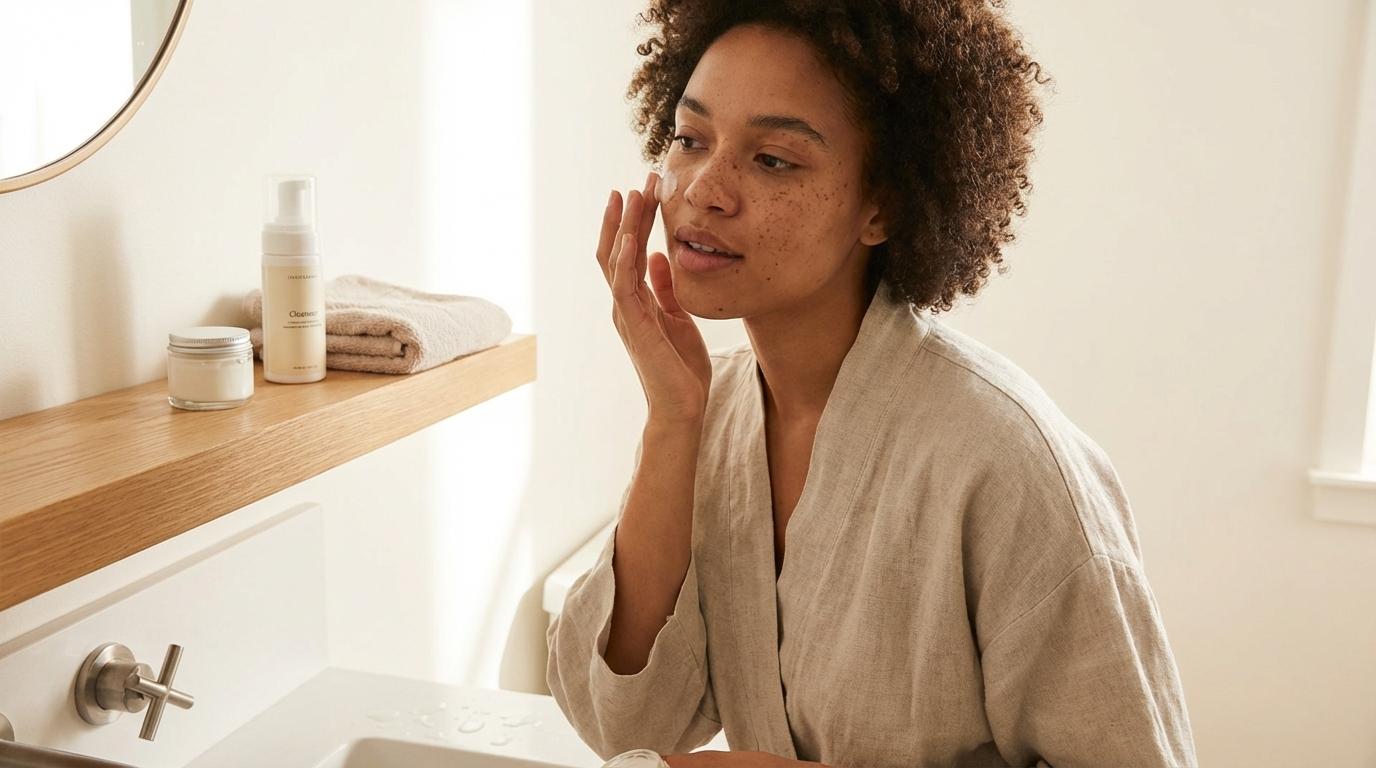
I want to share something that took me years to learn: your skincare routine does not need to be complicated to work. Somewhere along the way, the beauty industry convinced us that more steps equal better results. That is not quite true, and I think a lot of us are ready to hear this.
A simplified routine is not just easier to maintain. It is often more effective because you are actually doing it consistently. Let me walk you through the steps you might be able to skip, and why that is perfectly okay.
Toner: The Step That Became Optional
Toners were originally designed to remove leftover residue from harsh cleansers and restore the skin’s pH balance. Here is the thing, though: modern cleansers are formulated to be gentle and pH-balanced. They do not strip your skin the way old-school cleansers did.
If you enjoy using a toner, that is wonderful. Some toners deliver active ingredients like niacinamide or hyaluronic acid, and those can genuinely benefit your skin. But if you are using a basic hydrating or “balancing” toner out of obligation rather than enjoyment, you can safely set it aside.
Your skin will not miss it. Splash some water on your face after cleansing if you like, pat dry gently, and move on to your next step. The notion that you absolutely need toner is a holdover from a different era of skincare.
Eye Cream vs. Your Regular Moisturizer
This one might feel a little controversial, but hear me out. Eye creams are essentially moisturizers in smaller, more expensive jars. The skin around your eyes is thinner and more delicate, yes, but it does not require a completely different formulation in most cases.
Your regular moisturizer can work just fine around your eyes. The key is being gentle with application, using your ring finger to pat (never drag) the product into the orbital bone area. If your moisturizer contains ingredients like retinol or strong acids, you might want to avoid the immediate eye area, but that is true whether you are using eye cream or not.
There are exceptions. If you have specific concerns like puffiness, dark circles, or milia, a targeted treatment with caffeine or vitamin C might help. But for basic hydration? Your moisturizer is doing the job already. According to dermatologists at the AAD, the fundamentals matter more than having a product for every zone.
The Essence and Serum Confusion
Walk into any beauty store and you will find essences, serums, ampoules, boosters, and concentrates. The marketing language can be overwhelming. What is the difference? Honestly, the lines are blurry, and that is intentional.
Essences are typically lighter, more watery products that originated in Korean skincare routines. They are meant to add hydration and prep your skin for subsequent products. Serums tend to be more concentrated with active ingredients. Ampoules are supposedly even more concentrated versions of serums.
Here is what I have learned: you do not need all of these. If you are using a good serum with ingredients that address your concerns, you do not need an essence underneath it. If you are using a hydrating toner, you might not need an essence at all. These products have significant overlap.
Choose one treatment product that makes sense for your needs and use it consistently. That is more effective than layering three different products that essentially do the same thing. Your skin can only absorb so much anyway.
What Marketing Invented (And What You Actually Need)
The beauty industry is brilliant at creating problems and then selling us solutions. “Pore minimizers” for pores that cannot actually change size. “Detox” masks for skin that does not accumulate toxins the way marketing suggests. Separate products for morning and night when many formulations work around the clock.
Let us talk about what you actually need. A gentle cleanser removes dirt, oil, and sunscreen without disrupting your skin barrier. A moisturizer keeps your skin hydrated and helps maintain that barrier. Sunscreen protects against UV damage, which is the number one cause of premature aging.
Beyond these three fundamentals, everything else is optional enhancement. Truly. If you want to address specific concerns like acne, hyperpigmentation, or fine lines, adding one targeted treatment makes sense. But you do not need a ten-step routine to have healthy, happy skin.
Finding Your Minimum Effective Routine
I encourage you to think about your routine with fresh eyes. Which products are you using because they genuinely help your skin? Which ones are you using because someone told you that you should?
Try paring back for a few weeks. Keep your cleanser, moisturizer, and sunscreen. Add one treatment product if you have a specific concern you are working on. Notice how your skin responds. For many people, skin actually improves with a simpler routine because there is less chance of irritation, less product interaction, and more consistency.
The Mayo Clinic recommends keeping skincare simple, and there is wisdom in that approach. Your skin is resilient and knows how to take care of itself when you give it the basics it needs.
Skincare should feel nourishing, not burdensome. If your routine has become a chore, that is a sign that something needs to change. Give yourself permission to simplify. Your skin will adapt, and you might find that less really is more.
Remember, the goal is not a perfect routine. It is healthy skin and a practice that you can maintain with ease. That looks different for everyone, and that is exactly as it should be.