
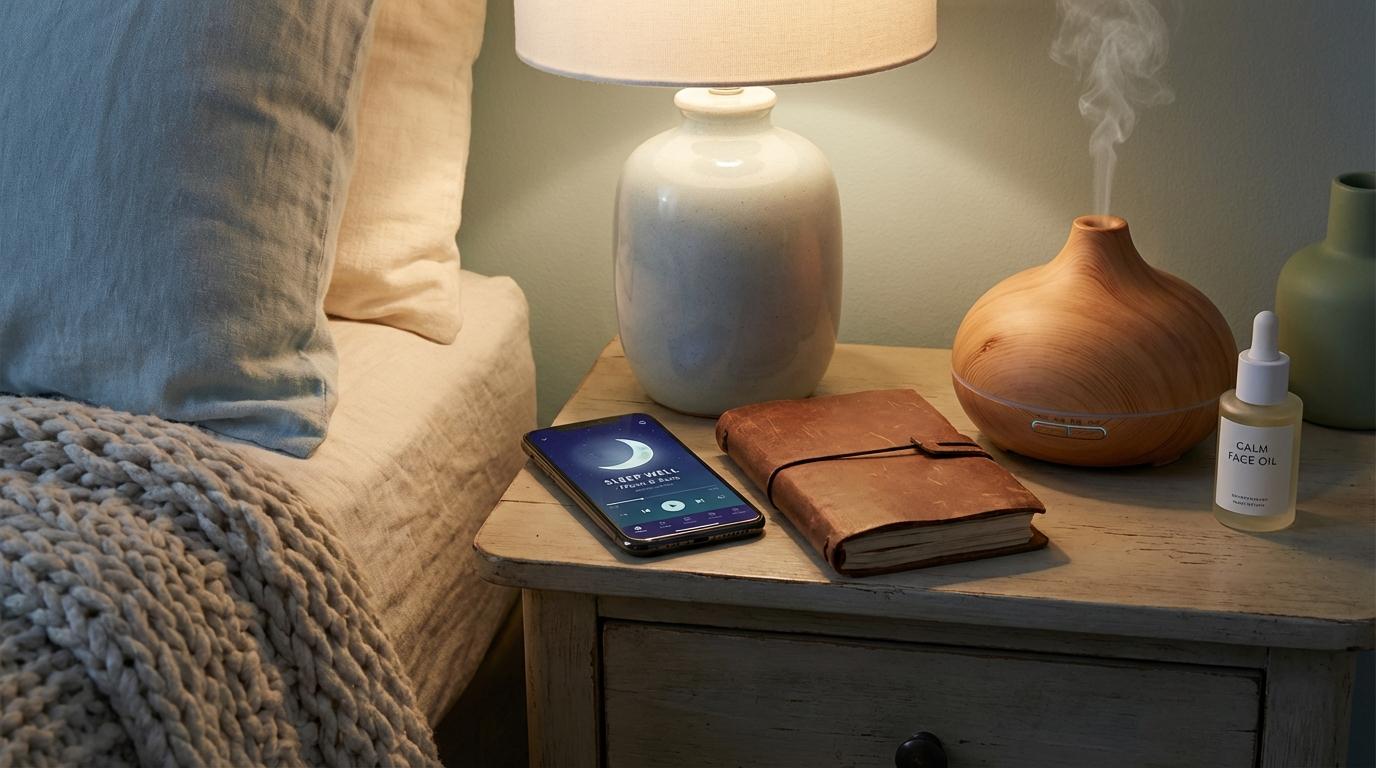
Most people assume that tracking their sleep will automatically improve their skin. It will not, at least not directly. What sleep tracking can do is reveal patterns you would never notice on your own, and those patterns often hold the key to understanding why your skin behaves the way it does on certain days.
What Your Sleep Data Actually Shows
Sleep tracking apps and wearables collect data on several variables: total sleep time, time spent in different sleep stages (light, deep, and REM), how many times you woke up during the night, and how long it took you to fall asleep. Some devices also track heart rate variability, blood oxygen levels, and skin temperature changes throughout the night.
From a skin perspective, the most relevant metrics are total sleep duration and time spent in deep sleep. Deep sleep is when your body ramps up growth hormone production, which directly stimulates cell turnover and collagen synthesis. If you are consistently getting seven hours of sleep but your tracker shows you are spending very little time in deep sleep, you might have an explanation for why your skin looks dull despite technically sleeping “enough.”
REM sleep also matters, though indirectly. REM deprivation is linked to increased cortisol levels the following day, and elevated cortisol triggers inflammation, excess sebum production, and impaired barrier function. Your tracker cannot tell you exactly what is happening to your cortisol, but it can flag when your REM cycles are consistently disrupted. If you notice that your skin tends to look worse during certain seasons, cross-referencing with sleep data might reveal that seasonal light changes are disrupting your sleep architecture before they disrupt your skin.
Correlating Sleep Quality With Skin Behavior
The real value of sleep tracking for skin health comes from logging consistently over time and looking for correlations. This requires a bit of effort, but it can be genuinely revealing.
Start by tracking your sleep data alongside a simple skin log. You do not need anything elaborate. A daily note on your phone rating your skin on a scale of 1-5 and jotting down any notable changes (breakout, dryness, redness, unusual oiliness) is enough. After two to four weeks, patterns start to emerge.
Common correlations people discover include breakouts appearing two to three days after a stretch of poor sleep, increased under-eye puffiness following nights with frequent wake-ups, and a general dullness that tracks with weeks of reduced deep sleep. These are not coincidences. Poor sleep causes measurable increases in transepidermal water loss (your skin loses more moisture), reduced blood flow to the face, and shifts in your skin’s pH that can compromise its barrier function.
The two-to-three-day delay on breakouts is particularly important to understand. If you slept terribly on Monday, the resulting cortisol spike and inflammatory cascade take time to manifest as a visible pimple. By Wednesday or Thursday, you might blame what you ate or a product you used, when the real trigger was Monday night’s sleep. Without tracking data to look back at, you would never make that connection.
App Recommendations Worth Trying
Not all sleep trackers are equally useful, and accuracy varies significantly between smartphone-only apps and wearable devices.
Smartphone apps like Sleep Cycle and SleepScore use your phone’s accelerometer and microphone to estimate sleep stages based on movement and breathing patterns. These are convenient and free (or cheap), but Cleveland Clinic notes that their accuracy for detecting specific sleep stages is limited compared to clinical tools. They are reasonable for tracking total sleep time and general consistency, which is honestly the most actionable data for skin purposes anyway.
Wearable devices like the Oura Ring, Apple Watch, and Fitbit use optical heart rate sensors and accelerometers, which gives them more data points to work with. The Oura Ring in particular tracks skin temperature changes, which can be interesting to correlate with hormonal fluctuations that affect skin. These devices tend to be more accurate for deep sleep detection, though none of them match a clinical polysomnography study.
For a skin-focused approach, the best setup is a wearable tracker paired with a simple journaling habit. The tracker handles the sleep data automatically. You add the skin observations manually. After a month, you have a dataset that can actually inform decisions about your routine.
When Tracking Helps vs. When It Harms
Sleep tracking has a well-documented dark side that is worth being honest about. Researchers have even coined a term for it: orthosomnia, which is the anxiety that comes from obsessing over your sleep data. If you are the type of person who checks your sleep score first thing in the morning and lets a bad number dictate your mood for the entire day, tracking might be doing more harm than good.
Anxiety about sleep quality can, ironically, worsen your sleep. And chronic anxiety raises cortisol, which brings us right back to the skin problems we are trying to avoid. If you notice that tracking is making you more stressed rather than more informed, step back. Take a break from the app for a few weeks. The data is useful only if it leads to actionable changes, not if it becomes another source of worry.
Signs that tracking is helping: you identify and fix a pattern (like caffeine after 2 PM disrupting deep sleep), you adjust your bedtime and see improvement, or you have concrete data to share with a doctor or dermatologist. Signs that tracking is hurting: you feel anxious about your scores, you lie in bed stressing about falling asleep so the app records a good night, or you blame every skin issue on sleep even when other factors are clearly involved.
Travel and Schedule Changes
Sleep tracking becomes especially useful when your schedule shifts. Travel across time zones, shift work, daylight saving changes, and even weekend sleep-ins can disrupt your circadian rhythm in ways that show up on your skin days later.
If you travel frequently, your tracker can help you see how long it takes your sleep architecture to normalize after a time zone change. Most people need about one day per hour of time zone difference to fully adjust. During that adjustment period, your skin may be more reactive than usual, which is useful to know before you decide to introduce a new active or get a facial.
For people with irregular schedules, like students during exam periods or shift workers rotating between day and night shifts, tracking can reveal which schedule variations hit your skin hardest. You might find that your skin tolerates occasional late nights but falls apart after three consecutive short-sleep nights. That kind of specific knowledge helps you plan your skincare accordingly, maybe applying a heavier moisturizer or skipping actives during the weeks you know will be rough.
Making the Data Work for Your Skin
The goal of sleep tracking is not to achieve a perfect score every night. It is to understand your personal patterns well enough to support your skin through the fluctuations that life inevitably brings. Maybe you discover that seven hours with good deep sleep is your skin’s sweet spot, and that anything below six hours consistently leads to breakouts. That is actionable information.
Use the data to make small, targeted adjustments. If your deep sleep is consistently low, look at factors like alcohol consumption, late meals, room temperature, and screen time before bed. If you are waking up frequently, check whether your sleep environment needs improvement (noise, light, or mattress quality). These are the kinds of changes that ripple forward into better skin without requiring any new products.
Sleep is one of those foundational factors that no serum or treatment can fully compensate for. Tracking it gives you visibility into something that usually operates in the background, and that visibility is where better decisions start.