
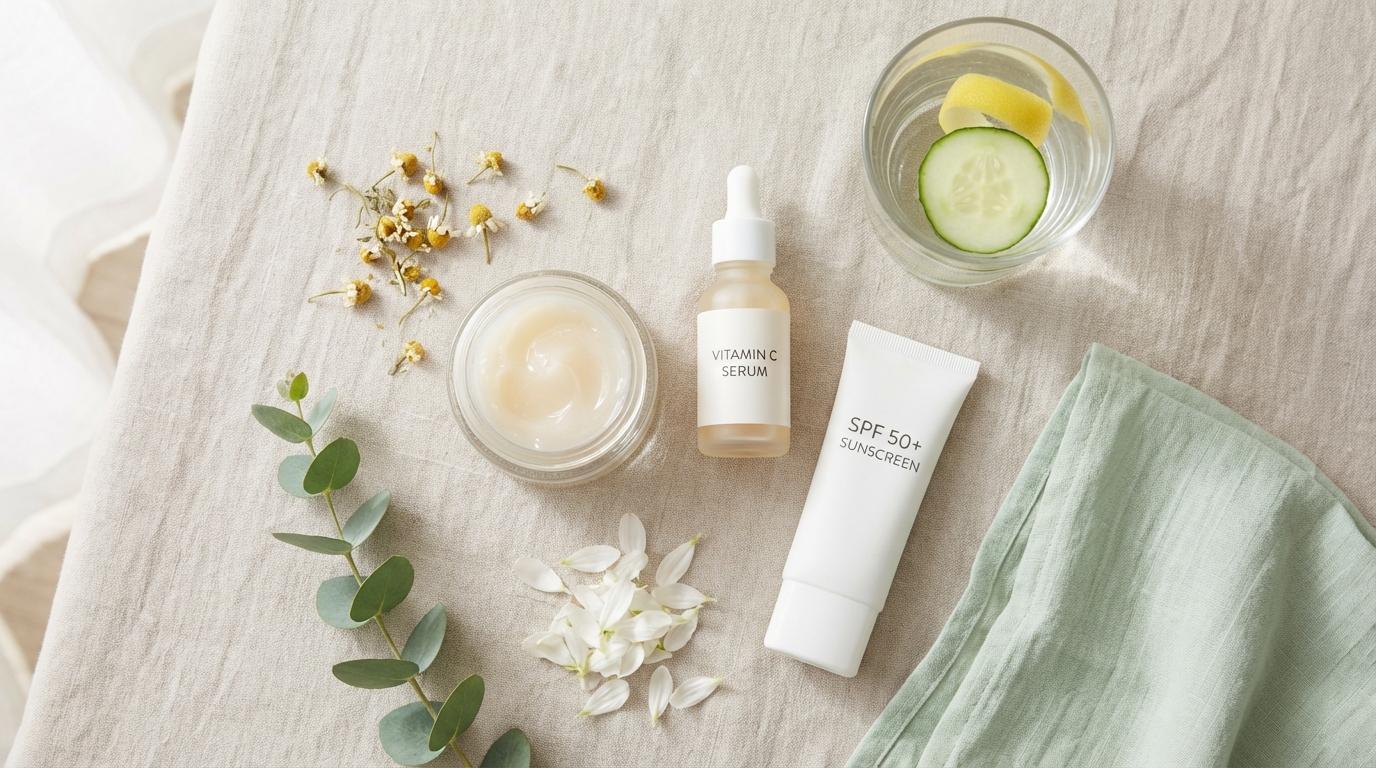
Every year around late March, I get the same question: why is my skin suddenly freaking out? The products that worked perfectly all winter are now causing breakouts, or your face feels simultaneously oily and dry. There is actual science behind this, and once you understand it, the fix becomes obvious.
Your skin responds to environmental changes in measurable ways. Temperature, humidity, UV index, and even pollen counts affect how your skin barrier functions. Let me break down what is happening and what adjustments actually make a difference.
Why Lighter Textures Make Sense When It Warms Up
During winter, low humidity causes increased transepidermal water loss (TEWL). Your skin loses moisture faster, which is why heavy creams and occlusives feel necessary. They create a physical barrier that slows water loss.
As temperatures rise, humidity typically increases too. Your skin does not need as much help retaining moisture. More importantly, those thick winter creams can become problematic. Research published in the International Journal of Cosmetic Science shows that heavy occlusive products in warm, humid conditions can increase sebum production and create an environment where acne-causing bacteria thrive.
What to switch:
- Heavy cream moisturizers to gel or gel-cream hybrids
- Facial oils (if you use them) to lighter serums with similar benefits
- Rich cleansing balms to lighter oil cleansers or micellar water
The goal is not to eliminate moisture. It is to match your product weight to what your environment demands. A lightweight hyaluronic acid serum under a gel moisturizer gives you hydration without the occlusive heaviness that can cause problems in spring.
Allergy Season and Your Skin Barrier
If you have seasonal allergies, your skin is affected whether you realize it or not. Histamine release does not just cause sneezing and itchy eyes. It triggers inflammation throughout your body, including your skin.
Studies have shown that people with allergic rhinitis (hay fever) have higher rates of skin sensitivity and atopic dermatitis flares during pollen season. Research from the Journal of Allergy and Clinical Immunology demonstrates the connection between airborne allergens and skin inflammation, even in people without diagnosed eczema.
What this means for your routine:
- Cleanse in the evening to remove pollen that accumulates on skin throughout the day
- Consider adding a barrier-supporting ingredient like ceramides or centella asiatica
- If you notice increased redness or sensitivity, scale back actives temporarily
- Antihistamines can help skin symptoms too, not just respiratory ones
Your skin might feel more reactive during high pollen days. This is not your imagination, and it is not necessarily your products. It is your immune system responding to environmental triggers. Keeping your routine simple and supportive during peak allergy season is scientifically sound advice.
Reintroducing Actives After Winter
Many people dial back active ingredients during winter because dry, cold conditions make skin more sensitive. If you paused or reduced your retinoid, exfoliating acids, or vitamin C, spring is a reasonable time to reintroduce them.
However, the reintroduction needs to be gradual. Your skin has essentially reset its tolerance. A study in the Journal of the American Academy of Dermatology found that retinoid tolerance is partially lost after breaks longer than 2 to 3 weeks. You will likely experience some adjustment irritation if you jump straight back to daily use.
A sensible reintroduction schedule:
- Week 1: Use the active once
- Week 2: Use twice, spaced apart (for example, Monday and Thursday)
- Week 3: Every other day
- Week 4 and beyond: Daily if tolerated, or stay at every other day if that works for you
Pay attention to your skin rather than following a rigid timeline. If you are experiencing excessive dryness, peeling, or redness, slow down. The goal is consistent use over time, not pushing through irritation.
One note on AHAs (like glycolic acid) and BHAs (like salicylic acid): these increase photosensitivity. As UV exposure increases in spring, you need reliable sun protection if you are using these ingredients. Which brings us to the most important point.
Sunscreen Becomes Non-Negotiable
I know you have heard this before. But the data is worth repeating because UV damage accumulates, and spring catches people off guard.
UV index increases significantly starting in March and April in most northern hemisphere locations. Yet sunscreen use tends to lag behind because it does not feel like summer yet. A Skin Cancer Foundation report notes that UV radiation can be strong enough to cause damage even on cloudy days, and reflected UV from surfaces increases exposure.
What changes in spring:
- Days are longer, meaning more cumulative UV exposure
- UV index rises even when temperatures do not feel hot
- Outdoor activities increase (more time in direct sunlight)
- Skin that was covered all winter is less adapted to UV exposure
If you have been using a moisturizer with SPF during winter, consider switching to a dedicated sunscreen with SPF 30 or higher. The protection factor of combination products is often lower in practice because people do not apply enough.
For those using retinoids, AHAs, or other photosensitizing ingredients, daily SPF is not optional. It is required for the products to work without causing damage. UVA rays (the ones that cause aging and penetrate clouds and windows) do not take spring off.
Putting It Together
Transitioning your routine for spring does not mean buying an entirely new set of products. It means making strategic adjustments based on how your skin behaves in changing conditions.
Start with swapping to lighter moisturizing textures. Support your barrier during allergy season. Reintroduce actives gradually if you took a winter break. And commit to consistent sun protection as UV exposure increases.
Your skin is responsive to its environment. The more you understand the underlying mechanisms, the easier it becomes to anticipate what your skin needs before problems develop. Science beats guesswork every time.