
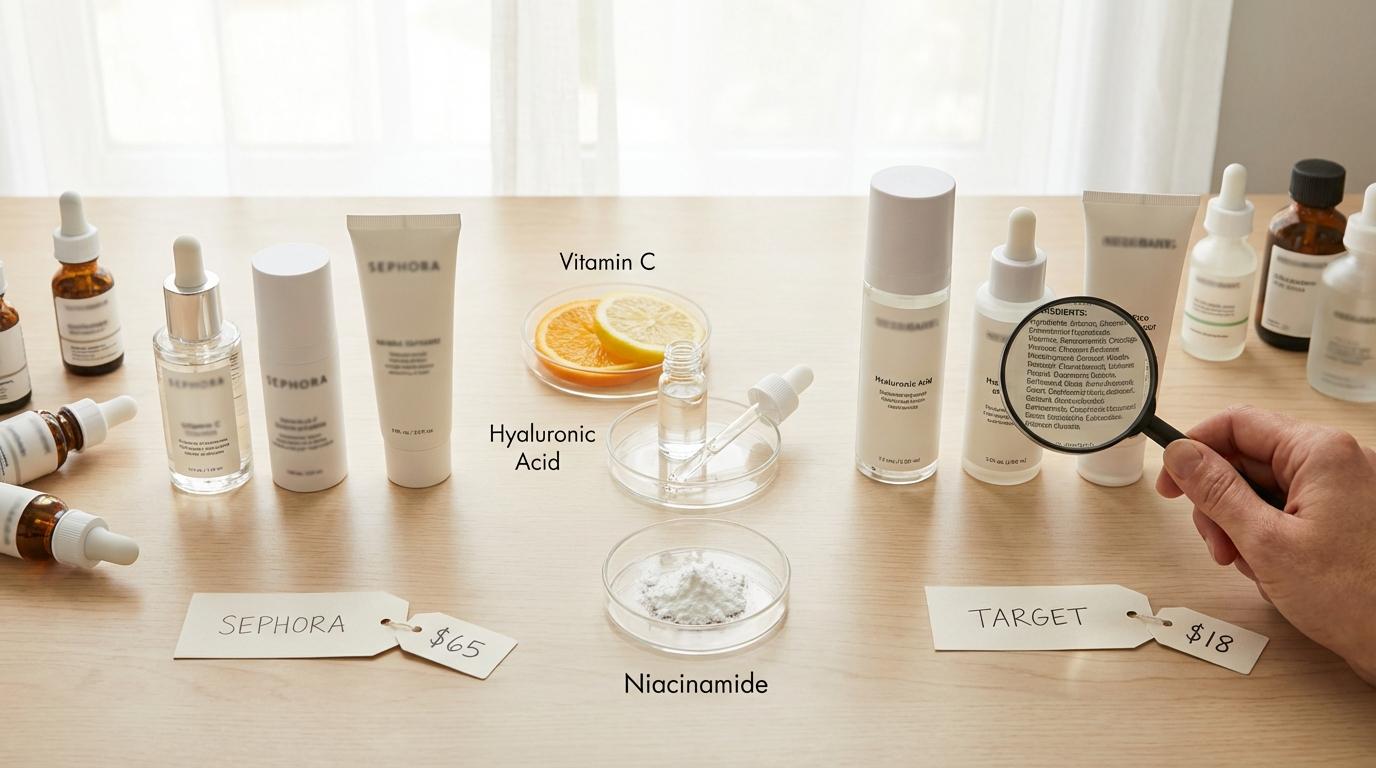
I spent way too much of my freshman year paycheck at Sephora before I learned how to actually read an ingredient label. Turns out, that $48 serum I was rationing like liquid gold? The key ingredient was the same concentration you can find at Target for twelve bucks. Nobody tells you this stuff in the beauty aisle, so I’m telling you now.
The skincare industry has a pricing problem, and it’s not in your favor. Luxury packaging, celebrity partnerships, and prime retail real estate all get baked into that price tag. But the ingredients themselves? Those come from the same handful of suppliers whether you’re shopping at a department store or a drugstore. Let’s break down the actual comparisons so you can make smarter choices with your money.
Niacinamide: The Great Equalizer
Niacinamide is everywhere right now, and for good reason. This B3 vitamin helps with pore appearance, oil control, uneven skin tone, and strengthening your skin barrier. It plays well with almost everything else in your routine, making it a workhorse ingredient.
At Sephora, you’ll find Paula’s Choice 10% Niacinamide Booster for $46 (0.67 oz). That’s about $68 per ounce if you’re doing the math. At Target, The Ordinary Niacinamide 10% + Zinc 1% runs you $6.50 for a full ounce. Same percentage of the active ingredient. Both formulas are water-based and layer under moisturizer the same way.
The Paula’s Choice formula does include additional ingredients like vitamin C and licorice extract. Is that worth paying 10x more? For most people, no. You can add those benefits through other affordable products if you want them. The niacinamide itself is doing the heavy lifting, and that part is identical.
Another Target option worth mentioning: Good Molecules Niacinamide Brightening Toner ($14 for 4 oz). It’s a lower concentration spread across a toner format, which some people prefer for gentler daily use. The point is, you have options that don’t require selling a kidney.
Vitamin C: Where Price Gaps Get Ridiculous
Vitamin C serums might have the wildest price range in all of skincare. You can spend $30 or $180 on products containing L-ascorbic acid at similar concentrations. The difference usually comes down to formulation stability and texture preferences, not effectiveness.
SkinCeuticals C E Ferulic is the gold standard that dermatologists reference, priced at $182 for 1 oz. It contains 15% L-ascorbic acid, 1% vitamin E, and 0.5% ferulic acid. This combination has solid research behind it, and the formula is stable when stored properly.
Here’s the thing though: Timeless 20% Vitamin C + E Ferulic Acid Serum uses the same antioxidant combination at an even higher vitamin C concentration for $24.95 at Target. Drunk Elephant C-Firma Day Serum at Sephora ($80) also uses 15% L-ascorbic acid with ferulic acid. You’re paying $55+ more for essentially the same active profile.
The Ordinary also makes a 23% Vitamin C Suspension ($6.80) that works well for people who don’t mind a slightly gritty texture. It’s suspended in silicone rather than water, which actually keeps it more stable over time. Different feel, same antioxidant benefits.
Quick tip: all vitamin C serums oxidize over time. That expensive serum going brown after two months is the same chemistry happening to the cheap one. Buy smaller bottles you’ll actually use up regardless of price point.
Hyaluronic Acid: The Hydration Markup
Hyaluronic acid holds up to 1000x its weight in water, which makes it fantastic for hydration. Every skincare brand has jumped on this ingredient, creating a huge range of prices for what is essentially the same thing.
Drunk Elephant B-Hydra Intensive Hydration Serum costs $49 at Sephora for 1.69 oz. It contains sodium hyaluronate (a form of hyaluronic acid), pro-vitamin B5, and pineapple ceramide. Nice formula, steep price.
At Target, The Inkey List Hyaluronic Acid Serum is $10.99 for 1 oz. It uses 2% hyaluronic acid with multiple molecular weights, meaning it hydrates at different skin depths. Neutrogena Hydro Boost Hyaluronic Acid Serum runs about $20 for 1 oz at Target too, with added trehalose for extra moisture retention.
The molecular weight conversation matters here. Smaller HA molecules penetrate deeper, while larger ones sit on the surface for immediate plumping. Both Drunk Elephant and the drugstore options typically use a blend. You’re not getting superior penetration technology by spending more.
One thing to watch: some luxury brands add peptides or other actives alongside the HA. Read the full ingredient list if that’s what you’re paying for. But if you just want solid hyaluronic acid hydration, Target’s got you covered at a fraction of the cost.
Reading Labels Like You Mean It
Knowing how to read an ingredient label is the single most valuable skill for budget skincare shopping. It takes some practice, but once you get it, you’ll never overpay again.
Ingredients are listed in order of concentration. The first five to seven ingredients make up the bulk of the formula. Everything after that is usually at 1% or less. This means if your star ingredient appears at the end of the list, you’re barely getting any of it regardless of what the marketing claims.
Look for the active ingredient and its percentage when possible. Niacinamide at 5% versus 10% will perform differently. The same goes for vitamin C, retinol, and other actives. Some brands hide behind proprietary blends, which is frustrating, but many now disclose concentrations.
INCIDecoder is a free tool where you can paste any ingredient list and get a breakdown of what each component does. It’ll flag potential irritants, show you which ingredients are marketing fluff versus actually functional, and help you compare products objectively.
Pay attention to ingredient order and percentage ranges. A product listing niacinamide as its second ingredient after water is very different from one listing it after fifteen other things. The packaging might scream NIACINAMIDE in big letters either way.
When Spending More Actually Makes Sense
I’m not here to say expensive skincare is always a scam. Sometimes there are legitimate reasons to spend more, and being honest about that helps you make better choices.
Formulation elegance is real. Some products absorb better, layer more smoothly, or feel nicer on your skin. If texture makes you actually use your products consistently, that has value. A $50 serum you love using daily will outperform a $10 one you hate touching.
Stability and packaging matter for certain ingredients. Vitamin C and retinol degrade with air and light exposure. Airless pumps and opaque bottles help preserve them longer. Some drugstore brands cut corners here while prestige brands invest in better packaging. Check what you’re getting.
Certain ingredients are just expensive to source or formulate. Quality retinoids, specific peptides, and well-researched botanical extracts cost more to produce. If a luxury product contains these and the drugstore version doesn’t, that’s a real difference.
That said, basic ingredients like niacinamide, hyaluronic acid, glycerin, and simple vitamin C derivatives? Those don’t justify huge markups. Be strategic about where you spend and where you save.
Building a Budget-Smart Routine
Here’s how I’d approach building a routine that performs without destroying your bank account:
- Cleanser: Go cheap. It’s on your face for 30 seconds. CeraVe or Cetaphil from Target work perfectly.
- Treatment serums: This is where ingredient concentration matters. The Ordinary and Good Molecules at Target deliver actives at the right percentages for under $15.
- Moisturizer: Mid-range is fine. Look for ceramides and fatty acids. Target’s Versed or CeraVe are solid picks.
- Sunscreen: Don’t cheap out entirely here. Sun damage is expensive to fix. But $15-20 at Target gets you great protection from brands like La Roche-Posay or Neutrogena.
The expensive stuff can come later when you have disposable income and specific concerns. Start with the affordable versions that contain the same core ingredients. Upgrade only if you find a real limitation with the budget option.
The Bottom Line on Budget Shopping
Target carries products with identical active ingredients to Sephora at a fraction of the price. The main differences are usually packaging aesthetics, texture preferences, and the shopping experience itself. None of those change what the ingredients do on your skin.
Do your homework before assuming you need the expensive option. Look up the active ingredient, check the concentration, and compare prices per ounce. r/SkincareAddiction is full of dupe recommendations from people who’ve done the comparisons.
Your skin responds to chemistry, not marketing budgets. A $6 bottle of niacinamide will reduce pore appearance just like a $46 one. The money you save can go toward actually replacing products before they expire, trying new ingredients, or just buying yourself lunch. All better uses than overpaying for fancy packaging.
Start reading those labels. Once you know what you’re looking at, the Sephora price tags start looking pretty absurd.