
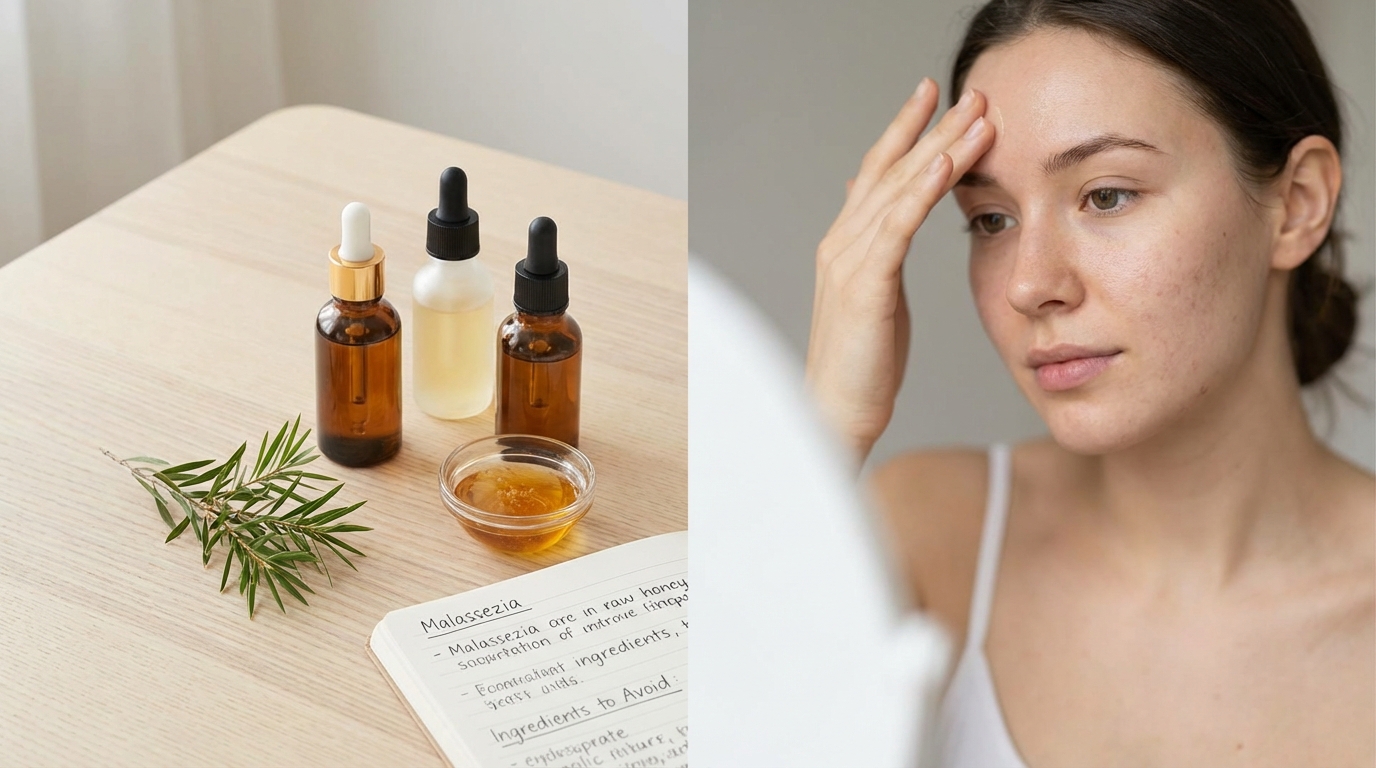
You’ve been treating your forehead breakouts for weeks, maybe months. You’ve tried salicylic acid, benzoyl peroxide, maybe even prescription treatments. And yet those tiny, uniform bumps refuse to budge. Here’s a thought that might change everything: what if it isn’t acne at all?
I know that sounds strange, so let me explain the science behind what might actually be happening on your skin.
The Difference Between Bacterial Acne and Fungal Acne
Traditional acne, technically called acne vulgaris, happens when Cutibacterium acnes (formerly called Propionibacterium acnes) bacteria multiply inside clogged pores. These bacteria feed on sebum and trigger an inflammatory response. The result? Those familiar red, inflamed pimples that vary in size and often come to a head.
Fungal acne is actually a misnomer because it isn’t acne at all. Dermatologists call it Malassezia folliculitis or pityrosporum folliculitis. It happens when Malassezia yeast (which naturally lives on everyone’s skin) overgrows inside hair follicles. This triggers inflammation that looks remarkably similar to acne, but the underlying cause is completely different.
Here’s the key distinction: bacteria and yeast require completely different treatments. Antibacterial ingredients do nothing against yeast. In fact, antibiotics can actually make fungal acne worse by killing off competing bacteria and giving Malassezia more room to thrive.
How to Tell If Your Breakout Is Fungal
The location and appearance of fungal acne tends to follow specific patterns. It commonly shows up on the forehead, chest, back, and shoulders, areas with more sebaceous glands where Malassezia loves to hang out.
Look at the bumps themselves. Fungal acne typically appears as uniform, small (1-2mm) papules or pustules that look almost identical to each other. Traditional acne tends to be more varied, with different sized lesions, blackheads, whiteheads, and cystic bumps all mixed together.
Another telling sign? Itching. Fungal acne often itches, while bacterial acne usually doesn’t (unless you’ve irritated it with too many products). If your forehead breakout gets worse after sweating, being in humidity, or wearing occlusive makeup for long periods, that’s another clue pointing toward Malassezia.
A dermatologist can confirm the diagnosis through skin scraping or by examining a sample under a microscope, but many people figure it out by noticing their breakouts don’t respond to standard acne treatments.
Ingredients That Make Fungal Acne Worse
Here’s where things get frustrating. Many common skincare ingredients actually feed Malassezia yeast. The fungus thrives on certain fatty acids and esters, which happen to be in a lot of products marketed for acne-prone skin.
According to research on Malassezia lipid metabolism, the yeast cannot synthesize its own fatty acids, so it relies on what’s available on your skin. Fatty acids with carbon chain lengths of 11-24 are particularly problematic.
Watch out for these common fungal acne triggers:
- Oils: Coconut oil, olive oil, and most plant oils except for MCT oil (C8/C10 only), mineral oil, and squalane
- Fatty acids: Oleic acid, lauric acid, palmitic acid, stearic acid
- Esters: Polysorbates, most esters ending in “-ate” (isopropyl myristate, glyceryl stearate)
- Fermented ingredients: Galactomyces, saccharomyces, and other fermented filtrates
Resources like Simple Skincare Science’s fungal acne guide maintain updated lists of safe products if you want to check your current routine.
Treatment Approaches That Actually Work
If you suspect fungal acne, the treatment strategy differs significantly from bacterial acne. You need antifungal ingredients, not antibacterial ones.
Topical antifungals: Ketoconazole is the gold standard. You can find it in dandruff shampoos like Nizoral (which the American Academy of Dermatology notes contains 1% ketoconazole). Apply it as a mask for 5-10 minutes before washing off. Other options include clotrimazole and miconazole, available as OTC antifungal creams.
Sulfur: This old-school ingredient has both antibacterial and antifungal properties. Sulfur masks or spot treatments can help without feeding the yeast.
Zinc pyrithione: Found in many dandruff shampoos and some face washes, this ingredient inhibits Malassezia growth effectively.
Salicylic acid: While primarily used for bacterial acne, salicylic acid is safe for fungal acne because it doesn’t feed the yeast. It helps keep pores clear and reduces inflammation.
For stubborn cases, dermatologists might prescribe oral antifungals like fluconazole or itraconazole. These work faster than topicals but come with more potential side effects, so they’re typically reserved for severe or persistent cases.
One important note: fungal acne often returns. Malassezia is a normal part of your skin microbiome, and certain conditions (humidity, sweat, occlusive products) can trigger another overgrowth. Maintenance treatment, like using a ketoconazole shampoo once a week, can help prevent recurrence.
When to See a Dermatologist
If you’ve tried antifungal treatments for 2-4 weeks without improvement, it’s worth getting a professional opinion. Your breakout might be bacterial acne after all, or it could be a combination of both (which happens more often than you’d think). You might also have a different condition entirely, like perioral dermatitis or keratosis pilaris.
A dermatologist can examine your skin, possibly take a sample, and give you a definitive answer. From there, you can build a treatment plan that actually addresses the root cause instead of guessing.
The frustrating reality of fungal acne is that it often masquerades as regular acne for months or years while people cycle through standard treatments that never quite work. Understanding the difference between Malassezia and bacterial causes is the first step toward finally clearing those stubborn bumps.