
So your skin just staged a full-on mutiny. Maybe you tried that new serum everyone on TikTok was raving about. Maybe you layered seven actives because more is better, right? (Spoiler: it was not better.) Or maybe your skin just woke up one day and chose chaos for absolutely no reason. Whatever happened, you are now staring at a red, angry, bumpy situation and panicking.
First of all, take a breath. Your skin is not broken forever. You did not ruin your face. What you need right now is to stop everything, calm things down, and let your skin barrier repair itself. This is where the back-to-basics routine comes in, and honestly, it might be the best thing you ever do for your skin.
Why Stripping Down to Cleanser and Moisturizer Actually Works
When your skin is freaking out, the last thing it needs is more stuff. Every product you put on irritated skin is a potential trigger. That vitamin C serum you love? Possible trigger. Your favorite exfoliating toner? Definitely a trigger right now. Even that gentle essence might be too much when your barrier is compromised.
Think of your skin barrier like a brick wall. Normally, those bricks (your skin cells) are held together by mortar (lipids). When things go wrong, that mortar starts crumbling. Products can seep through where they should not, causing more irritation. Your skin cannot properly hold onto water. Everything feels tight, looks flaky, and gets angry at the slightest provocation.
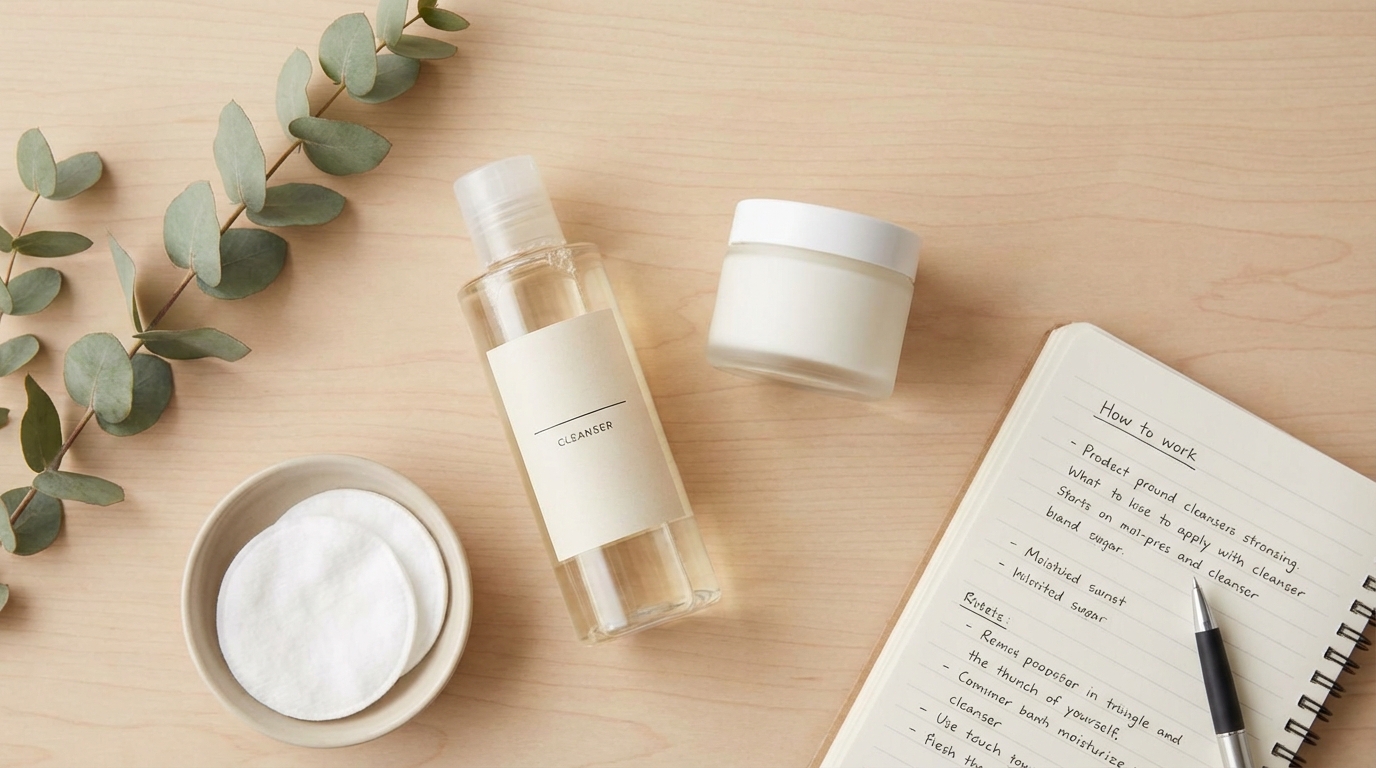
The fix is stupidly simple: cleanser and moisturizer. That is it. A gentle, non-foaming cleanser (foaming formulas can be stripping when your barrier is compromised) and a basic moisturizer with ceramides, fatty acids, or hyaluronic acid. According to the American Academy of Dermatology, keeping your routine simple helps avoid further irritation while your skin heals.
I know it feels counterintuitive. Your brain is screaming “fix it fix it fix it” and wants to throw every healing product at the problem. But stripping back is the fix. Your skin knows how to repair itself when you stop interfering.
How Long to Stay Basic (And Why Patience Is Hard)
Here is the part nobody wants to hear: this takes time. Your skin barrier does not rebuild overnight. We are talking about two to four weeks minimum before you should even think about adding products back in. Some people need six to eight weeks if the damage was significant.
I am going to be real with you. These weeks will feel eternal. You will be bored. You will miss your acids. You will see an influencer post about some new product and want to try it immediately. Do not do it. Your future skin is begging you to stay the course.
Here are the signs your barrier is healing:
- That tight, uncomfortable feeling goes away
- Redness starts to calm down
- Products stop stinging (yes, even water was probably stinging before)
- Your skin holds moisture better throughout the day
- Breakouts or bumps start clearing without new ones appearing
Do not rush this timeline because you are feeling antsy. The research on skin barrier repair shows that ceramide levels and barrier function take several weeks to normalize after damage. Rushing means you will just end up back at square one, cursing past-you for being impatient.
The Reintroduction Protocol (a.k.a. Treating Your Skin Like a Science Experiment)
Once your skin feels calm and happy again, you can start adding products back. But slowly. One product at a time. And you need to wait between introductions to see how each one affects you. This is not optional, it is essential.
Here is how I do it:
Week 1-2 of reintroduction: Add one product. Just one. Use it every other day at first, then daily if everything looks good. Watch for any redness, bumps, itching, or that tight feeling coming back.
Week 3-4: If the first product is working fine, add the second one. Same drill. Every other day, then daily, watching for reactions.
Keep going like this until you have rebuilt your routine. Yes, this means it could take months to get back to your full routine. That is the point. You are building a routine that actually works for YOUR skin, not just copying someone else’s ten-step system.
A few rules for reintroduction:
- Start with hydrating and soothing products before actives
- Leave acids and retinoids for last (they are the most likely to cause problems)
- If something causes a reaction, stop immediately and wait until your skin calms again
- Keep notes on what you introduced and when (your phone notes app works fine)
Pro tip from skincare experts at Paula’s Choice: if you had a reaction to something before, do not assume you need to try it again. Some products just do not work for some people. That is okay. There are literally thousands of other options.
Learning From Your Skin (Because It Is Actually Trying to Tell You Stuff)
Here is the silver lining of a skin disaster: you learn so much about what your skin actually needs. Before my Great Barrier Breakdown of 2022 (I got overly enthusiastic with glycolic acid), I had no idea my skin was actually pretty sensitive. I was just forcing it to tolerate things because everyone said those products were essential.
During your back-to-basics phase, pay attention. Really pay attention. Notice when your skin feels good versus when it feels off. Notice what environmental factors affect it (hello, heating systems in winter). Notice if certain ingredients consistently cause problems.
Keep track of:
- What products you were using when things went wrong
- How your skin reacts to different weather or stress levels
- Which new products during reintroduction feel good versus meh versus bad
- Any patterns you notice (like always breaking out on your chin during your period)
This information is gold. The CeraVe skin experts recommend understanding your specific skin needs rather than following generic routines. What works for that beauty influencer might be completely wrong for you, and that is totally normal.
Some people emerge from this process realizing they only need three products, not fifteen. Others learn their skin loves niacinamide but hates vitamin C derivatives. You might discover that your skin does better with minimal routine in summer and more hydration in winter.
The goal is not to get back to exactly where you were before. The goal is to build something better. A routine based on what your actual skin needs, not what the skincare industry tells you to buy.
So yeah, your skin falling apart is annoying and stressful and makes you want to hide from mirrors. But it is also an opportunity to reset and learn. Strip it back, be patient, reintroduce carefully, and pay attention. Your skin will thank you by being way less dramatic in the future. (Okay, I cannot guarantee that last part, but it will definitely be healthier.)