
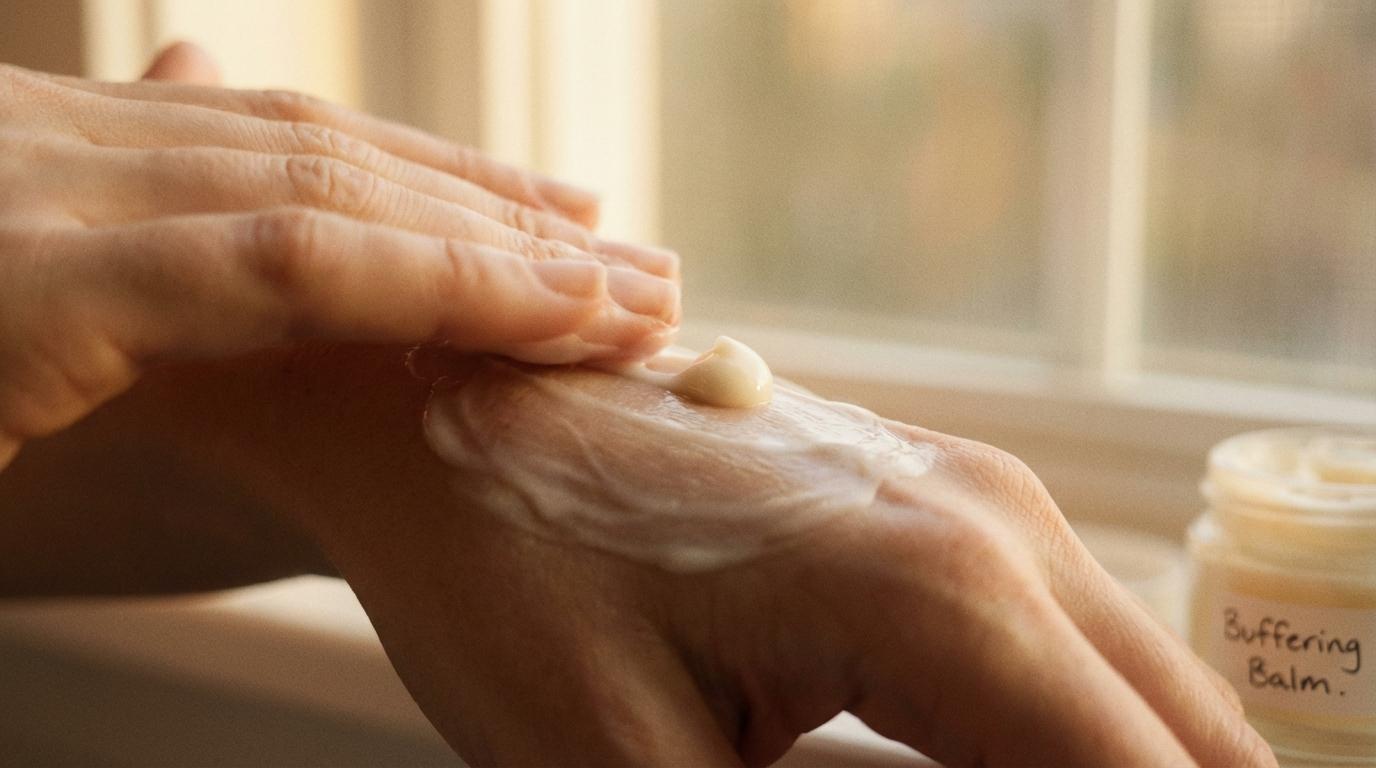
Retinol molecules penetrating your skin barrier trigger a cascade of cellular responses, from increased turnover to collagen stimulation, but that process can overwhelm unprepared skin and leave you red, flaky, and wondering what you did wrong. If you have ever tried retinol and quit because your face felt like sandpaper, the buffering technique might be exactly what you need to try again.
The buffering method is simple in concept: you apply moisturizer before retinol instead of after. This creates a dilution effect that slows down how quickly the active ingredient penetrates your skin. It does not make the retinol less effective over time. It just gives your skin cells a gentler introduction to what is, biochemically speaking, a pretty significant change in how they operate.
Why Retinol Causes Irritation in the First Place
Retinol converts to retinoic acid in your skin through a two-step enzymatic process. First, retinol becomes retinaldehyde. Then retinaldehyde becomes retinoic acid, the form that actually binds to receptors in your cells and tells them to behave differently. This conversion happens at different rates depending on your individual enzyme activity, which is why some people tolerate retinol easily while others struggle.
The irritation you experience during the first few weeks comes from accelerated cell turnover outpacing your skin’s ability to shed those cells smoothly. Your barrier function gets temporarily compromised as new cells push old ones out faster than usual. The technical term for this adjustment period is retinization, and it typically lasts anywhere from two to six weeks depending on concentration and frequency of use.
Research published in the Journal of Cosmetic Dermatology found that gradual introduction of retinoids significantly reduced the incidence of irritation compared to immediate daily use. The buffering technique works on this same principle: start gentle, let your enzymes and skin cells adapt, then increase exposure as tolerance builds.
How to Apply Moisturizer First
Wait until your face is completely dry after cleansing, about five to ten minutes. Then apply your regular moisturizer in a thin, even layer. You want full coverage but not a thick mask. Let that absorb for another five minutes or so until your skin no longer feels wet or tacky.
Now apply your retinol product. Use a pea-sized amount for your whole face, which is actually less than most people think they need. Spread it evenly, avoiding the immediate eye area, corners of your nose, and corners of your mouth where skin is thinner and more reactive. The moisturizer underneath acts as a buffer zone, slowing penetration without blocking it entirely.
If you want, you can add another light layer of moisturizer on top. This sandwich method adds extra protection for very sensitive skin, though most people find the single moisturizer layer underneath sufficient.
Picking the Right Moisturizer for Buffering
Not all moisturizers work equally well for this technique. You want something that absorbs relatively quickly and does not contain potentially irritating ingredients that could compound retinol’s effects. Skip anything with fragrance, essential oils, or additional active ingredients like acids or vitamin C during your initial retinol adjustment period.
Look for basic moisturizers with ingredients like ceramides, hyaluronic acid, glycerin, or squalane. These support barrier function without adding complexity to what is already happening on your skin. Ceramides are particularly helpful here because they strengthen the barrier that retinol temporarily disrupts during retinization.
Heavier occlusive moisturizers like those containing petrolatum can also work, though they create a more significant barrier that might slow penetration more than you need once your skin adjusts. Start with a medium-weight lotion or cream and adjust based on how your skin responds.
How Long to Keep Buffering
The adjustment timeline varies considerably between individuals. Most dermatologists suggest buffering for at least two to four weeks when starting retinol, then reassessing based on how your skin feels. If you are still experiencing significant irritation, dryness, or flaking after a month of buffered application, you might need to continue longer or consider a lower concentration product.
Signs that your skin is ready to try applying retinol directly include: no redness the morning after application, no excessive flaking or peeling, no increased sensitivity to other products in your routine, and skin that generally feels comfortable rather than reactive. You do not need to rush this transition. Some people buffer permanently and still see excellent results.
When you do try direct application, start with one night per week without the buffer and see how your skin responds. If all goes well after a week or two, try two nights. Gradual progression is always safer than jumping straight to nightly unbuffered use. You can learn more about why retinoids increase sun sensitivity to understand why protecting your skin during this period matters so much.
Other Ways to Reduce Retinol Irritation
Buffering works well in combination with other tolerance-building strategies. Frequency matters as much as concentration. Starting with retinol two or three times per week and gradually increasing to nightly use gives your skin more recovery time between exposures. This slow ramp-up approach mimics how dermatologists introduce prescription retinoids to patients with sensitive skin.
The concentration of retinol in your product also makes a difference. Products range from around 0.025% to 1% or higher, and starting at the lower end gives you room to increase potency as your tolerance builds. A well-formulated 0.3% retinol applied consistently will produce better results than a 1% product that irritates you so badly you can only use it sporadically.
Time of year matters too. Starting retinol in winter when humidity tends to be lower and heating systems dry out indoor air can intensify irritation. Many dermatologists recommend beginning a retinol routine in spring or fall when environmental conditions are more moderate. If you must start during extreme seasons, be extra attentive to hydration and barrier support.
Common Buffering Mistakes
The biggest mistake people make with buffering is using too little moisturizer. A barely-there layer will not provide meaningful protection. You need enough product to actually create a barrier between your skin and the retinol, even if it feels like more than you typically use.
Another error is not waiting long enough for the moisturizer to absorb. Applying retinol to still-wet moisturizer can actually increase penetration rather than buffering it, because water and humectants temporarily increase skin permeability. Those five to ten minutes of patience make a real difference in how the technique works.
Some people try to buffer with products containing niacinamide, which is generally fine, but if you are using a low-pH retinol formula and a high-pH niacinamide product, you could potentially reduce the effectiveness of both. Most modern formulations are designed to work together, but if you notice decreased results, try a plain moisturizer instead.
What Results to Expect
Buffering does not mean slower results, which is a misconception that keeps some people from trying this technique. The retinol still reaches your skin and still converts to retinoic acid. It just does so more gradually, which can actually improve compliance because you are more likely to stick with a routine that does not make your face miserable.
Expect to see texture improvements within four to eight weeks, reduced fine lines within two to three months, and more significant changes in tone and firmness over six months to a year. These timelines apply whether you buffer or not. The difference is in comfort during those early weeks, not in eventual outcomes.
If you have been using buffered retinol for several months and feel like you have plateaued, that might be a sign to try direct application or move to a higher concentration. Adaptation is the goal, and successful buffering means you eventually will not need it anymore, though choosing to continue buffering long-term is perfectly valid too.
When Buffering Is Not Enough
Some people have skin that genuinely cannot tolerate retinol regardless of buffering, frequency, or concentration adjustments. Conditions like rosacea, eczema, or severely compromised barrier function may require alternative approaches entirely. Bakuchiol, a plant-derived compound, has shown similar effects to retinol in some studies without the irritation profile, and prescription retinoid alternatives exist that work through different mechanisms.
If you have tried buffering with the lowest concentration retinol available, applied only once or twice weekly, and still experience persistent irritation after six weeks, it might be time to consult a dermatologist. They can evaluate whether retinol is appropriate for your skin type or whether a different approach to your skincare goals makes more sense.
Retinol is not the only effective ingredient for texture, tone, or aging concerns. Plenty of people achieve excellent results with routines that do not include it at all. The buffering technique expands access to retinol for people who might otherwise give up, but it is not a requirement for healthy, well-cared-for skin.