
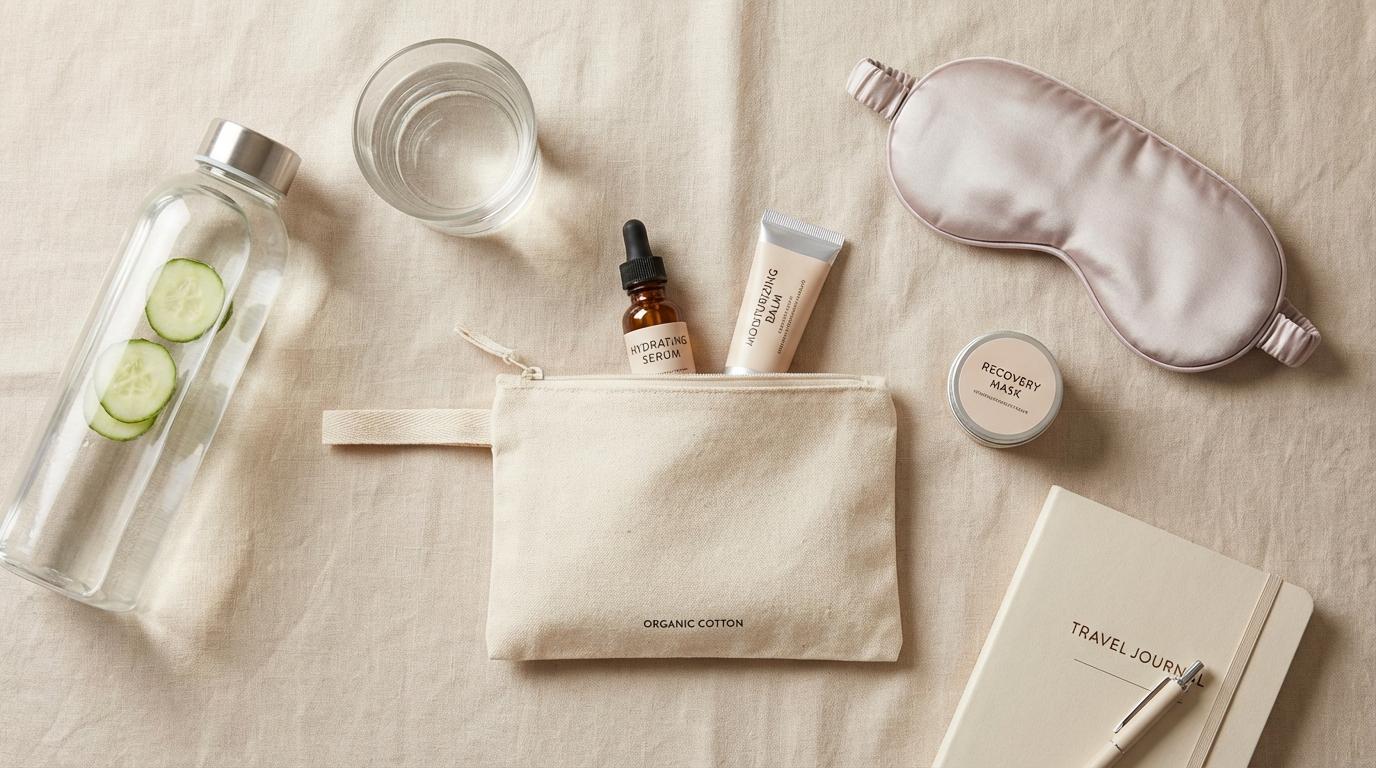
I spent 14 hours on a flight to Tokyo last year and stepped off the plane looking like a raisin in a hoodie. My skin was tight, flaky, and somehow both oily AND dry at the same time. After that disaster, I made it my mission to figure out exactly how to keep my skin intact during long flights. Here’s everything I’ve learned.
Why Planes Wreck Your Skin
Before we get into the routine, you need to understand what you’re dealing with. Airplane cabin humidity drops to around 10-20%. For context, the Sahara Desert sits at about 25%. You’re basically flying through conditions drier than a desert for hours on end.
This ultra-dry air pulls moisture straight out of your skin through a process called transepidermal water loss. Your skin tries to compensate by producing more oil, which is why you can end up both dehydrated and greasy. Add in recycled air, altitude changes that affect circulation, and the stress of travel, and your skin has a lot working against it.
Pre-Flight Hydration Prep (24-48 Hours Before)
Smart flight skincare starts before you even get to the airport. The goal is to get your skin as hydrated and resilient as possible before you subject it to the cabin environment.
- Hydrate internally: Drink more water than usual in the day or two leading up to your flight. Cut back on alcohol and caffeine, which are both dehydrating.
- Do a hydrating mask: The night before your flight, use a deeply hydrating overnight mask or sleeping pack. Products with hyaluronic acid, ceramides, or squalane work well here.
- Skip harsh actives: Avoid retinoids, strong AHAs, or anything that might compromise your skin barrier for 24-48 hours before flying. Your skin will already be stressed enough.
- Moisturize heavily: Layer your hydrating products thicker than normal the night before. Give your skin a moisture reserve to draw from.
What to Pack in Your Carry-On
Your in-flight skincare bag needs to work within TSA’s liquid restrictions (3.4 oz or less per container). Here’s what actually matters:
- Micellar water or cleansing wipes: For removing makeup and refreshing your face without water
- Hydrating mist: Look for one with glycerin or hyaluronic acid, not just plain water
- Hydrating serum: A travel size hyaluronic acid serum is worth the bag space
- Rich moisturizer: Something thicker than your daily moisturizer
- Lip balm: A thick, occlusive one. Your lips have no oil glands and will dry out fast.
- Hand cream: Hands show dehydration quickly. A urea-based cream works especially well.
- Sunscreen: Yes, really. UV rays are stronger at altitude and airplane windows don’t fully block UVA rays.
Skip the sheet masks. I know they look fun and everyone loves an airplane sheet mask photo, but here’s the thing: in an environment that dry, the mask can actually pull moisture back out of your skin once it starts drying. If you insist on using one, remove it after 10-15 minutes maximum.
The In-Flight Skincare Schedule
Here’s how I break down skincare during a long flight, assuming you’re on a 10+ hour journey.
Right After Boarding (Before Takeoff)
Once you’re settled in your seat, take off your makeup if you’re wearing any. Use micellar water or cleansing wipes. Yes, it feels weird doing skincare on a plane surrounded by strangers, but your skin will thank you. Actually, scratch that, your skin doesn’t thank anyone. Your skin will just be less angry at you later.
After cleansing, layer on your hydrating serum while your skin is still slightly damp from the micellar water. Follow immediately with your rich moisturizer. The key word is immediately. In air this dry, you have seconds before that hydration starts evaporating.
Apply lip balm and hand cream. Put on sunscreen if you’re in a window seat.
Every 2-3 Hours During the Flight
Set a reminder on your phone if you need to. Every few hours, do a mini refresh:
- Mist your face with your hydrating spray
- Immediately follow with a thin layer of moisturizer to seal it in
- Reapply lip balm
- Drink water (this is your reminder)
Here’s a mistake I see people make constantly: they mist their face and then just… sit there. In a dry environment, water on your skin with nothing to seal it will evaporate and take your existing moisture with it. You’ll end up drier than before. Always, always follow mist with moisturizer.
One Hour Before Landing
This is when you prep to look like a functioning human when you step off the plane. Cleanse again if your skin feels grimy. Apply your serum and moisturizer one more time. If you want to wear makeup, now’s the time to put it on. Keep it minimal, though. Heavy foundation on already stressed skin is a recipe for a breakout.
I usually just do a tinted SPF, concealer under my eyes, and mascara. Good enough to look awake in passport control photos.
Landing Looking Human
Beyond skincare, a few other tricks help you look less like a zombie when you land:
- Eye drops: Your eyes get dry on planes too. A few drops before landing helps you look more awake.
- Under-eye patches: If you have cooling gel patches, pop them on for the last 20 minutes of the flight. They reduce puffiness from the altitude and sitting position.
- Cold water: If you can get to the bathroom before landing, splash cold water on your face. It wakes up your circulation and reduces any swelling.
- Drink water the whole flight: I cannot stress this enough. Aim for about 8 oz per hour of flight time. Yes, you’ll have to pee more. That’s actually good, it forces you to get up and move, which helps with circulation.
Recovery Over the Next Few Days
Your skin won’t bounce back immediately after landing. Give it some extra attention for the next 2-4 days.
Day of arrival: Do a gentle, thorough cleanse when you get to your destination. Your skin has been marinating in recycled air and probably needs a proper wash. Follow with a hydrating mask, something creamy rather than a clay or peel-off mask. Sleep as much as you can.
Days 1-2 after arrival: Keep your routine simple and hydration-focused. This is not the time to try new products or do harsh treatments. Your skin barrier is compromised and needs time to recover. Use gentle cleansers, lots of hydrating serums, and rich moisturizers. If you’re traveling somewhere sunny, be extra diligent about SPF.
Days 3-4 after arrival: By now, your skin should be stabilizing. You can ease back into your normal routine, including actives if you use them. If you notice any breakouts (common after flying due to the stress on your skin), treat them gently rather than attacking them with harsh spot treatments.
According to dermatologist Dr. Shereene Idriss, the low humidity in cabin air leads to dehydration that can leave skin dull and more prone to sensitivity, which is why a gentle recovery period matters so much.
What Not to Do
A few things that will make your airplane skin situation worse:
- Drinking alcohol: It’s dehydrating and messes with your sleep, which your skin needs to recover.
- Wearing full makeup the whole flight: Your skin can’t breathe or receive the hydration it needs through layers of foundation.
- Using retinol or acids before/during travel: Compromised skin barrier plus dry cabin air equals irritation and redness.
- Touching your face: Airplane surfaces are not clean. Keep your hands off your face as much as possible.
- Skipping SPF: As noted by skincare experts at FOREO, UV exposure increases at higher altitudes, and airplane windows don’t fully block UVA rays.
Budget-Friendly Flight Skincare
You don’t need to buy special “travel skincare” products. Here’s how to do this affordably:
- Decant your regular products into small travel containers
- Micellar water: Garnier or Simple both work great and cost under $10
- Hydrating mist: Mario Badescu or Pixi have affordable options, or just buy travel-size rosewater from the drugstore
- Aquaphor works as both lip balm and a heavy-duty moisturizer in a pinch
- CeraVe Moisturizing Cream in the travel size is affordable and effective
For more detailed product recommendations, Marie Claire’s guide to airplane skincare has some solid options across different price points.
The Bottom Line
Long flights are rough on skin, but they don’t have to destroy it. The strategy is simple: hydrate before, protect during, and recover after. Pack the right products, set reminders to reapply throughout the flight, and give your skin grace for a few days after landing.
Your next long-haul flight doesn’t have to end with you looking like you survived a desert trek. With a little preparation, you can step off that plane looking like someone who maybe just took a really long nap instead of someone who’s been in a pressurized metal tube breathing recycled air for half a day.
Safe travels, and may your skin stay hydrated at 35,000 feet.