
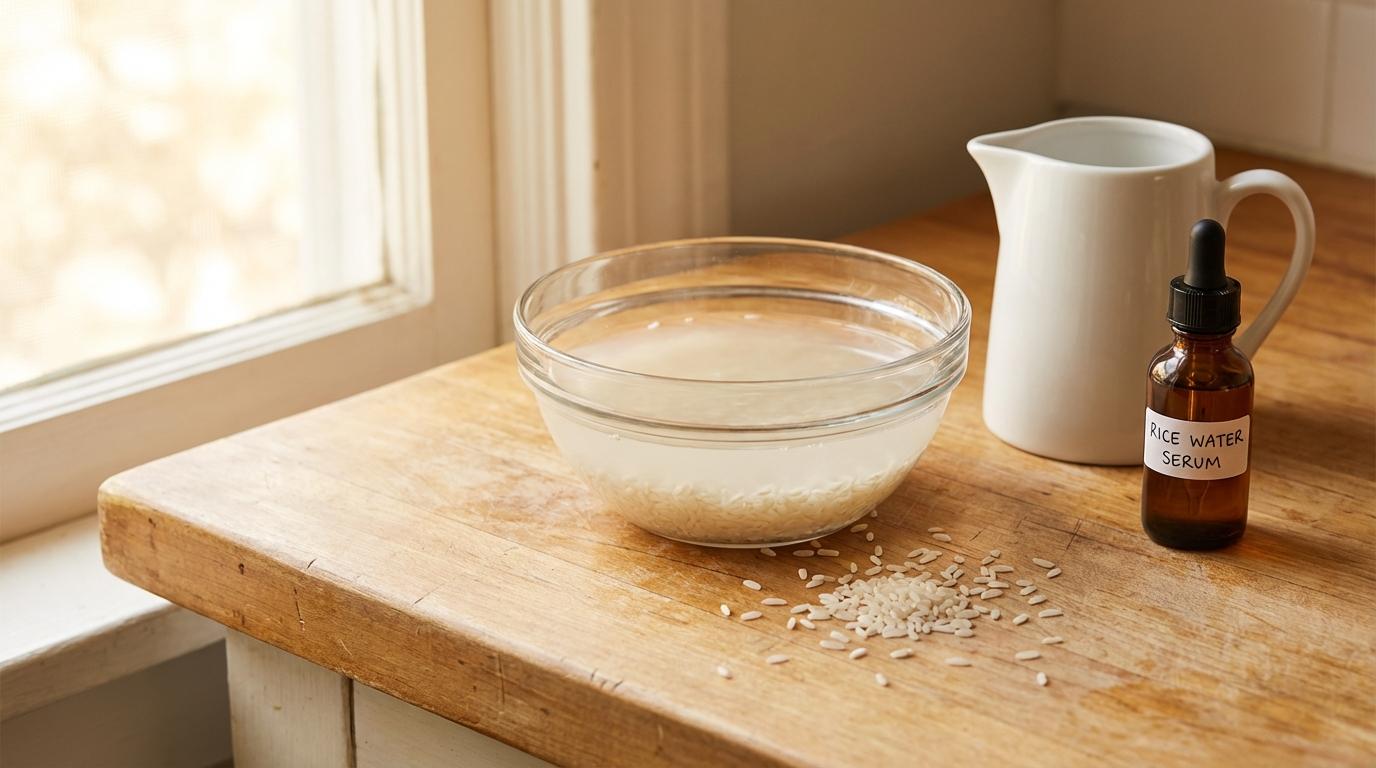
When rice soaks in water, starches and vitamins slowly leach from the grain into the surrounding liquid, creating a milky solution that Asian cultures have used for centuries on skin and hair. But does this traditional ingredient actually work, or is it just another overhyped TikTok trend? As someone who spent years studying biochemistry, I wanted to break down exactly what science tells us about rice water.
What’s Actually in Rice Water?
Before we can evaluate whether rice water works, we need to understand what you’re putting on your face. Rice water contains several compounds that are potentially beneficial for skin:
- Inositol – a carbohydrate that may help with cell repair and renewal
- Vitamins B and E – antioxidants that can help protect skin from environmental damage
- Amino acids – the building blocks proteins use to maintain skin structure
- Minerals – including zinc and magnesium in small amounts
- Starch – which has a soothing effect on irritated skin
The concentration of these compounds varies significantly depending on how you prepare your rice water. Plain soaking extracts less than boiling, and fermented rice water (where you let it sit for 24-48 hours) contains the highest concentration of active compounds plus additional fermentation byproducts.
See also: this post.
What Research Actually Shows
I’m going to be honest with you: the research on rice water specifically is limited. Most studies have been small or conducted in lab settings rather than on actual human skin. That said, here’s what we do know.
A 2018 study tested a rice water gel on 12 participants over 28 days. Researchers found that rice water showed antioxidant activity comparable to vitamin C, which is pretty impressive for something you can make in your kitchen. The study also noted that rice water reduced elastase activity. Elastase is an enzyme that breaks down elastin in your skin, so inhibiting it could theoretically help with firmness and elasticity over time.
Earlier research from 2002 looked at rice starch specifically and found that bathing in rice starch water improved skin healing capacity by about 20% in people with irritated skin. This supports the traditional use of rice water for calming inflammation.
Fermented rice water shows even more promise. According to research compiled by Formula Botanica, fermentation amplifies the production of beneficial compounds like organic acids, amino acids, and polyphenols. The fermentation process also lowers the pH, which may help with maintaining your skin’s acid mantle.
There’s also some evidence that compounds in rice can help regulate melanin production when skin is exposed to UV light. However, this doesn’t mean rice water can treat existing dark spots. It may help prevent future sun-related hyperpigmentation, but only as a supportive measure alongside actual sunscreen.
How to Make Rice Water Properly
If you want to try rice water, proper preparation matters. There are three main methods:
Simple Soak Method (Mildest)
- Rinse 1/2 cup of rice to remove dirt and impurities
- Place rice in a bowl with 2-3 cups of water
- Let it soak for 30 minutes to 2 hours
- Strain and transfer liquid to a clean container
- Store in the refrigerator for up to one week
Boiled Method (Concentrated)
- Rinse 1/2 cup of rice
- Boil in 2-3 cups of water until the rice is cooked
- Strain the water into a container (you can still eat the rice)
- Dilute with plain water before applying if the consistency is too thick
- Refrigerate and use within one week
Fermented Method (Most Potent)
- Follow the simple soak method first
- Instead of refrigerating immediately, leave the strained water at room temperature
- Let it sit for 24-48 hours until it turns slightly sour (this is normal)
- Once fermented, refrigerate and use within one week
- Dilute before use since fermented rice water is quite concentrated
Important note: fermented rice water has a distinct smell that some people find unpleasant. If you’re sensitive to scents, the simple soak method might be more practical for you.
Realistic Results Timeline
If you’re considering adding rice water to your routine, managing expectations matters. This isn’t a quick fix ingredient. Here’s what a realistic timeline looks like:
Week 1-2: You might notice your skin feels softer immediately after application due to the starch content. Any soothing effects on irritation could also appear within the first few uses. These are surface-level effects, not deep changes.
Week 3-4: Some people report improved skin texture and a subtle brightness. This is when consistent use starts to pay off, if it’s going to work for you at all.
Week 6-8: This is the minimum timeframe for evaluating any potential effects on elasticity or fine lines. Given that the research showing elastase inhibition was conducted over 28 days, you’ll need at least a month of consistent use to assess these deeper effects.
Here’s the truth: many people won’t see dramatic results. Rice water is a gentle ingredient with mild concentrations of active compounds. It’s not going to replace your retinol or vitamin C serum. Think of it as a potentially beneficial addition for those who want to experiment with traditional ingredients, not a miracle cure.
When You Should Skip Rice Water
Rice water isn’t for everyone. You should probably avoid it if:
- You have fungal acne (malassezia folliculitis). The starches and fermentation byproducts in rice water could potentially feed the yeast that causes fungal acne. If you’re prone to this condition, rice water might make things worse.
- You’re allergic to rice. This sounds obvious, but allergies can develop at any time. If you notice any itching, redness, or swelling after using rice water, stop immediately.
- You have severely compromised skin barrier. While rice water can be soothing for mild irritation, introducing a DIY product to raw, damaged, or eczema-flared skin adds unnecessary variables. Stick with dermatologist-recommended products until your skin heals.
- You’re impatient. If you need quick results, rice water will likely disappoint you. The effects, if any, are subtle and take weeks to appear.
Also consider skipping rice water if you already have a solid routine with proven actives like ingredients you understand well. Adding rice water won’t necessarily make your routine better. It might just make it more complicated.
How to Actually Use It
If you decide to try rice water, here’s how to incorporate it sensibly:
As a toner: After cleansing, apply rice water with a cotton pad or by patting directly onto skin. Follow with your regular serums and moisturizer. This is the most common application method.
As a rinse: After cleansing, splash rice water on your face, let it sit for a few minutes, then rinse with plain water. This works well if you find the residue feels too sticky to leave on.
As a mask base: Mix rice water with a bit of rice flour to create a paste. Apply for 10-15 minutes, then rinse. This gives you more of the starch-based soothing benefits.
Start by using rice water 2-3 times per week rather than daily. Even gentle ingredients can cause irritation with overuse, especially if you’re using the fermented version. If your skin responds well after a few weeks, you can gradually increase frequency.
Is Rice Water Worth It?
Rice water falls into an interesting category: it’s not a scam, but it’s also not the miracle ingredient social media sometimes makes it out to be. The science shows it has antioxidant properties and may help with skin soothing and texture over time. The research is promising but limited.
What rice water definitely has going for it is cost. You’re essentially using a kitchen byproduct. If you already cook rice regularly, you’re throwing away potential skincare for free. From a budget beauty perspective, it’s hard to argue with the economics.
My recommendation? If you’re curious and don’t fall into any of the skip-it categories, try it for 6-8 weeks and see what happens. Keep your expectations reasonable, maintain the rest of your routine, and treat it as an experiment rather than a solution. Sometimes the traditional ingredients our grandmothers used work for a reason. Sometimes they’re just nice rituals that don’t do much. The only way to know which category rice water falls into for your specific skin is to try it yourself.