
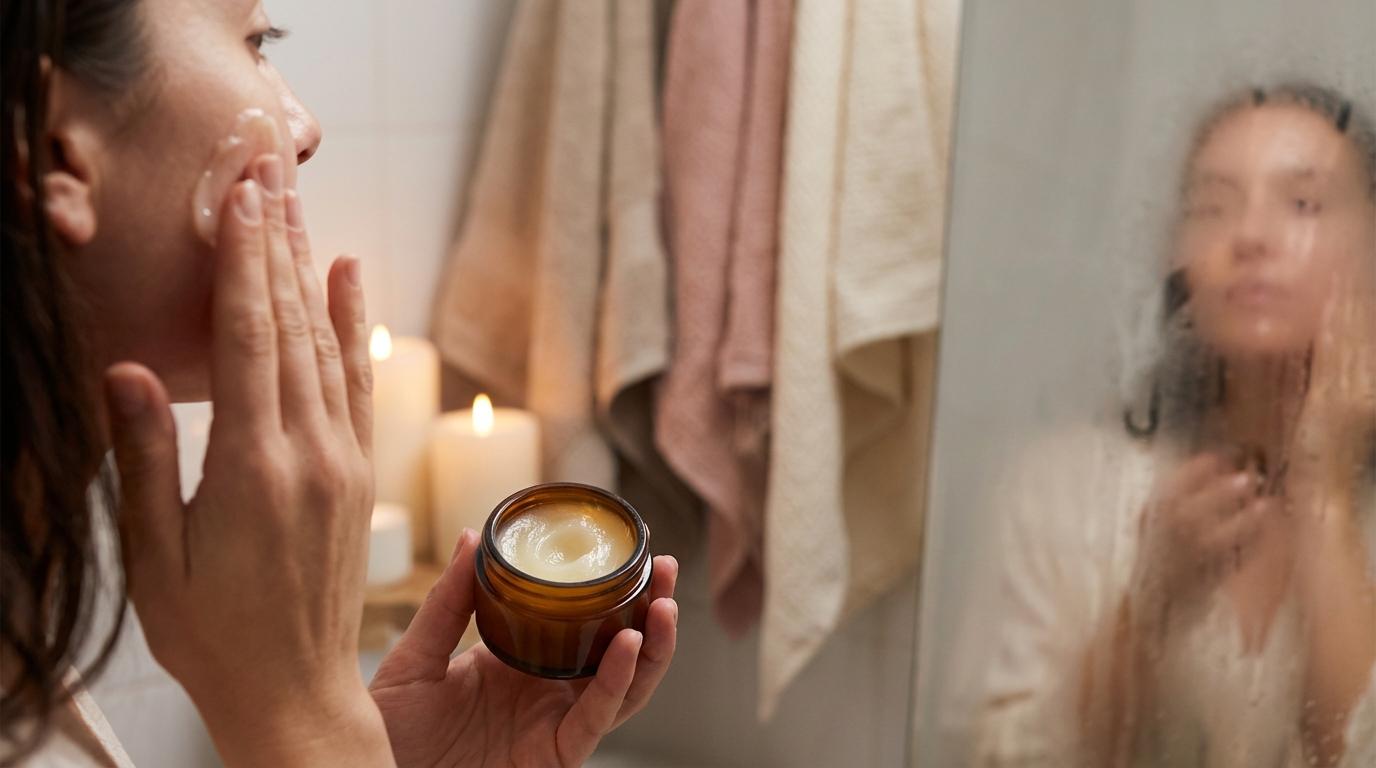
Why would anyone voluntarily coat their face in petroleum jelly before bed? It sounds chaotic, maybe even counterintuitive if you’ve spent years being told thick products clog pores. But slugging has actual science backing it up, and once you understand the mechanism, the shiny-face-at-midnight routine makes a lot more sense.
The Occlusion Mechanism
Slugging works through occlusion, which is basically creating a physical barrier on your skin’s surface. When you apply petroleum jelly (or another thick occlusive like Aquaphor or CeraVe Healing Ointment) over your skincare, you’re sealing everything underneath. Nothing gets in, and more importantly, very little gets out.
The barrier doesn’t let your skin “breathe” in the way some people worry about, but here’s the thing: your skin doesn’t actually need to breathe. It’s not a lung. What it does need is hydration, and occlusion keeps that hydration exactly where you put it. The petroleum jelly layer is like putting plastic wrap over leftovers. The moisture stays trapped.
This trapped moisture creates an optimal environment for your skin to absorb the products underneath. Whatever serums, treatments, or moisturizers you applied before the slug layer have nowhere to evaporate to. They stay on your skin, in contact with your skin, working longer than they would if exposed to air.
TEWL Prevention
The real star of the slugging show is something called transepidermal water loss, or TEWL. Your skin constantly loses water to the environment through evaporation. This is normal, but when it happens too fast, your skin gets dehydrated, tight, and compromised.
Factors that increase TEWL include dry air (hello, winter and air conditioning), hot showers, over-exfoliation, retinoid use, and anything that damages your skin barrier. High TEWL is basically your skin hemorrhaging moisture, and your expensive hydrating serums can only do so much if that water is just evaporating right back off.
Petroleum jelly reduces TEWL by up to 98% according to dermatological research. That’s dramatically more effective than most moisturizers, which typically reduce TEWL by 20-30%. When people say slugging is great for dehydrated skin, this is the mechanism. You’re not adding more water; you’re preventing the water you have from leaving.
Who Actually Benefits
Not everyone needs to slug, and that’s fine. But certain skin situations make slugging particularly useful:
Dehydrated skin: If your skin feels tight, looks dull, or shows fine lines that disappear when you moisturize, it’s dehydrated. This is a water problem, not an oil problem, and slugging directly addresses it by locking moisture in overnight.
Barrier damage: Went too hard on retinol? Over-exfoliated? Tried that new acid peel and now your face is angry? A few nights of slugging helps your barrier recover by reducing TEWL while your skin repairs itself.
Accutane or prescription retinoid users: These treatments dramatically increase TEWL and cause intense dryness. Dermatologists often recommend slugging to make the side effects more bearable.
Winter or dry climate dwellers: Low humidity environments steal moisture from your skin constantly. Slugging at night compensates for what the environment takes during the day.
Eczema or very dry skin types: Petroleum jelly routines have been used for these conditions for decades. The slugging trend is really just a rebranding of what dermatologists have recommended for ages.
When Occlusion Causes Problems
Slugging is not for everyone. The same mechanism that makes it helpful can make it problematic for certain skin types.
Oily or acne-prone skin: If your skin already produces plenty of oil, trapping it under an occlusive layer can create a warm, moist environment where bacteria thrive. Some people with acne can slug without issues, but many find it triggers breakouts. The occlusion doesn’t clog pores in itself (petroleum jelly is non-comedogenic), but it can worsen existing congestion.
Fungal acne (malassezia folliculitis): The yeast responsible for fungal acne loves the warm, moist conditions that slugging creates. If you have fungal acne or are prone to it, slugging can make flares worse.
Already-healthy skin: If your barrier is intact and your skin is well-hydrated, slugging doesn’t add much. It’s a tool for specific situations, not a mandatory step for everyone. Sometimes your skin just doesn’t need the extra help.
How to Slug Without the Drama
If you want to try slugging:
- Cleanse and apply your regular routine first (toner, serum, moisturizer)
- Wait a minute for products to absorb slightly
- Apply a thin layer of petroleum jelly, Aquaphor, or similar occlusive
- Sleep on a pillowcase you don’t care about (or use a silk one that wipes clean easily)
- Rinse in the morning; the jelly usually comes off easily
You don’t need to glob it on. A thin layer does the job. More product just means more mess on your pillow.
Start with once or twice a week to see how your skin responds. If you wake up with breakouts, your skin might not tolerate occlusion well. If you wake up with softer, more hydrated skin, you’ve found something that works.
What to Avoid Under the Slug
Because occlusion increases penetration of whatever’s underneath, be careful what you layer before slugging:
Strong retinoids: Slugging over tretinoin or high-percentage retinol can increase irritation. Some people do it successfully to manage dryness, but start cautiously. The increased penetration means increased potency, which can mean increased irritation.
Acids: Don’t slug over AHAs, BHAs, or other acids. The increased penetration can lead to chemical burns or serious irritation.
Anything irritating: If a product already makes your skin sensitive, slugging over it amplifies the effect. Save the slug for gentle, hydrating products.
The Simple Truth
Slugging isn’t magic, and it isn’t new. It’s just applying petroleum jelly (which dermatologists have recommended for dry skin for over a century) and calling it a trend. The science is solid: occlusion reduces water loss, helps products absorb, and supports barrier function.
Whether it’s right for you depends entirely on your skin. Dry, dehydrated, barrier-damaged skin benefits. Oily, acne-prone, or fungal-acne-prone skin probably doesn’t. Try it, pay attention to how your skin responds, and adjust accordingly.
Sometimes the weirdest-looking skincare step is the one that actually works. Waking up looking like you face-planted into a butter dish might not be glamorous, but if your skin is happier for it, who cares what the pillow thinks?