
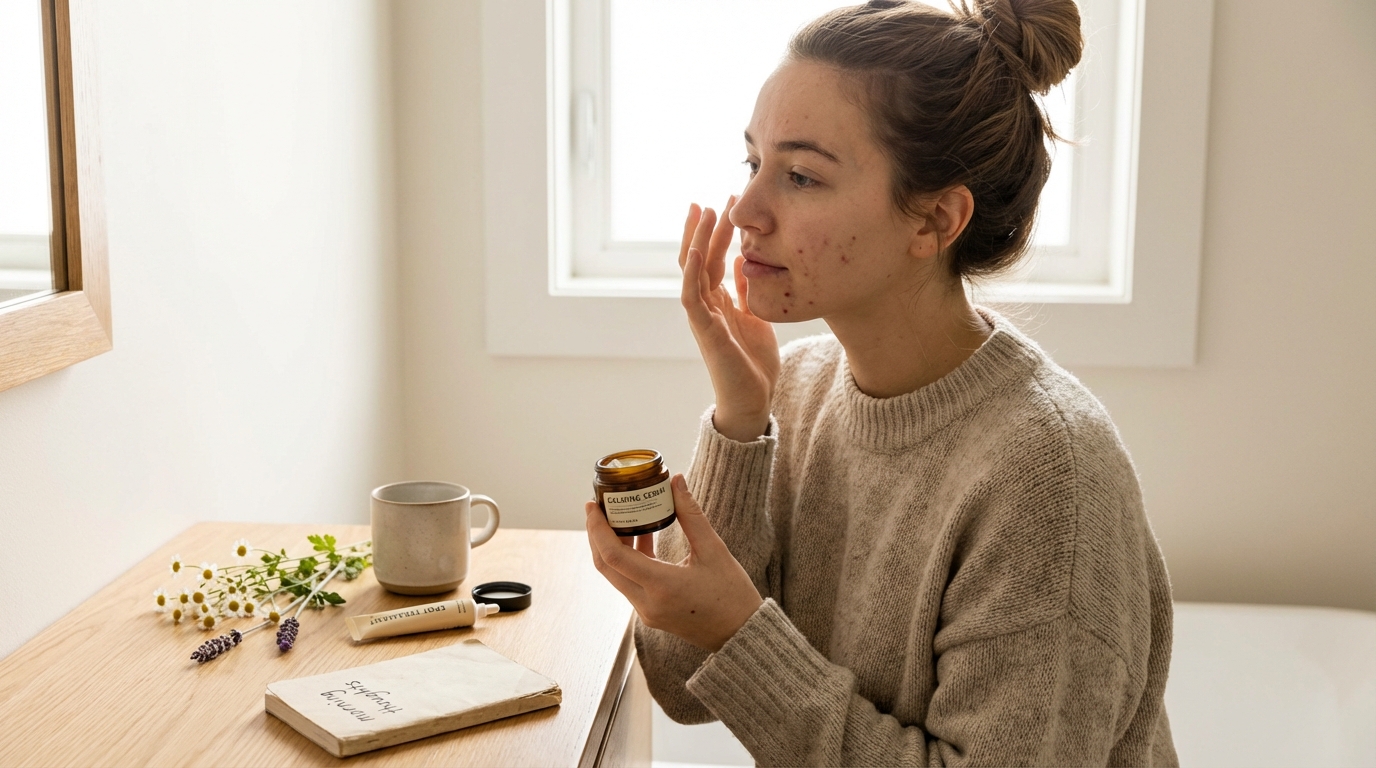
Let me guess: you’ve been stressed out of your mind lately, and your skin has decided this is the perfect time to absolutely lose it. Like, you’re dealing with deadlines, family drama, or whatever chaos life has thrown at you, and now your face wants in on the action. Cool. Very cool. (Not cool at all.)
Here’s the thing nobody warns you about: stress doesn’t just make you feel terrible. It literally changes your skin. Your body starts pumping out cortisol, which is basically your “everything is on fire” hormone, and your skin responds by producing more oil, getting inflamed, and generally acting like a teenager going through it. I’ve been there. Finals week, job interviews, that time I accidentally sent a text to the wrong person and had to spend three days in hiding. Every single time, my chin decided to throw a party I didn’t RSVP to.
But you can fight back. Not with aggressive products that will make everything worse (please, I’m begging you, put down that 10% benzoyl peroxide you’re eyeing), but with a routine that actually works with your stressed-out skin instead of against it.
Understanding the Cortisol and Skin Connection
So here’s the science bit, and I promise I’ll make it quick because I know you’ve got things to do (or things to stress about, same difference).
When you’re stressed, your body releases cortisol. This hormone tells your sebaceous glands to produce more oil, which is why you might notice your skin getting greasier even if you’re not changing anything in your routine. More oil means more clogged pores, which means more breakouts. It’s a fun little domino effect that nobody asked for.
But that’s not all! (This is not the good kind of infomercial energy.) Cortisol also triggers inflammation throughout your body, including your skin. This is why stress breakouts tend to be those deep, painful, cystic types that hurt to touch and take forever to go away. According to the American Academy of Dermatology, stress can trigger or worsen existing acne by increasing inflammation and oil production.
Your skin barrier also takes a hit when you’re stressed. It becomes more permeable, which means it’s easier for irritants to get in and harder for moisture to stay locked in. So now you’ve got oily, inflamed, dehydrated skin that’s breaking out. Fantastic.
The good news? Once you understand what’s happening, you can actually do something about it. You can’t always control your stress levels (trust me, I’ve tried manifesting my problems away and it did not work), but you can control how you treat your skin during stressful periods.
Calming Products to Reach For During Stress
When your skin is stressed, the worst thing you can do is stress it out more. This is not the time for your most powerful actives or your harshest treatments. I know it’s tempting. I know you want to attack those breakouts with everything you’ve got. But aggressive products on already-compromised skin is a recipe for disaster, and I speak from experience. (RIP to my skin barrier, 2019.)
Instead, focus on gentle, calming ingredients. Centella asiatica (also called cica) is incredible for calming inflammation. You’ll find it in a lot of Korean skincare products, and it genuinely helps soothe angry skin without causing more problems.
Niacinamide is another one to look for. It helps regulate oil production and has anti-inflammatory properties, so it addresses multiple stress-skin issues at once. Keep it at lower concentrations though, around 2-5%. The super-high percentages can be irritating when your skin is already sensitive.
Ceramides are your friends right now. Remember how I mentioned your skin barrier gets compromised when you’re stressed? Ceramides help repair and strengthen that barrier. Look for moisturizers with ceramides listed high in the ingredients.
And please, keep your routine simple. This is not the time to try that new acid you bought or experiment with layering six different serums. Cleanser, maybe a calming serum, moisturizer, sunscreen. That’s it. Your skin needs stability right now, not a chemistry experiment.
Spot Treating Stress Acne the Right Way
Okay, so you’re being gentle with your overall routine, but you’ve got these specific breakouts that need addressing. I get it. Looking at a new pimple every morning is not great for the stress levels you’re trying to manage.
For those painful, under-the-skin bumps that stress loves to create, hydrocolloid patches are genuinely helpful. They’re not going to make a cystic pimple disappear overnight (nothing will, sorry to break it to you), but they protect the area, absorb some of the gunk, and most importantly, stop you from touching it. Because you were going to touch it. We both know you were going to touch it.
If you’re using a spot treatment, salicylic acid at around 2% is generally gentler than benzoyl peroxide while still being effective. Apply it only to the actual breakouts, not your whole face. Your non-breakout areas don’t need it, and spreading active ingredients everywhere when your skin is already stressed is asking for trouble.
For really inflamed spots, some people swear by sulfur treatments. They’re old school but they work, and they’re usually less irritating than other options. Fair warning though: they do smell like, well, sulfur. Which is not great. But sometimes effectiveness beats smelling nice.
Ice can help with inflammation too. Wrap an ice cube in a clean cloth and hold it on a really angry pimple for a minute or two. It won’t cure anything, but it can reduce swelling and make it less painful. Plus it’s free, which is nice when you’ve already spent money on seventeen products trying to fix this situation.
Prevention for Next Time (Because There Will Be a Next Time)
Look, stress is part of life. Unless you’re planning to move to a remote island with no wifi and no responsibilities (if you find one, please send coordinates), you’re going to have stressful periods again. But you can be better prepared.
First: have your gentle products ready. When you notice stress ramping up, that’s your cue to scale back your routine preemptively. Don’t wait until your skin is already freaking out. Swap to gentler formulas before the breakouts start.
Second: sleep matters more than any product. I know, I know, you can’t always control your sleep when you’re stressed. But even getting to bed 30 minutes earlier can help. Your skin does most of its repair work while you sleep, and cortisol levels naturally drop overnight. Sleep is literally free skincare and we all need to take advantage of it more.
Third: look at what else might be contributing. When I’m stressed, I eat like garbage, drink way too much coffee, and touch my face constantly. All of those make breakouts worse. I’m not saying you need to be perfect (we’re all just trying to survive here), but being aware of your stress habits can help you minimize damage.
Fourth: stress management isn’t just skincare adjacent, it IS skincare. Whatever helps you decompress, whether that’s exercise, meditation, screaming into a pillow, or watching the same comfort show for the fifteenth time, make time for it. According to Harvard Health, chronic stress keeps cortisol elevated, which keeps your skin in crisis mode. Anything that genuinely lowers your stress levels will show up in your skin eventually.
The annoying truth is that stress breakouts are your body’s way of telling you something is off. You can treat the symptoms (and you should, because nobody needs to suffer with painful acne on top of everything else), but the real fix involves addressing what’s stressing you out in the first place. I know that’s not what you wanted to hear. I didn’t want to hear it either when I was stress-breaking-out before a job interview. But it’s true.
For now, be gentle with your skin and yourself. Use calming products, don’t pick at anything (I know it’s hard, I believe in you), and try to get some sleep. Your skin will calm down eventually. It always does. And next time you feel the stress building, you’ll know exactly what to do. Or at least you’ll have your centella serum ready, which is basically the same thing.