
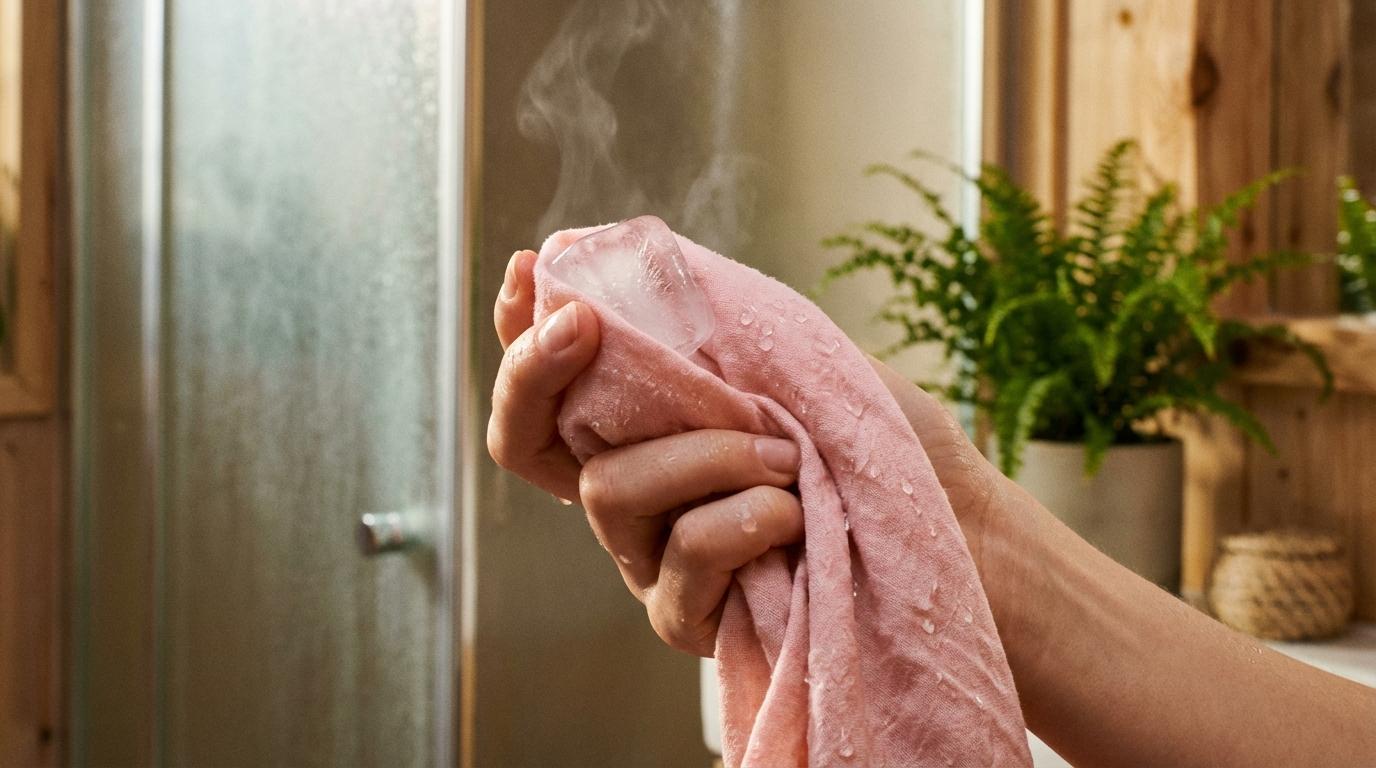
Putting ice on a pimple is supposed to reduce swelling and make it less angry. The problem is that ice can actually irritate your skin further, cause damage to the surface, and in some cases leave you with a bigger, redder mess than what you started with.
When Cold Actually Helps (And Why)
Credit where it’s due, there is real science behind cold therapy for inflammation. When you apply something cold to swollen tissue, the blood vessels underneath constrict. Less blood flow means less redness and less of that throbbing, painful pressure you get with deep cystic pimples. Dermatologists do use cryotherapy in certain treatments, and cold compresses are a standard recommendation for all kinds of swelling. The concept is sound.
The catch (because there’s always a catch) is that clinical cold therapy is carefully controlled. The temperature, the duration, the method of application. When a doctor uses cold to treat inflammation, they’re working with precise tools and protocols. When you’re holding an ice cube wrapped in a paper towel against your chin at midnight, the situation is significantly less controlled. And that gap between clinical precision and DIY panic is exactly where things go wrong.
Ice Burns Are Real and They Happen Fast
This is the part nobody talks about enough. Ice can literally burn your skin. It sounds contradictory, something so cold causing a burn, but the mechanism is straightforward. Direct contact with ice (or anything at freezing temperature) damages skin cells in a way that’s functionally similar to a mild thermal burn. The technical term is cold-induced injury, and facial skin is especially vulnerable because it’s thinner than skin on most other parts of your body.
You don’t need prolonged contact for this to happen either. Pressing an ice cube directly against a pimple for even two or three minutes can cause redness, peeling, and irritation that lasts days longer than the pimple itself would have. And if you’re already using active ingredients like retinoids or chemical exfoliants (which thin the outer layer of skin), you’re even more susceptible to cold damage. The skin around an active breakout is already inflamed and compromised. Adding extreme cold to an already stressed area is like yelling at someone who’s already having a bad day. It does not help.
Some people develop actual frostbite patches from icing pimples too aggressively. These show up as white or grayish spots that eventually peel and can leave behind hyperpigmentation, especially on darker skin tones. Trading a pimple that would have lasted four days for a dark mark that lasts four months is not the trade anyone wants to make.
The Rebound Effect Nobody Warns You About
Even if you manage to avoid an ice burn, there’s another issue. When you remove the ice, your body responds to the sudden temperature change by rushing blood back to the area. This is called reactive hyperemia (fancy term for your body overcorrecting), and it can actually increase inflammation and redness temporarily. That deep, cystic pimple you were trying to shrink? It might look even puffier thirty minutes after you stop icing it.
The body is genuinely trying to help here. It detects that tissue was exposed to extreme cold, so it floods the area with warm blood to prevent damage. But the result is that any swelling reduction you achieved during the icing disappears, sometimes with interest. Repeated icing and warming cycles throughout the day can keep the area in a constant state of vascular confusion, which isn’t doing your breakout any favors.
Better Ways to Handle a Swollen Breakout
If what you really want is to reduce the size and redness of an inflamed pimple, there are approaches that work more reliably and carry less risk.
- Hydrocolloid patches. These small adhesive patches draw fluid out of a pimple while protecting it from bacteria and your fingers. They work best on pimples that have come to a head, but even on deeper spots, they can reduce inflammation overnight. They’re cheap, they’re available at every drugstore, and they genuinely work.
- Benzoyl peroxide spot treatment. A small dab of 2.5% benzoyl peroxide directly on the pimple kills acne-causing bacteria and helps reduce inflammation. Lower percentages work just as well as higher ones for spot treatment, with significantly less irritation and dryness.
- Sulfur-based treatments. Sulfur dries out individual pimples and has anti-inflammatory properties. Sulfur masks or spot treatments applied overnight can visibly reduce a pimple’s size by morning. They smell a bit rough (not going to sugarcoat that), but they’re effective.
- A warm compress. This might sound counterintuitive since we just spent several paragraphs discussing cold, but gentle warmth (a clean washcloth soaked in warm, not hot, water) can actually help a deep pimple come to the surface faster. Warmth increases circulation in a controlled way, which can help the body resolve the infection on its own timeline rather than trying to force it down.
If You’re Going to Ice Anyway, Do It Right
Reality check: some people are going to ice their pimples regardless of what any article says. If that’s you (no judgment, truly), at least minimize the damage.
Never apply ice directly to your skin. Wrap it in a soft, clean cloth. A thin cotton washcloth or several layers of paper towel create enough of a barrier to prevent direct cold contact while still transmitting the cooling effect. Keep the application to sixty seconds maximum, then remove and wait at least five minutes before even considering another round. One or two rounds is enough. Doing it every hour is not going to speed anything up and will very likely cause irritation.
Skip the ice entirely if you’ve applied any exfoliating acids or retinoids to the area in the past twenty-four hours. Your skin barrier is already thinned, and cold exposure will compound the sensitivity. Also skip it if the pimple is open, popped, or actively oozing. Cold applied to broken skin can slow healing and increase the chance of scarring.
Pay attention to what your skin tells you during and after. If the area looks more red or irritated an hour after icing than it did before, that’s your sign to stop. More is not better with cold therapy. If you notice any whitening or numbness during application, remove the ice immediately. Those are early signs of cold injury.
What’s Really Going On When You Reach for the Ice
Part of the appeal of icing a pimple is that it feels like you’re actively doing something about it. A painful, swollen breakout creates a sense of urgency, a need to fix it right now. Ice feels proactive. It feels aggressive in a satisfying way. But most of the time, the best thing you can do for an inflamed pimple is apply a proper spot treatment and then leave it completely alone. Touching it less, looking at it less in the mirror, resisting the urge to try every hack you’ve seen online.
Breakouts resolve. Sometimes faster than you expect, sometimes slower. But adding cold stress to already inflamed skin rarely makes the timeline shorter, and it frequently makes things worse. A simple spot treatment, clean hands, and a bit of patience will outperform an ice cube almost every time. And if your breakouts are frequent or severe enough that you’re regularly in emergency-pimple mode, that’s a signal to look at your overall acne routine rather than treating each individual spot as a crisis.