
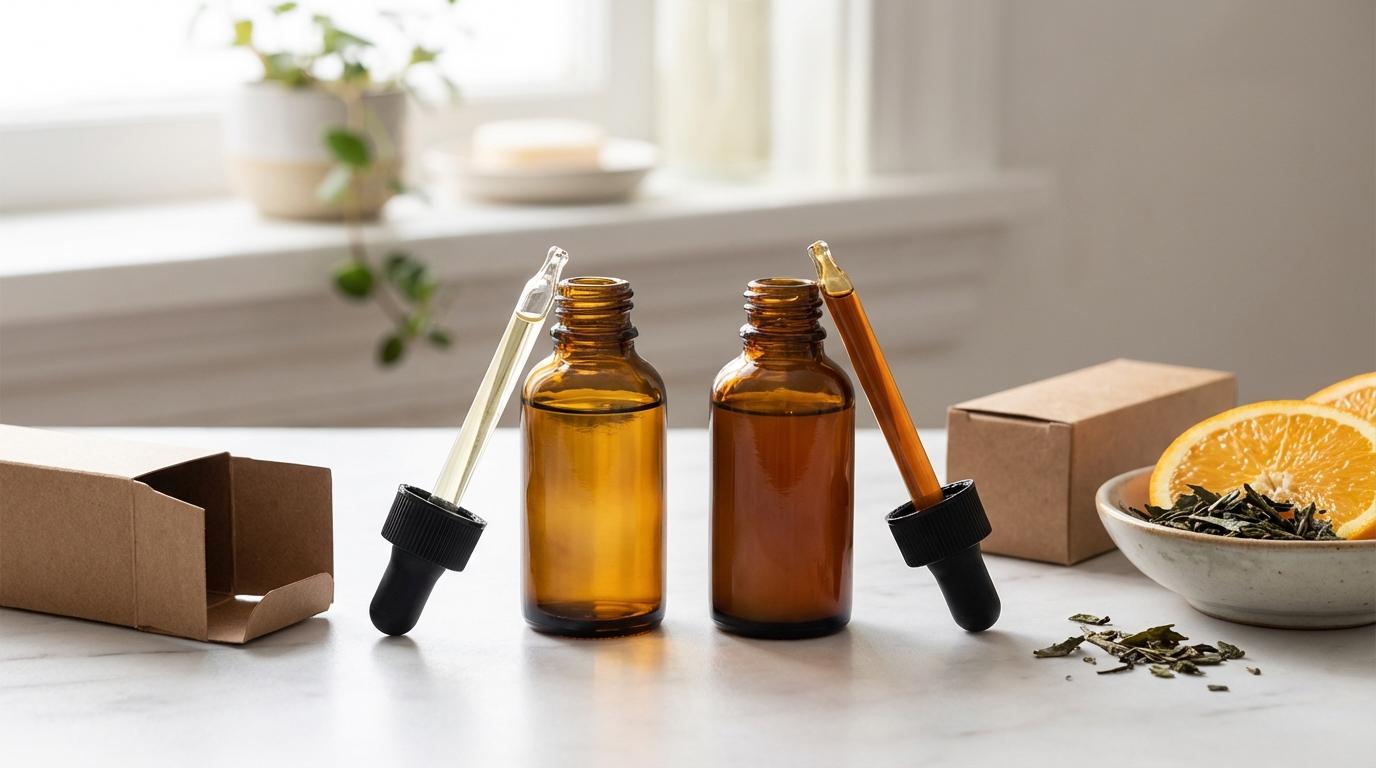
Okay so you finally invested in a vitamin C serum (proud of you), used it like three times, forgot about it for a month, and now it looks like someone poured iced tea into the bottle. Cool. Very cool. This is fine.
Spoiler: it is not fine. But also, it is not entirely your fault. Vitamin C serums are basically the drama queens of skincare, and I say this with love because I have also murdered several bottles myself. Let me break down what is happening in that sad little dropper bottle and what you can actually do about it.
What Oxidation Actually Means (Without the Chemistry Class Lecture)
When your vitamin C serum changes color, that is oxidation. In normal human terms: the vitamin C molecules are reacting with oxygen in the air and basically breaking down. Think of it like how an apple slice turns brown when you leave it on the counter. Same energy, different product.
The form of vitamin C in most serums is called L-ascorbic acid, and it is notoriously unstable. This is actually the most effective form for your skin, but it comes with the personality of a moody houseplant that needs very specific conditions to survive.
When L-ascorbic acid oxidizes, it converts into something called dehydroascorbic acid first (still somewhat useful, honestly), and then eventually into other compounds that do absolutely nothing for your skin. The color progression typically goes: clear or very pale yellow, to yellow, to orange, to brown. The darker it gets, the more degraded it is.
Here is the annoying part: this process starts the moment the bottle is opened. Every single time you use it, you are introducing more air and more potential for oxidation. Some breakdown is inevitable. The goal is just to slow it down as much as possible.
The Storage Mistakes You Are Probably Making Right Now
I am going to list these and you are going to feel called out. It is okay. We have all been there.
Leaving it in your bathroom: Your bathroom is basically a sauna. Hot showers create humidity and heat, both of which speed up oxidation like nobody’s business. That cute little shelf above your sink? Terrible location. According to skincare experts at Byrdie, storing vitamin C at room temperature can cause it to degrade significantly faster than refrigerated products.
Keeping it near a window: Light exposure (especially UV light) breaks down vitamin C faster than my motivation on a Monday morning. Even ambient light through a window counts. This is why good vitamin C serums come in dark or opaque bottles, but that only does so much.
Not closing the cap tightly: I know you are rushing through your morning routine. I know you sometimes just set the dropper on top without actually sealing it. Every second that bottle is open, oxygen is getting in and starting the oxidation party.
Buying massive bottles: That economy size seemed like such a good deal, right? But unless you are using vitamin C serum on your entire body (please do not), a giant bottle means more air space inside as you use it up, and more time for oxidation to happen before you finish it. Smaller bottles that you replace more frequently will actually give you better results.
Ignoring the manufacturing date: Check when your serum was actually made, not just the expiration date. A product that has been sitting on a shelf for 18 months before you bought it has already been oxidizing that whole time. Paula’s Choice recommends using vitamin C serums within three months of opening for best results.
When It Is Still Usable Versus When It Is Literally Trash
Here is the part everyone wants to know: can you still use your slightly yellow serum or should you throw it out?
Still usable (probably): If your serum has gone from clear to a light yellow or pale orange, it is not at full strength anymore, but it can still provide some antioxidant benefits. Think of it as vitamin C running at like 60% capacity. Not ideal, but not completely pointless either. You might notice less dramatic results, but it is not going to hurt your skin.
Getting questionable: Medium orange is the danger zone. At this point, the serum has lost most of its effectiveness. You could still use it as a body serum if you want to use it up (waste not, want not), but it is probably not doing much for your face anymore. If you have sensitive skin, I would honestly skip it at this stage because the oxidized compounds can potentially be irritating.
Throw it away: Dark orange to brown means your serum is toast. Seriously, toss it. Not only is it not providing benefits, but according to dermatologists interviewed by Allure, heavily oxidized vitamin C can actually cause some skin irritation and potentially contribute to free radical damage (which is literally the opposite of what you bought it for).
Another sign to watch for: if it smells different than when you bought it, that is your cue. Oxidized vitamin C develops a distinct smell that is kind of metallic or just… off. Trust your nose on this one.
How to Actually Prevent This From Happening Again
Alright, let us talk solutions. Because buying a new serum every month and watching it turn brown is expensive and deeply frustrating.
Store it in the fridge: I know this sounds extra, but refrigeration genuinely extends the life of your vitamin C serum by slowing down the oxidation process. Keep it in the door or somewhere you will actually see it and remember to use it. Cold vitamin C actually feels kind of nice on your face in the morning anyway.
Look for better packaging: Airless pump bottles are significantly better than dropper bottles because they minimize air exposure with each use. Some brands also use opaque packaging or include additional antioxidants like vitamin E and ferulic acid, which help stabilize the vitamin C. These products cost a bit more, but they last longer, so it often evens out.
Consider different forms of vitamin C: L-ascorbic acid is the most potent but also the most unstable. Derivative forms like sodium ascorbyl phosphate or ascorbyl glucoside are more stable and less prone to oxidation, though they may be slightly less effective. For some people, especially those who consistently struggle with oxidation issues, these alternatives make more sense.
Buy smaller bottles more frequently: A fresh 15ml bottle is better than a half-empty 30ml bottle that has been oxidizing for months. It feels counterintuitive to spend more money on smaller sizes, but you are actually getting more active vitamin C this way.
Use it consistently: The faster you go through your serum, the less time it has to oxidize. This is your excuse to actually stick to your skincare routine. Daily use (or twice daily if your skin tolerates it) means you finish the bottle before it has a chance to turn into orange juice.
Look, vitamin C serums are high maintenance. That is just the reality. But when they are working properly, they genuinely help with brightness, dark spots, and protecting your skin from environmental damage. The key is treating them like the delicate little science experiments they are instead of something you can just toss under your sink and forget about.
Now go check your bathroom cabinet. I will wait.