
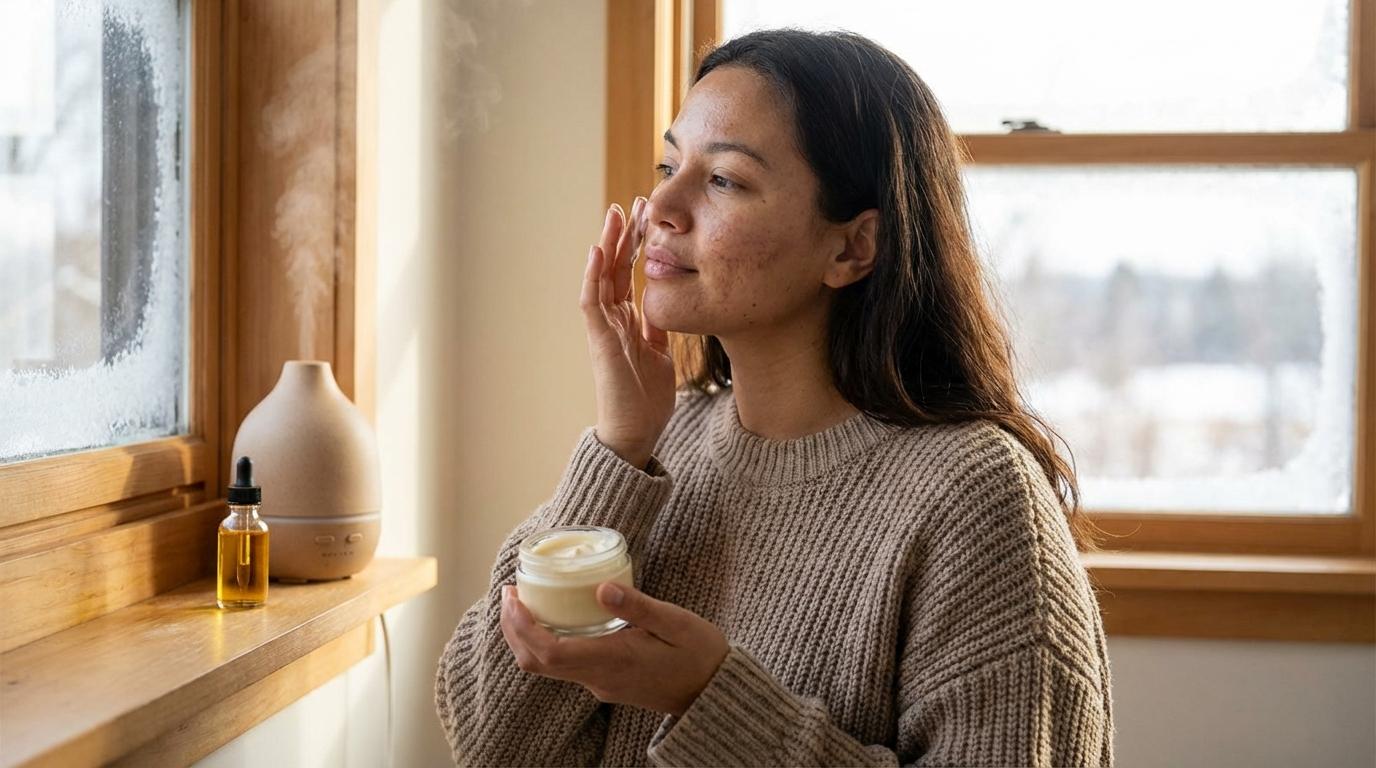
I spent years ignoring winter skincare advice. “Just moisturize more,” they said. “Use a heavier cream,” they said. I nodded, kept using my gel moisturizer, and wondered why my face felt like sandpaper by February.
Here is the thing nobody tells you: winter does not just dry out your skin. It fundamentally changes how your skin functions. And if you keep using your summer routine, you are basically setting yourself up to fail.
What Actually Happens to Your Skin in Winter
Cold air holds less moisture than warm air. Basic physics. When you step outside in winter, the air literally pulls water from your skin’s surface. Your body cannot keep up with the demand.
Your skin’s lipid barrier, the fatty layer that keeps moisture locked in, gets compromised. Think of it like a brick wall where the mortar starts crumbling. The bricks (your skin cells) are still there, but everything is falling apart between them.
According to the American Academy of Dermatology, winter causes transepidermal water loss to increase significantly. Your skin is literally leaking moisture it cannot afford to lose.
And that tight, uncomfortable feeling after washing your face? That is not “clean.” That is damage.
Indoor Heating Is Making Everything Worse
You escape the cold and think you are safe. Wrong.
Central heating drops indoor humidity to around 10 to 20 percent. For reference, the Sahara Desert averages about 25 percent humidity. Your apartment in January might actually be drier than the desert.
Your skin responds by ramping up oil production to compensate. So now you have dehydrated skin that is also oily. Congestion follows. Breakouts happen. You think you need to strip your skin more. The cycle continues.
A study published in the British Journal of Dermatology found that low humidity environments cause measurable changes to skin barrier function within just a few hours of exposure.
Your radiator is working against you. Accept it and adapt.
Making the Switch: Gel to Cream
If you have been using a gel or water-based moisturizer all year, winter is when that stops working.
Gels are mostly water and lightweight humectants. Great for humid summer days when your skin can pull moisture from the air. Useless in winter when the air has nothing to give.
Cream moisturizers contain more occlusive ingredients. These are the fats and waxes that sit on top of your skin and physically prevent moisture from escaping. In winter, you need that barrier.
Look for ingredients like:
- Ceramides (repair the lipid barrier)
- Squalane (mimics your natural sebum)
- Shea butter (occlusive without clogging)
- Glycerin paired with occlusives (humectant plus seal)
The CeraVe research team explains that ceramides make up about 50 percent of your skin’s barrier. When you lose them, you lose moisture retention. Creams help replace what winter strips away.
You do not need to spend a fortune. Drugstore ceramide creams work just as well as expensive ones. The science is the same.
Facial Oils Are Not Optional Anymore
I used to think facial oils were for dry skin types only. Then I spent one winter with dehydrated combination skin and learned my lesson.
Oils do something moisturizers cannot. They create a true occlusive seal. Even the most emollient cream has gaps. Oil fills those gaps.
The trick is layering. Apply your regular moisturizer first, then a few drops of oil on top. The oil locks everything in. It is not about replacing your moisturizer. It is about protecting it.
Best oils for winter according to Paula’s Choice research:
- Squalane (lightweight, absorbs well, works for everyone)
- Rosehip (vitamin A benefits, good for texture issues)
- Marula (rich in antioxidants, slightly heavier)
- Jojoba (closest to natural sebum, balances oily areas)
Start with squalane if you are nervous. It is the most foolproof option. Does not break people out. Does not feel greasy. Just works.
The Practical Winter Routine Shift
You do not need to overhaul everything. Small changes make the biggest difference.
Morning:
- Skip the foaming cleanser. Use a gentle cream or milk cleanser instead. Or just splash with water.
- Apply a hydrating toner or essence while skin is still damp.
- Layer your cream moisturizer (not gel).
- Sunscreen. Yes, even in winter. UV damage does not take holidays.
Evening:
- Double cleanse if wearing makeup or sunscreen.
- Hydrating toner on damp skin.
- Any treatments (retinoids, actives). Consider using them less frequently in winter.
- Cream moisturizer.
- Facial oil on top to seal.
One more thing: scale back on active ingredients. Your skin is already stressed. Acids and retinoids increase sensitivity. Use them once or twice a week instead of daily. Your barrier needs time to recover between treatments.
The Humidity Fix
Get a humidifier. Put it in your bedroom. Run it at night.
This is the single most effective thing you can do for winter skin. You can buy the best creams in the world, but if you are sleeping in desert-dry air for eight hours, you are fighting a losing battle.
Aim for 40 to 50 percent humidity indoors. Your skin, your sinuses, and your houseplants will all perform better.
The Mayo Clinic recommends humidifiers for dry skin relief. They are not wrong.
Stop Fighting the Season
Winter skin is different from summer skin. Treating it the same way is why you feel like your products stopped working every December.
Make the switch now. Richer moisturizer. Add an oil. Get a humidifier. Use gentler cleansers.
Your routine should change because your environment changed. That is not high-maintenance skincare. That is common sense.