
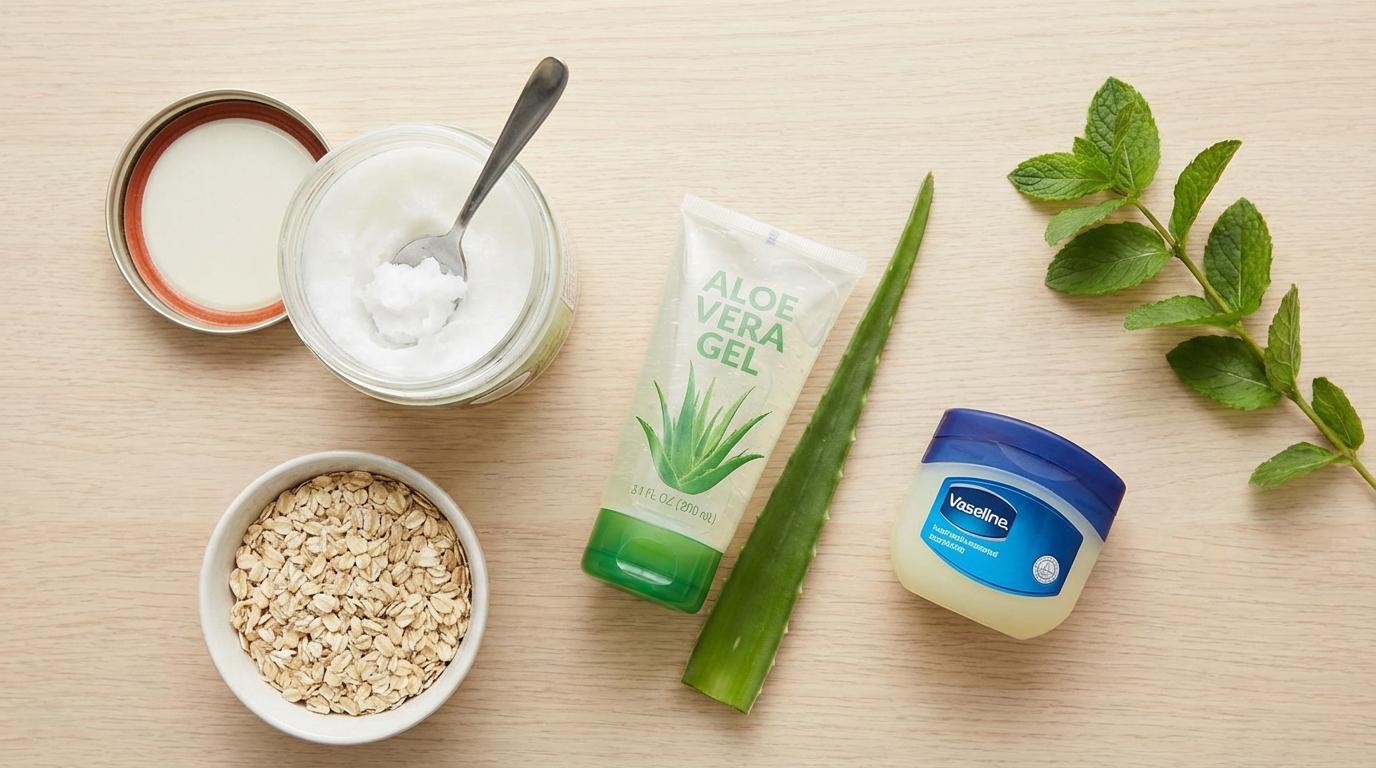
I used to speed-walk past the skincare section at my grocery store, convinced that “real” skincare only came from Sephora or some fancy dermatologist’s office. Then I started paying attention to ingredient lists, and honestly? I felt like a fool for ignoring what was right there next to the bread and milk.
The truth is, some of the most effective skincare ingredients have been sitting on grocery store shelves for decades. Not everything works (we’ll get to that), but a few staples absolutely deserve a spot in your routine. Let’s break down what’s actually worth grabbing on your next shopping trip.
Aloe Vera Gel: The Underrated Multitasker
Aloe vera gel is one of those products that people either forget about entirely or use exclusively for sunburns. Both approaches are selling it short.
Pure aloe vera gel contains compounds like acemannan and polysaccharides that help calm inflammation and support skin healing. It’s also naturally hydrating without being heavy, which makes it perfect for oily or acne-prone skin types that can’t handle thick creams.
Here’s how I actually use it:
- As a lightweight moisturizer during hot, humid months when everything else feels like too much
- Mixed with my regular moisturizer to boost hydration without adding heaviness
- Over irritated patches after over-exfoliating or when my skin is generally throwing a tantrum
- As a soothing layer after shaving or waxing
The catch: not all aloe vera gels are created equal. Many drugstore versions are mostly water with added alcohol, fragrance, and dyes. Look for products with aloe vera listed as the first ingredient and minimal additives. The clear, fragrance-free options are usually your best bet.
Coconut Oil: Let’s Be Honest About This One
Coconut oil might be the most controversial ingredient in budget skincare. People either swear by it or blame it for the worst breakouts of their lives. Both camps are right, depending on their skin type.
Here’s the reality: coconut oil is highly comedogenic, meaning it has a strong tendency to clog pores. If you’re acne-prone or have oily skin, putting coconut oil on your face is basically asking for problems. I learned this the hard way in my early twenties, and my chin didn’t forgive me for months.
But that doesn’t mean coconut oil is useless. It genuinely shines in other applications:
- Body moisturizer for dry areas like elbows, knees, and heels
- Hair mask for dry, damaged ends (not the scalp if you’re prone to buildup)
- Makeup remover for stubborn waterproof products, but you MUST double cleanse afterward
- Cuticle treatment when your nails need some extra attention
According to research published in the International Journal of Molecular Sciences, coconut oil does have antimicrobial and anti-inflammatory properties. The issue is that these benefits don’t outweigh the pore-clogging risk for many people’s facial skin.
My rule: keep it away from your face unless you’ve tested it thoroughly and confirmed your skin can handle it. Everywhere else on your body? Go for it.
Vaseline (Petroleum Jelly): The Occlusive Champion
Vaseline gets a bad reputation it doesn’t deserve. People assume it’s “too heavy” or that it will suffocate their skin. Neither is accurate.
Petroleum jelly is an occlusive, which means it creates a barrier on top of your skin to prevent moisture loss. It doesn’t add moisture itself; it locks in whatever hydration is already there. This makes it incredibly useful as a final step in your nighttime routine, especially during winter or if you use active ingredients that can be drying.
The American Academy of Dermatology recommends petroleum jelly for dry skin relief, and dermatologists have been endorsing it for years. It’s also non-comedogenic for most people, despite what the texture might suggest.
Practical applications that actually work:
- Slugging: Apply a thin layer over your entire routine at night to seal everything in
- Lip treatment: Better than most fancy lip balms for keeping lips hydrated overnight
- Spot occlusion: Dab over dry patches or over healing blemishes (after they’ve scabbed, not before)
- Under-eye area: Helps prevent the fine lines that come from overnight dehydration
- Protecting skin around your nails during at-home manicures
A little goes a long way. You don’t need to slather it on like frosting; a thin layer is plenty effective and won’t leave your pillowcase looking like a crime scene.
What’s Overhyped: Products to Skip
Not everything in the grocery store skincare aisle deserves your money. Here’s what I’d pass on:
Lemon juice for brightening: Please don’t put straight lemon juice on your face. The pH is way too acidic and can cause chemical burns, especially if you go outside afterward. The citric acid makes your skin photosensitive, which can lead to dark spots rather than preventing them. If you want vitamin C benefits, get an actual vitamin C serum with a stable formula and appropriate pH level.
Baking soda scrubs: Another pH disaster. Your skin’s natural pH is around 4.5-5.5, while baking soda sits around 9. Using it disrupts your skin barrier, which can lead to dryness, irritation, and increased sensitivity. There are plenty of gentle physical exfoliants that won’t wreck your skin barrier.
Apple cider vinegar toners: Yes, it’s acidic, which theoretically could help with exfoliation. In practice, it’s unpredictable, can cause burns, and smells terrible. Proper chemical exfoliants like glycolic or lactic acid are formulated to work safely on skin and won’t make you smell like a salad.
Most “natural” face scrubs with large particles: Sugar scrubs, walnut shell scrubs, and anything with rough, jagged particles can cause micro-tears in your skin. These tiny abrasions might not be visible, but they can lead to irritation and compromise your skin barrier over time.
The Smart Shopping Strategy
If you’re going to shop for skincare at the grocery store, here’s how to do it without wasting money:
Read the full ingredient list. Marketing terms like “natural,” “pure,” and “organic” mean almost nothing. What matters is what’s actually in the product. If the ingredient you want (like aloe vera) isn’t in the first three ingredients, you’re mostly paying for water and fillers.
Check for unnecessary additives. Added fragrance, dyes, and alcohol (especially denatured alcohol) can irritate skin. This is particularly important for products you’re leaving on your skin, like aloe gel or moisturizers.
Start with a patch test. Even “natural” products can cause reactions. Test any new product on a small area of your inner arm or jawline for a few days before applying it to your entire face.
Know your skin type. This matters more than any product recommendation. What works brilliantly for dry skin can destroy oily, acne-prone skin. Coconut oil is the perfect example: amazing for some, terrible for others.
Building a Budget-Friendly Routine
You don’t need to replace your entire skincare routine with grocery store finds, but strategically incorporating them can save money without sacrificing results. Here’s a realistic approach:
- Cleanser: Worth spending a bit more on, since this is the foundation of your routine
- Moisturizer: Aloe vera gel works great for lightweight hydration; Vaseline as an occlusive layer at night
- Body care: This is where grocery store options really shine; coconut oil for body moisture is perfectly fine
- Treatments (serums, actives): Better to invest in proper formulations from skincare brands
The goal isn’t to build an entire routine from the grocery aisle. It’s to recognize that some simple, affordable products work just as well (or better) than their expensive counterparts. A $4 jar of Vaseline does the same thing as a $30 “sleeping mask” with petroleum jelly as its main ingredient.
The Bottom Line
Your grocery store actually does have some skincare winners hiding between the canned goods and frozen pizzas. Aloe vera gel, Vaseline, and even coconut oil (in the right context) can absolutely earn a place in your routine.
The key is knowing what works for your specific skin and being honest about what’s overhyped. Skip the DIY lemon juice treatments and baking soda disasters. Stick with the proven basics, and you might be surprised how far a few dollars can take you.
Next time you’re grabbing groceries, take a second look at that skincare aisle. Your skin (and your wallet) might appreciate it.