
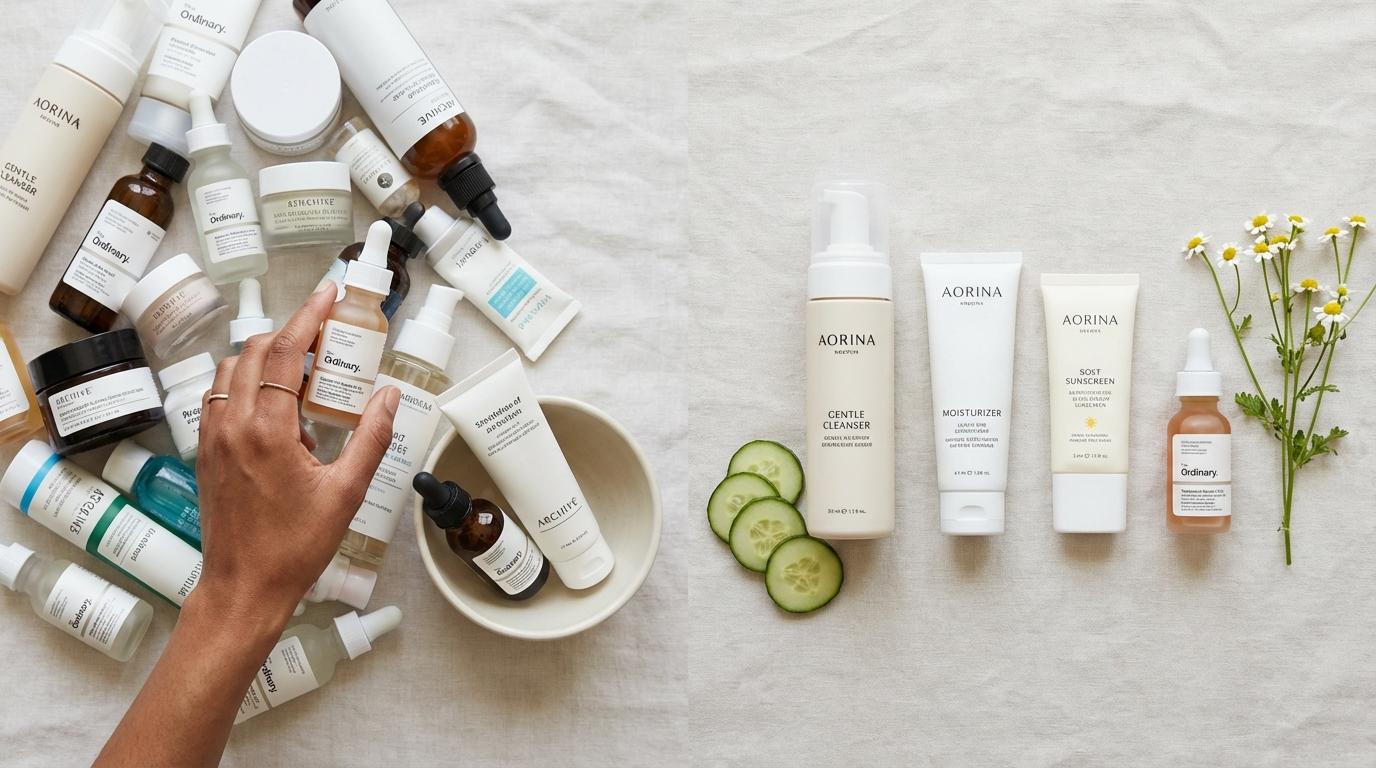
I spent three years as a beauty editor watching brands convince people they needed 12 products to have decent skin. That’s marketing, not science. Most of you are using way more products than your skin actually needs, and some of those products are actively working against each other.
Let’s fix that.
The Redundancy Problem in Your Routine
Pull out every skincare product you own. Line them up. Now count how many of them claim to “hydrate” or “moisturize.” If you have more than two, we have a problem.
Here’s what I see constantly: a hydrating toner, a hyaluronic acid serum, a hydrating essence, and a moisturizer. That’s four products doing essentially the same job. Your skin can only absorb so much hydration before you’re just wasting product and money.
The same goes for exfoliation. If you’re using a glycolic acid toner AND a salicylic acid serum AND a retinol, you’re not getting triple the results. You’re probably getting irritation, redness, and a compromised skin barrier.
Redundancy isn’t just about ingredients. It’s about function. Ask yourself what each product actually does. If two products have the same primary function, one of them can go.
Common redundancies I see:
- Multiple vitamin C products at different concentrations
- A “treatment” moisturizer plus a regular moisturizer
- Both chemical and physical exfoliants in the same week
- Spot treatments that contain the same actives as your serums
Pick one. Use it consistently. That’s how you actually see results.
Products That Cancel Each Other Out
This is where things get frustrating. You’re spending money and time on products that are literally neutralizing each other on your face.
The classic example: vitamin C and niacinamide. Old research suggested these two couldn’t coexist. Newer studies show they’re fine together, but the formulations matter. If you’re using unstable vitamin C, it can oxidize faster when mixed with certain ingredients. The result? Neither product works as well as it should.
Retinol and benzoyl peroxide are another pair that don’t play well. Benzoyl peroxide can degrade retinol on contact. If you’re layering these back to back, you’re essentially throwing your retinol in the trash.
AHAs and BHAs used simultaneously can overstrip your skin. Yes, some products combine them intentionally at careful concentrations. But if you’re layering your own glycolic toner under your salicylic serum, you’re creating a chemical cocktail your skin didn’t ask for.
The fix is simple. If you need multiple actives, separate them. One in the morning, one at night. Or alternate days. Your skin can only process so much at once anyway.
Streamlining Without Losing Results
Here’s what nobody tells you: a simpler routine often gives better results than a complicated one.
Why? Because complicated routines are hard to stick with. You skip steps when you’re tired. You rush through application. You forget to wait between layers. Inconsistent use of many products will never beat consistent use of a few.
The essentials are three things: cleanser, moisturizer, sunscreen. Everything else is a bonus. If you’re dealing with a specific concern like acne or hyperpigmentation, add ONE targeted treatment. Not three. One.
Here’s how to evaluate what stays:
- Does this product address a real problem I actually have?
- Have I seen measurable results from this product?
- Would my skin suffer if I stopped using this for two weeks?
If you answered no to any of these, that product is a candidate for removal.
I’ve seen people drop from 10 products to 4 and watch their skin improve within a month. Less irritation. Less confusion. Better results. The American Academy of Dermatology backs this up: most people need far fewer products than they think.
The Editing Process: How to Actually Do This
Don’t throw everything out tomorrow. That’s not editing, that’s panic.
Start by tracking what you’re actually using. For one week, write down every product that touches your face, morning and night. Include how long each step takes. Include how your skin feels after.
After that week, look at your list. Circle the products that made a noticeable positive difference. Put a question mark next to anything you used out of habit rather than purpose. Cross out anything that caused irritation, no matter how expensive it was.
Now build your new routine using only the circled products. Keep it to five steps maximum: cleanser, one treatment product, moisturizer, sunscreen for morning, and maybe a different treatment at night.
Give this streamlined routine 30 days. Your skin needs time to adjust. Resist the urge to add products back in during this period, even if you miss them.
After 30 days, evaluate honestly. Is your skin worse, the same, or better? Most people find it’s the same or better, which tells you those extra products weren’t doing much.
If you want to reintroduce something after the trial period, add one product at a time. Wait two weeks before adding the next. This way you can actually tell what’s working and what’s filler.
The goal isn’t minimalism for its own sake. The goal is a routine that works for your skin, fits your lifestyle, and doesn’t waste your money on products that compete with each other.
Your skin doesn’t need complexity. It needs consistency with products that actually do their job. Research consistently shows that a simple, consistent routine outperforms an elaborate, inconsistent one.
So take an honest look at your bathroom shelf. Count the products. Question the purpose of each one. And start cutting.
Your skin will thank you by actually improving. And your wallet will thank you too.