
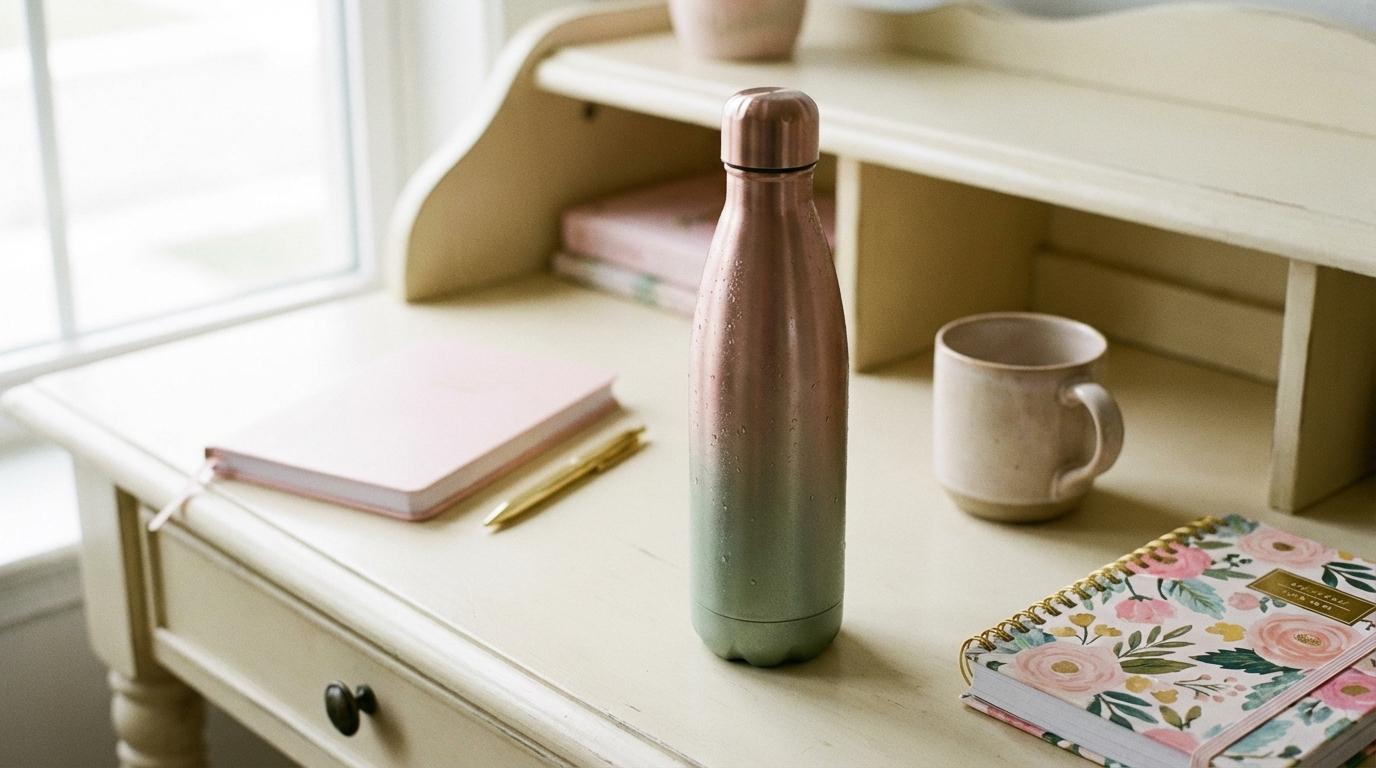
Water bottles sit on desks, in gym bags, and on nightstands, collecting bacteria with each passing day. This isn’t meant to alarm you, but rather to offer some gentle awareness about a connection between hydration habits and skin, particularly around the mouth and chin.
Most of us have developed the excellent habit of staying hydrated throughout the day. Reusable bottles reduce waste and keep water accessible. These are good things. What often gets overlooked is that the bottles themselves need regular care, and when they don’t receive it, they can become surprising contributors to breakouts in very specific locations.
Mouth Contact Around the Lips
Every time you drink from your bottle, your lips make contact with the spout or rim. Saliva, skin cells, oils from your lip products, and bacteria from your mouth transfer to that surface. The bottle then sits at room temperature, often in the dark interior of a bag, creating conditions where bacteria thrive.
When you drink again, you’re pressing your lips against that accumulated bacterial colony. The skin around your mouth is relatively thin and sensitive. Repeatedly introducing bacteria to this area can contribute to small bumps, irritation, or actual breakouts along the lip line and chin.
This doesn’t mean everyone who uses a water bottle will break out. Many people drink from the same bottle for years with no issues. But if you’re experiencing persistent breakouts specifically around your mouth and chin, and you’ve already addressed the usual suspects, your water bottle deserves consideration.
The pattern to notice is whether the breakouts concentrate where your bottle makes contact with your face. A narrow spout might cause issues right on the lip line. A wider bottle opening might affect a larger area around the mouth. Paying attention to these patterns can help identify whether your bottle is contributing to the problem.
Cleaning Frequency Needed
Research on reusable water bottles has found bacterial counts that rival or exceed those on household items we consider dirty, like cutting boards or kitchen sinks. A study examining water bottle hygiene found that bottles cleaned infrequently harbored significant bacterial populations, including some strains associated with skin infections.
The recommendation that emerges from this research is simple: wash your water bottle daily. Not weekly. Not “when you remember.” Daily, or at minimum every other day if you’re genuinely not able to manage daily cleaning.
Hot, soapy water is sufficient for most bottles. Use a brush that can reach the bottom and around all interior surfaces. Pay special attention to the spout, lid, and any crevices where moisture collects. These hidden areas are where bacteria particularly love to accumulate.
If your bottle has a straw, that straw needs cleaning too. The interior of drinking straws is notoriously difficult to clean and becomes a bacterial haven quickly. Small straw-cleaning brushes exist specifically for this purpose. If you can’t be bothered with straw cleaning, consider switching to a strawless bottle design.
For a deeper clean once a week, you can soak the bottle in a mixture of white vinegar and water, or use a bottle cleaning tablet designed for this purpose. Rinse thoroughly afterward. The occasional deeper clean helps address anything that regular washing might miss.
Bottle Types and Cleaning Considerations
Different bottle materials require slightly different care approaches. Stainless steel bottles can handle hot water and are generally easier to sanitize. Glass bottles are also easy to clean and don’t retain odors. Both of these materials are excellent choices for people concerned about hygiene.
Plastic bottles, particularly soft squeezable ones, can develop scratches over time that harbor bacteria. These scratches are nearly impossible to clean thoroughly. If you use plastic bottles, replace them regularly, especially when you notice visible wear.
Wide-mouth bottles are easier to clean than narrow-neck designs because you can actually get your hand or a brush inside. If you’re choosing a new bottle, consider cleanability as a factor alongside aesthetics and functionality.
Bottles with complex lids, multiple parts, or built-in filters need extra attention. Every component should be disassembled and cleaned individually. It’s tempting to just rinse the main bottle and ignore the lid mechanism, but that’s often where the worst bacterial buildup occurs.
Signs Your Bottle Might Be Contributing
Breakouts that cluster specifically around the mouth and chin, where your bottle makes contact, are the most obvious sign. But there are other indicators worth noting.
If you notice a smell when you open your bottle, even a faint one, bacteria have been busy. A clean bottle with fresh water should have no odor at all. Any scent is evidence that something is growing in there.
Visual discoloration, particularly a pinkish film, indicates bacterial or fungal growth. Some bacteria produce pigments as they multiply. If you see any color that shouldn’t be there, it’s time for serious cleaning or bottle replacement.
A slippery feeling on the interior surfaces is another warning sign. This is biofilm, a complex matrix that bacteria create to protect themselves. Biofilm is harder to remove than loose bacteria and requires scrubbing, not just rinsing.
Simple Solutions
None of this requires dramatic changes to your routine. Small adjustments make a significant difference.
Keep a designated bottle brush near your sink as a visual reminder to clean daily. When cleaning your bottle becomes as automatic as washing your dishes, it stops feeling like an extra task.
Consider having two bottles and rotating them. While one is drying completely after washing, you use the other. This ensures you always have a clean, fully dry bottle available. Moisture left inside a bottle encourages bacterial growth, so allowing proper drying time matters.
If daily cleaning truly isn’t realistic for your lifestyle, choose a bottle design that minimizes bacterial contact. Wide mouths are easier to clean. Stainless steel resists bacterial adhesion better than plastic. Simple designs without straws or complex lids have fewer places for bacteria to hide.
You might also adjust how you drink. Pouring water into your mouth without the bottle touching your lips eliminates the bacteria transfer entirely. This takes practice and isn’t always practical, but it’s an option worth considering, especially if you’re dealing with stubborn perioral breakouts.
The Broader Perspective
A dirty water bottle is unlikely to be the sole cause of significant acne. Breakouts are complex, involving hormones, genetics, skincare products, and numerous other factors. But for some people, bottle hygiene is one contributing element among many, and it happens to be an element that’s easy to address.
Thinking about what touches your face throughout the day is worthwhile. Phones, hands, pillowcases, and yes, water bottles, all make repeated contact with facial skin. None of these alone causes acne in most people. But cumulative bacterial exposure from multiple sources can tip the balance for those whose skin is already prone to breakouts.
If you’ve been struggling with mouth and chin breakouts and feel like you’ve tried everything, adding bottle hygiene to your routine is a low-effort experiment. Clean your bottle daily for a few weeks and see if you notice any change. It costs nothing and takes very little time.
This isn’t about fear or making hydration complicated. It’s about extending the same care to your bottle that you give to other things touching your face. Most people wouldn’t go weeks without washing their pillowcase. Water bottles deserve the same consideration, and your skin around the mouth and chin may quietly thank you for the attention.