
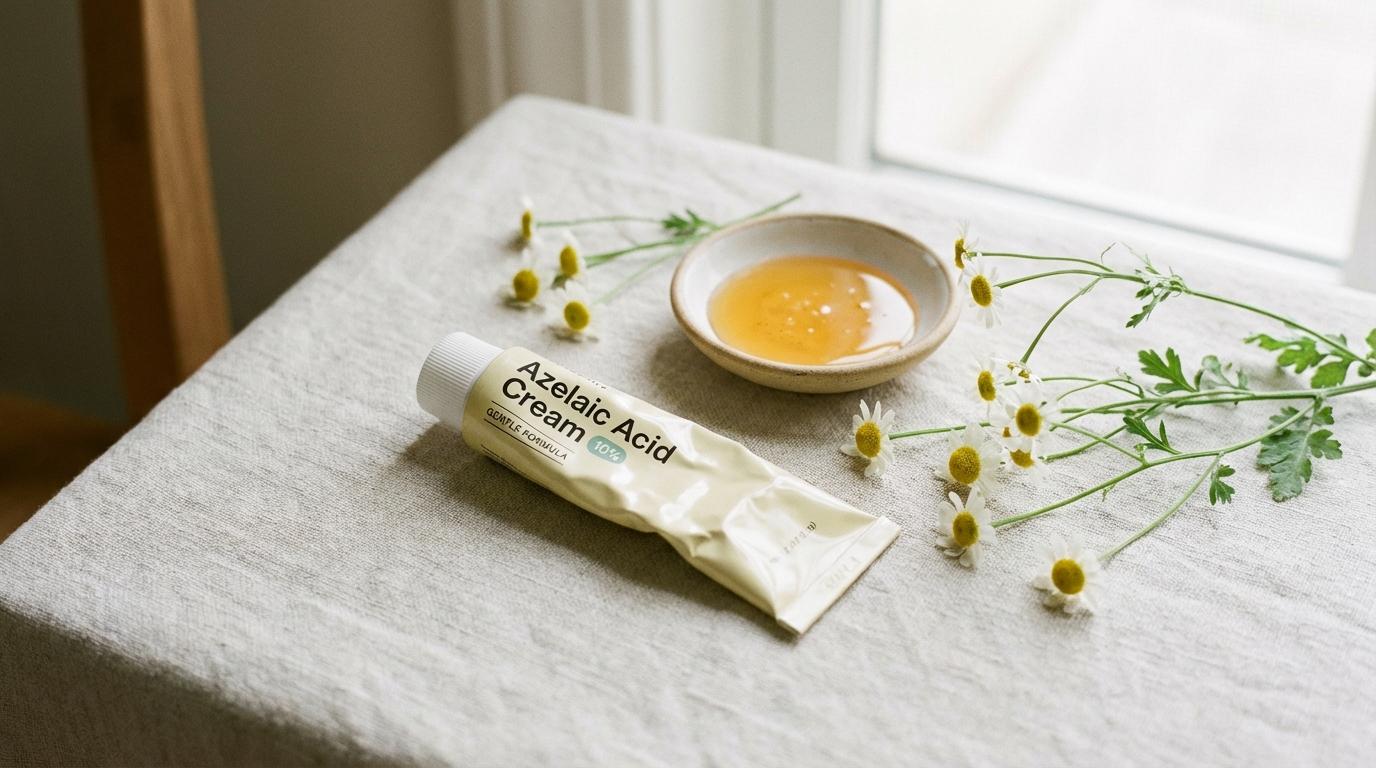
Azelaic acid sits quietly on pharmacy shelves while flashier ingredients steal the spotlight, yet dermatologists have been recommending it for decades. This unassuming skincare workhorse has earned its place in clinical settings and is finally getting the recognition it deserves among those of us who prefer effective, gentle solutions over complicated routines. If redness, breakouts, or uneven skin tone have been part of your story, this ingredient might become a meaningful part of your daily practice.
What Makes Azelaic Acid Special
Azelaic acid is a naturally occurring dicarboxylic acid found in grains like wheat, rye, and barley. Your skin actually produces small amounts of it naturally through the yeast that lives on healthy skin. This connection to our body’s own ecosystem is part of what makes it so well-tolerated by most skin types.
Unlike harsher actives that can strip or irritate, azelaic acid works through multiple gentle pathways. It has anti-inflammatory and antioxidant properties that help calm reactive skin while also addressing the bacteria that contribute to breakouts. This multi-tasking nature means fewer products in your routine and less potential for irritation from layering too many actives.
A Trusted Ally for Rosacea
Rosacea can feel like an unpredictable companion, with flushing and redness appearing at the most inconvenient times. The 15% azelaic acid formulation was approved by the FDA in 2002 specifically for treating papulopustular rosacea, and the research supporting this use continues to grow stronger with time.
Clinical studies have shown that around 70% to 80% of people see their rosacea symptoms improve with consistent azelaic acid use. Meta-analyses looking at rosacea treatments found that erythema severity, inflammatory lesion counts, and overall improvement were all significantly better with azelaic acid compared to vehicle creams after 12 weeks of use. Perhaps even more encouraging, some studies found azelaic acid performed better than metronidazole 0.75% for reducing redness and inflammation.
The gentle nature of this ingredient makes it particularly valuable for rosacea-prone skin, which tends to react poorly to aggressive treatments. While retinoids and certain acids can trigger flares, azelaic acid typically soothes rather than aggravates sensitive, reactive complexions. Those dealing with both acne and rosacea simultaneously often find azelaic acid especially useful since it addresses both conditions without the irritation that comes from using separate treatments.
Addressing Acne Without the Drama
Acne treatment often involves ingredients that work well but come with a learning curve of dryness, peeling, and sensitivity. Azelaic acid offers a different path. It targets the bacteria involved in breakouts while also helping to normalize the way skin cells shed, preventing the buildup that leads to clogged pores.
The antibacterial properties of azelaic acid work against Cutibacterium acnes, the bacteria most associated with inflammatory breakouts. At the same time, it has mild keratolytic effects, meaning it helps keep pores clear without the intense exfoliation of stronger acids.
For those who find salicylic acid or adapalene too drying or irritating, azelaic acid can be a welcome alternative. It is also one of the few acne treatments considered safe during pregnancy, making it valuable for those navigating hormonal breakouts during this time.
Why Dermatologists Keep Coming Back to It
Dermatologists appreciate ingredients that do what they promise without creating new problems. Azelaic acid has been used clinically for over 30 years, which means there is substantial long-term data on its safety and efficacy. This track record gives both practitioners and patients confidence.
Beyond rosacea and acne, azelaic acid shows promise for post-inflammatory hyperpigmentation and melasma. It works by inhibiting tyrosinase, an enzyme involved in melanin production, which helps fade dark spots left behind after breakouts heal. This makes it especially useful for those dealing with both active acne and the marks it leaves behind.
The versatility of azelaic acid means dermatologists can recommend it for patients with multiple concerns, simplifying routines rather than adding more products. When your skin is already sensitive or reactive, having one ingredient that addresses several issues feels like a small kindness.
Understanding the Different Strengths
Azelaic acid comes in several concentrations, and understanding the differences can help you find what works for your skin.
Over-the-counter formulations typically range from 10% to 12%. These lower concentrations are often enough for maintenance, mild concerns, or those with very sensitive skin who need a gentler introduction. The trade-off is that results may take longer to appear, typically three to four months of consistent use.
Prescription strengths include 15% (often sold under brand names like Finacea) and 20% (commonly known as Azelex). The 15% concentration is primarily prescribed for rosacea, while the 20% cream is typically used for moderate acne. With prescription strength, improvement often becomes visible within six weeks to three months.
Interestingly, a 2021 study found that patients using 10% azelaic acid gel had a success rate of about 37% after eight weeks, compared to 30% for those using 20% cream. The lower concentration also showed a better safety profile. This suggests that more is not always better, and starting with a gentler formulation might be perfectly reasonable for many people.
How to Bring Azelaic Acid Into Your Routine
Introducing azelaic acid follows the same principle that guides most thoughtful skincare: start slowly and listen to your skin. Even though it tends to be well-tolerated, giving your skin time to adjust allows you to catch any sensitivity early.
Begin by applying it every other evening for the first week or two. If your skin responds well, you can gradually increase to nightly use, and eventually twice daily if needed. Most people find once daily application sufficient for maintaining results.
Azelaic acid works well after cleansing and any water-based serums, and before your moisturizer. It layers nicely with most other ingredients, though if you are using other actives like vitamin C or retinoids, introducing them at different times of day can help prevent overloading your skin.
Some people experience mild tingling or slight stinging when they first begin using azelaic acid. This usually subsides as your skin adjusts and is not typically a sign that you need to stop using it. However, if irritation persists or worsens, scaling back or consulting with a dermatologist is always wise.
Managing Expectations
Patience is part of any meaningful skincare practice, and azelaic acid is no exception. Unlike some ingredients that show dramatic results quickly (often followed by equally dramatic irritation), azelaic acid works gradually and steadily.
For acne, most people notice improvement after about four weeks, with optimal results appearing around the three to four month mark. Rosacea can take a bit longer, with some studies showing peak improvement around 12 weeks of consistent use.
The upside of this gentle approach is that the improvements tend to be sustainable. You are not shocking your skin into temporary clarity; you are supporting its natural ability to stay calm and clear over time.
Who Might Love This Ingredient
Azelaic acid feels especially suited for those who value simplicity and gentleness in their approach to skincare. If you have rosacea or redness-prone skin that reacts poorly to most treatments, this ingredient offers hope without harsh side effects. If acne has been part of your life but stronger treatments leave your skin parched and flaky, azelaic acid provides an alternative path.
Those dealing with post-acne marks or uneven skin tone can appreciate how it addresses multiple concerns simultaneously. And anyone who prefers a minimal routine will value an ingredient that does the work of several products without requiring a complicated layering strategy.
The fact that it has been trusted by dermatologists for decades, combined with its gentle nature and proven efficacy, makes azelaic acid worth considering for anyone ready to embrace skincare that works with their skin rather than against it.