
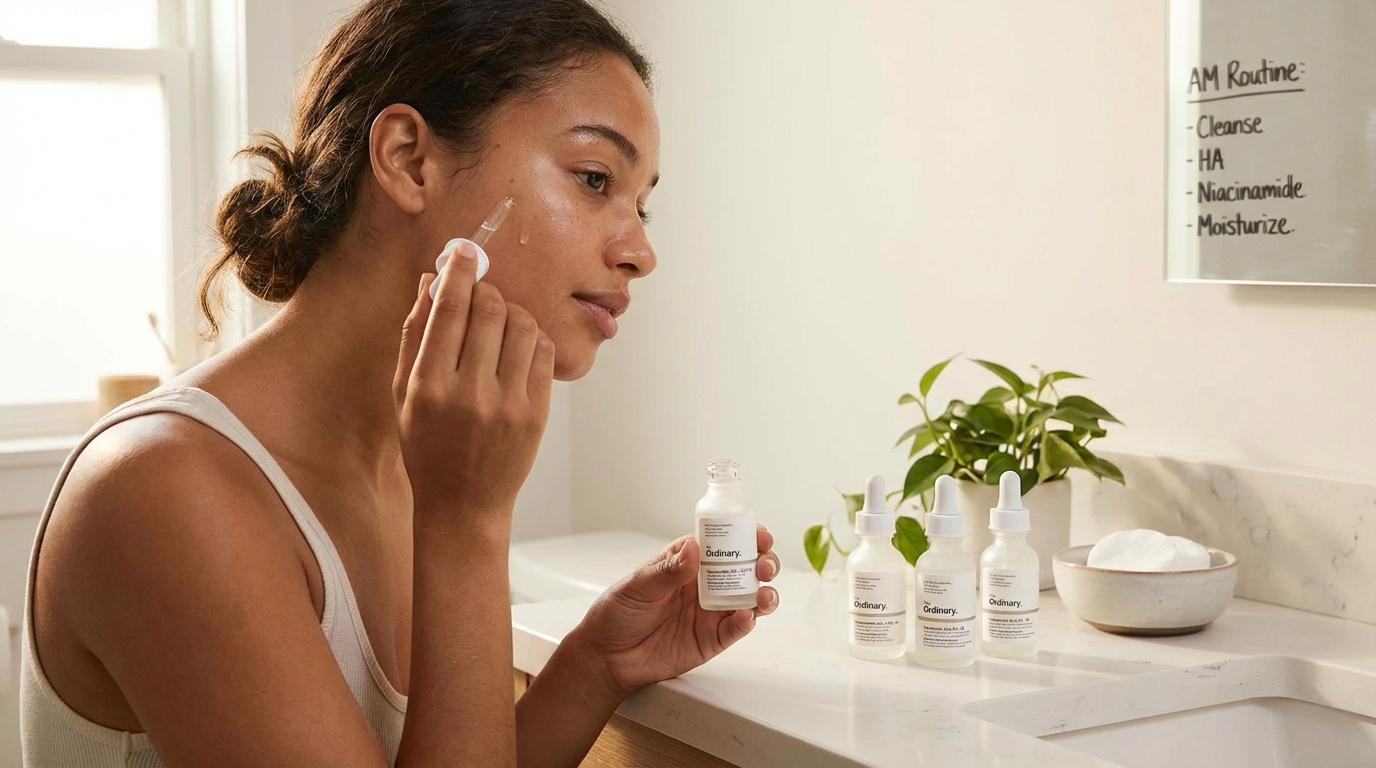
Look, I get it. You’ve scrolled past The Ordinary’s website and felt your eyes glaze over at all those clinical-sounding names. Buffet? Granactive Retinoid? It sounds more like a chemistry exam than skincare. But here’s the thing: not every product in that lineup is going to work for you, and some aren’t worth the hype at all. After spending way too much of my student budget testing these products (and returning a few, let’s be honest), I’m going to break down exactly which ones deserve your money.
The Products That Actually Deliver
The Ordinary built its reputation on affordable, no-frills formulas. But “affordable” doesn’t mean you should buy everything. These are the products that consistently perform across different skin types and concerns.
Niacinamide 10% + Zinc 1% is probably their most famous product, and for good reason. At under five dollars, this serum genuinely helps with oil control and the appearance of pores. The zinc addition makes it particularly good for congested or acne-prone skin. I’ve been using this one for two years, and it’s the only product I’ve repurchased more than three times. Apply it after cleansing, before heavier serums or moisturizer.
Hyaluronic Acid 2% + B5 is another solid performer. It’s a simple hydration booster that works well under any moisturizer. The B5 (panthenol) adds some soothing properties, which is nice if your skin runs sensitive. Just remember: hyaluronic acid needs moisture to work, so apply it to damp skin or layer it under a good moisturizer.
Squalane Cleanser might be their most underrated product. It’s a gentle, balm-to-oil cleanser that removes makeup without stripping your skin. Unlike some budget cleansers that leave a weird film, this one rinses clean. It’s also fragrance-free, which matters if you’re trying to keep your routine non-irritating.
Azelaic Acid Suspension 10% is a workhorse for anyone dealing with redness, uneven texture, or post-acne marks. Azelaic acid is gentle enough for most skin types while being effective at brightening and smoothing. The texture is a bit silicone-y, which some people love and others hate, but you can’t argue with the results at this price point. According to the American Academy of Dermatology, azelaic acid is recommended for both acne and rosacea, making it a versatile pick.
Granactive Retinoid 2% Emulsion is my pick for anyone new to retinoids. It uses a gentler form of retinoid that’s less likely to cause the peeling and irritation that traditional retinol can bring. It won’t give you the fastest results, but it also won’t trash your moisture barrier in the process. If you’re curious about how encapsulated retinol compares to traditional formulas, this product is essentially a real-world example of that gentler approach. Think of it as a patient investment in your future skin.
Products to Skip (Or At Least Think Twice About)
Not everything in The Ordinary’s lineup is worth it. Some products have formulation issues, others are just not as effective as the hype suggests, and a few require so much babysitting that they’re not practical for everyday use.
Vitamin C Suspension 23% + HA Spheres 2% has a gritty, almost sandy texture that makes it unpleasant to apply. It can also sting and pill under makeup. Vitamin C is great in theory, but this particular formula is just not user-friendly. If you want vitamin C from The Ordinary, their newer Ascorbic Acid 8% + Alpha Arbutin 2% is a better bet, though it’s still not my favorite vitamin C on the market.
AHA 30% + BHA 2% Peeling Solution (the red mask everyone posts on TikTok) is strong. Like, really strong. It can give good results if used correctly, but I’ve seen too many people overdo it and end up with chemical burns. If you’re new to acids, this isn’t where you start. And even if you’re experienced, once a week is plenty. This is one product where the viral fame doesn’t match the responsibility it requires.
The Ordinary Oils (Rosehip, Marula, etc.) are fine, but they’re nothing special. You can find comparable quality oils at your local health food store for similar prices, sometimes with better sourcing transparency. They’re not bad products; they’re just not uniquely good. Save your cart space for the serums that are harder to find elsewhere.
Alpha Arbutin 2% + HA is another product that gets recommended constantly for hyperpigmentation, but honestly? It works slowly, and on its own, the results are underwhelming. If you’re serious about fading dark spots, you’ll get better results pairing it with vitamin C or azelaic acid. On its own, it’s kind of just there.
How to Layer The Ordinary Products Without Chaos
The Ordinary’s biggest weakness is that they sell you the ingredients but not the roadmap. Here’s how to actually use these products together without turning your face into a science experiment gone wrong.
Morning routine example:
- Cleanser (Squalane Cleanser or any gentle cleanser)
- Niacinamide 10% + Zinc 1% (on damp skin or after hydrating toner)
- Hyaluronic Acid 2% + B5 (if you need extra hydration)
- Moisturizer
- Sunscreen (always, no exceptions)
Evening routine example:
- Cleanser
- Azelaic Acid OR Granactive Retinoid (not both on the same night when starting out)
- Moisturizer
The golden rule: don’t combine direct acids (like AHAs, BHAs, or vitamin C) with retinoids in the same routine. You can use acids in the morning and retinoids at night, or alternate nights. Niacinamide, hyaluronic acid, and azelaic acid are generally safe to mix with most things.
If you’re building a routine from scratch, start with just three products: a cleanser, one treatment serum (like niacinamide or azelaic acid), and a moisturizer. Add more only after you know your skin tolerates the basics. There’s no award for using the most products, and your skin will actually look better with a simpler routine.
What to Do When Your Favorites Sell Out
The Ordinary’s stock issues are legendary (and frustrating). Here are some alternatives that perform similarly if you can’t get your hands on the originals.
Instead of Niacinamide 10% + Zinc 1%: Paula’s Choice 10% Niacinamide Booster is more expensive but has a better texture. The Inkey List Niacinamide is another budget-friendly alternative with a similar formula. According to dermatology research published in NIH, niacinamide at concentrations of 2-5% is often effective, so you don’t necessarily need the full 10%.
Instead of Hyaluronic Acid 2% + B5: Vichy Mineral 89 is a bit pricier but beautifully hydrating. The Inkey List Hyaluronic Acid is basically the same formula at a similar price point. Honestly, most drugstore hyaluronic acid serums do roughly the same thing.
Instead of Azelaic Acid Suspension 10%: This one is trickier because azelaic acid options are limited. Paula’s Choice 10% Azelaic Acid Booster is excellent but costs more. In some countries, you can get Finacea (prescription-strength azelaic acid) over the counter, which is worth asking your pharmacist about.
Instead of Granactive Retinoid 2% Emulsion: Versed Press Restart Gentle Retinol Serum uses a similar encapsulated retinoid approach. Neutrogena Rapid Wrinkle Repair is more traditional retinol but widely available if you can’t find gentler options.
The Bottom Line on Building Your Ordinary Routine
The Ordinary democratized skincare by making effective ingredients accessible at prices that don’t require a second job. But the brand’s strength is also its weakness: with so many options and so little guidance, it’s easy to buy too much, layer incorrectly, or expect more than these simple formulas can deliver.
Stick with their standouts (Niacinamide, Hyaluronic Acid, Azelaic Acid, Granactive Retinoid, Squalane Cleanser), skip the products that require expert-level handling or don’t perform as well as the hype suggests, and build your routine slowly. Your skin doesn’t need a pharmacy. It needs consistency and the right few products.
And honestly? If you’re on a tight budget, The Ordinary’s best products punch way above their price point. A complete basic routine with their star products costs less than a single serum from most luxury brands. That’s real value, not just marketing. Beauty editors at Byrdie have noted this too: the brand’s transparency about ingredients and pricing changed what we expect from skincare.
Start simple, pay attention to how your skin responds, and don’t let anyone pressure you into a 10-step routine with ingredients you can’t pronounce. The best skincare routine is one you’ll actually stick to.