
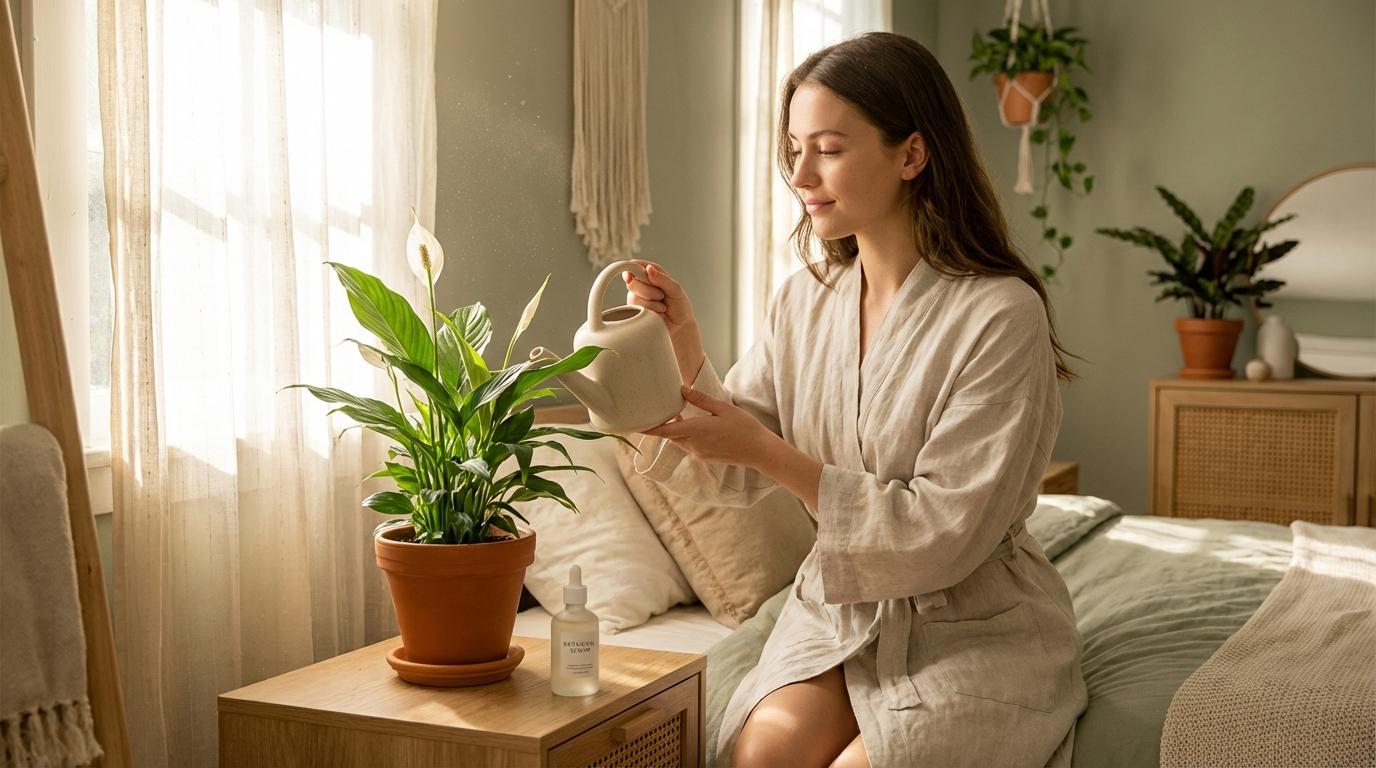
Those “air purifying plants” all over Pinterest are supposed to filter toxins from your bedroom while you sleep. Except they don’t, at least not in any meaningful way that affects your actual skin. The famous NASA study everyone cites was conducted in sealed chambers the size of a closet, which is nothing like your bedroom with its air vents, door gaps, and windows. To get the air-cleaning effect NASA found, you’d need somewhere between 10 and 1,000 plants per square meter of floor space. That’s a greenhouse, not a bedroom.
What the Science Actually Says
A 2019 meta-analysis from Drexel University reviewed decades of research on indoor plants and air quality. The conclusion was clear: houseplants do not effectively purify indoor air in real-world conditions. The American Lung Association backed this up, noting that natural building ventilation does most of the work removing indoor volatile organic compounds, not your pothos in the corner.
I spent years believing the plant hype myself. I had a fiddle leaf fig, two snake plants, a whole collection of succulents, thinking they were doing something for my skin while I slept. They weren’t. Not for air quality, anyway.
But here’s where it gets interesting: plants might still benefit your skin, just not through air purification. The mechanisms that actually matter are humidity, stress reduction, and the behavioral changes plants encourage.
Plants That Actually Add Humidity
This is where plants can genuinely help your skin. Through a process called evapotranspiration, plants release water vapor from their leaves. In a bedroom during dry winter months or in air-conditioned spaces during summer, that extra moisture in the air can make a real difference for your skin barrier.
Not all plants add humidity equally. The big winners are:
Areca Palm: NASA research found that a six-foot Areca palm transpires nearly one quart of water into the air every 24 hours. That’s significant. The broad, plentiful fronds maximize surface area for water release.
Boston Fern: These love humidity and create it. Boston ferns are high-transpiration plants that do well in bedrooms with indirect light. They’re also hard to kill if you can remember to water them.
Spider Plant: A 2015 study found spider plants are among the best for increasing indoor humidity. They’re resilient, tolerate low light, and propagate easily if you want to spread them around your space.
Jade Plant: Research shows jade plants release most of their moisture in the dark, making them particularly useful for bedroom humidity while you sleep.
For skin benefits specifically, grouping several humidity-adding plants together creates a microclimate with noticeably moister air. Humidity affects your skin barrier function in measurable ways. Low humidity increases transepidermal water loss, leaving skin dehydrated and more prone to irritation. Plants won’t replace a humidifier during brutal winter months, but they can supplement one.
The Reality Check on Air Purifying Claims
Let me be direct: most marketing around “air purifying plants” is overstated at best. The NASA study that launched a thousand blog posts tested plants in small, sealed chambers with no air exchange. Your bedroom is not a sealed chamber. Air moves in and out constantly through HVAC systems, windows, door gaps, and walls.
The American Lung Association states that you’d need around 680 plants in a 1,500 square foot home to achieve the air-cleaning effect the NASA study suggested. Nobody is doing that. And if someone is, they have bigger concerns than skin health.
Does this mean plants are useless for your indoor environment? No. It means we need to be realistic about what they do and don’t accomplish. Plants improve a space aesthetically. They may reduce stress (more on that in a second). They can add humidity. They don’t meaningfully remove VOCs, formaldehyde, or other pollutants at bedroom scale.
Low Maintenance Options That Actually Work
If you’re going to add plants for the humidity benefits, choose ones that won’t stress you out. Nothing defeats the purpose like watching a plant slowly die because you forgot about it.
Pothos: Nearly indestructible. Tolerates low light, inconsistent watering, and benign neglect. While not the highest humidity producer, it adds some moisture and requires minimal effort.
Snake Plant: Survives in almost any light condition and only needs watering every two to three weeks. It’s not a major humidity contributor, but it’s a reliable, low-stress option that handles bedroom conditions well.
Peace Lily: Higher transpiration rates than snake plants, prefers indirect light, and droops dramatically when it needs water, which functions as its own watering reminder. It will bounce back after you water it, usually within hours.
Chinese Evergreen: Tolerates low light and sporadic watering. A good choice for bedrooms without much natural light.
Skip the high-maintenance tropicals unless you genuinely enjoy plant care. A stressed-out fiddle leaf fig shedding leaves isn’t doing anything for your skin or your mental state.
When Plants Actually Help
Beyond humidity, there’s evidence that plants benefit skin indirectly through stress reduction. A 2022 study found that having indoor plants lowered participants’ blood pressure and improved cognitive function. Chronic stress damages skin through cortisol elevation, barrier dysfunction, and increased inflammation. Anything that genuinely reduces stress has downstream skin benefits.
Plants also encourage other healthy behaviors. People with bedroom plants tend to open curtains more often, pay more attention to their home environment, and create spaces where they want to spend time. That attention to environment can extend to skincare routines and sleep hygiene.
The ritual of caring for plants may matter more than the plants themselves. Watering a plant in the morning can anchor a morning routine. Noticing when a plant needs attention trains you to notice other things that need attention, including your skin.
The Honest Assessment
Should you get bedroom plants for your skin? Maybe, but with realistic expectations.
Plants will not purify your air in any meaningful way. That’s the research. If air quality is your concern, look into actual air purifiers with HEPA filters, proper ventilation, and reducing pollution sources (scented candles, fragranced products, certain cleaning supplies).
Plants can add humidity, which genuinely benefits skin during dry conditions. A few high-transpiration plants grouped together in a bedroom can measurably increase moisture in the air. This helps maintain skin barrier function and reduces transepidermal water loss while you sleep.
Plants might reduce stress, which has real skin benefits through the cortisol and inflammation pathways. This is harder to quantify and varies person to person. If you find plants calming, that’s a valid reason to have them.
Plants require care, which is either a positive routine or a source of guilt depending on your personality and schedule. Be honest with yourself about which category you fall into before filling your bedroom with greenery.
The best bedroom plant for skin is probably the one you’ll actually keep alive. Start with something low-maintenance, see if you enjoy it, and expand from there. Your skin won’t suffer if you skip the indoor jungle trend entirely. But if you like the idea of waking up surrounded by green, the humidity boost is real, even if the air purification isn’t.