
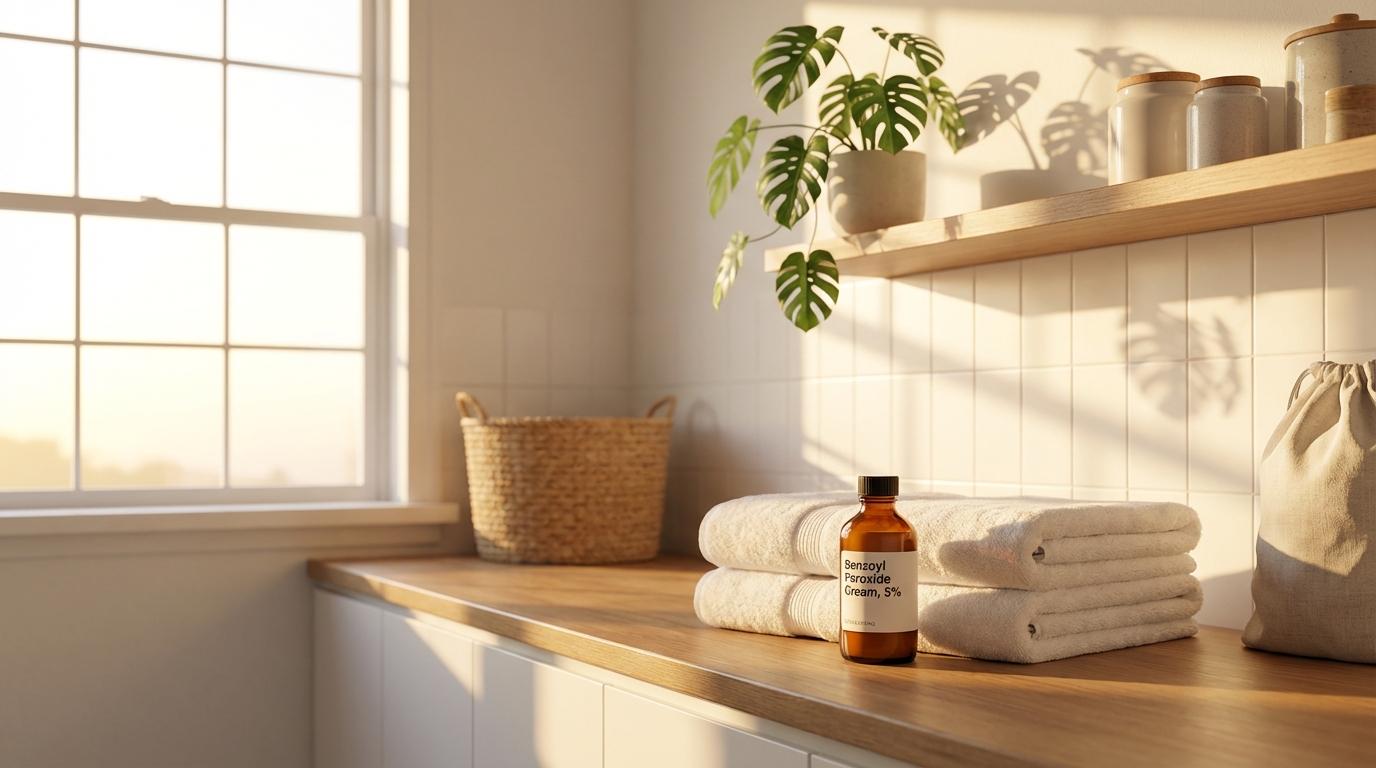
Waking up to find bleach spots on your favorite dark pillowcase is one of those skincare heartbreaks nobody warns you about. If you’ve ever used benzoyl peroxide and then wondered why your towels suddenly have mysterious orange patches, you’re not alone. This powerful acne-fighting ingredient has a reputation for being incredibly effective but also notoriously messy.
The good news? You absolutely can use benzoyl peroxide without turning your bathroom into a fabric tie-dye experiment. It just takes a little awareness and some simple habit adjustments. Let me walk you through everything I’ve learned about making peace with this ingredient while protecting your belongings.
Why Benzoyl Peroxide Bleaches Things
Before we talk solutions, it helps to understand what’s actually happening. Benzoyl peroxide is an oxidizing agent, which is exactly what makes it so good at killing acne-causing bacteria. When it comes into contact with fabric, it literally oxidizes the dye molecules, stripping them of their color. This isn’t technically “bleaching” in the chlorine sense, but the result looks the same: permanent discoloration that no amount of washing will fix.
The tricky part is that this reaction can happen hours after you’ve applied the product. Your face might feel completely dry, but trace amounts of benzoyl peroxide can still transfer to fabric and cause damage. This is why so many people discover the problem too late, after the spots have already appeared.
The White Towel and Pillowcase Strategy
The most straightforward approach is simply accepting that some things will get bleached and planning accordingly. This might sound like giving up, but it’s actually a minimalist solution that removes stress from the equation entirely.
White bedding dedicated to treatment nights
Keep a set of white or very light-colored pillowcases specifically for nights when you use benzoyl peroxide. White fabric can’t show bleach marks because there’s no dye to oxidize. Some people designate an old pillowcase as their “treatment pillowcase” and flip to the clean side halfway through the week.
If you’re someone who likes things aesthetically coordinated, this doesn’t have to look clinical. Cream, ivory, and pale gray are also safe options that won’t show obvious damage. The key is avoiding deep or saturated colors that will reveal every trace of product transfer.
Bathroom towels that don’t matter
Similarly, keep white washcloths and face towels in your bathroom. Dark hotel-style towels look luxurious until you’ve used benzoyl peroxide a few times and they develop that telltale spotted appearance. White towels can be bleached regularly anyway, and any product transfer just fades into the fabric.
I know a lot of people resist this suggestion because they love their aesthetic bathroom setup. But here’s a gentle reality check: the towel you use on your face for thirty seconds matters far less than the results you’re getting from your skincare. Practicality wins here.
Wash-Off vs. Leave-On: The Method That Changes Everything
One of the most underrated strategies for minimizing fabric damage is switching from leave-on benzoyl peroxide products to wash-off versions. Research has shown that short-contact therapy can be just as effective as leaving the product on overnight, while dramatically reducing both fabric bleaching and skin irritation.
How short-contact therapy works
The basic approach is simple: apply your benzoyl peroxide cleanser or treatment, let it sit on your skin for two to ten minutes, then rinse it off completely. The product still has time to kill bacteria and penetrate pores, but you’re not walking around with it on your face for hours.
According to dermatological research from the American Academy of Dermatology, benzoyl peroxide begins working within minutes of application. You don’t necessarily need prolonged contact time to get results, especially if your skin is on the sensitive side.
Benzoyl peroxide cleansers
Products like 4% or 5% benzoyl peroxide washes are designed specifically for this purpose. You wet your face, apply the cleanser, let it sit for a minute or two while you brush your teeth or do something else, then rinse thoroughly. The active ingredient does its job without ever touching your pillowcase.
This approach is particularly helpful for people who want the acne-fighting benefits but can’t tolerate having benzoyl peroxide on their skin all night. It’s also ideal if you share a bathroom or bedroom with someone who might not appreciate product transfer on shared items.
The rinse thoroughly step is crucial
Whatever method you choose, rinsing well matters more than you might think. Residue left along your jawline, hairline, or around your ears can still transfer to fabric. Take an extra thirty seconds to make sure every trace is gone. Some people follow up with a damp washcloth to catch anything the water rinse missed.
Leave-On Methods That Minimize Damage
If you prefer leave-on treatments because they work better for your skin, there are still ways to reduce the bleaching problem.
Apply earlier in the evening
The longer benzoyl peroxide sits on your skin before bed, the more it absorbs and the less likely it is to transfer. If you normally do your skincare routine right before sleeping, try moving it earlier. Apply benzoyl peroxide right after dinner, then go about your evening activities. By bedtime, the product has had two or three hours to absorb fully.
Use less product
More is not better with benzoyl peroxide. A thin layer is all you need, and using excessive amounts just increases the chance of transfer. The pea-sized amount guideline that appears on every skincare product label actually matters here. A light, evenly distributed layer absorbs faster and leaves less residue.
Wait for complete absorption
Don’t apply other products on top of benzoyl peroxide until it has completely absorbed. If you’re layering moisturizer right after, you might be trapping product on the surface of your skin where it can more easily rub off onto fabric. Give it at least five to ten minutes before moving on to the next step.
Lower concentrations work too
If fabric bleaching is a consistent problem, consider whether you need the concentration you’re using. Many dermatologists point out that 2.5% benzoyl peroxide is often just as effective as 10% for killing bacteria, with far less irritation. A lower concentration also means less active ingredient available to bleach your belongings. The National Center for Biotechnology Information has published research supporting this approach.
Preventing Excessive Dryness
Here’s something that connects to the fabric issue in an unexpected way: when your skin is overly dry from benzoyl peroxide, it tends to flake. Those tiny flakes carry traces of product with them, and they end up on everything you touch. Managing dryness isn’t just about comfort; it’s also about reducing how much product migrates off your face.
Buffer with moisturizer
If your skin can’t tolerate direct application, try the “buffering” technique. Apply a light moisturizer first, wait a few minutes for it to absorb, then apply benzoyl peroxide on top. This creates a slight barrier that helps reduce irritation while still allowing the active ingredient to work. Some people find this makes a dramatic difference in how their skin tolerates the product.
Start slowly
If you’re new to benzoyl peroxide or returning after a break, ease into it. Use the product every other night or even every third night at first. Let your skin build tolerance gradually. Jumping straight to nightly use often backfires with excessive peeling and irritation that makes the whole experience miserable.
Hydrating products around it
Make sure the rest of your routine supports hydration. A gentle cleanser, a solid moisturizer, and possibly a hydrating serum can all help counteract the drying effects of benzoyl peroxide. When your skin stays balanced, you’re less likely to experience the flaking that contributes to product transfer. If you’re dealing with skin that feels stressed, you might also appreciate the concept of rest days for your skin where you skip actives entirely.
Don’t combine with other drying ingredients
Using benzoyl peroxide alongside retinoids, strong acids, or other potentially irritating ingredients is often too much. Pick your battles. If benzoyl peroxide is your primary acne treatment, skip the drying toner and the exfoliating serum. Your skin barrier will thank you, and you’ll have fewer problems with excessive dryness and flaking.
Practical Habits That Protect Your Stuff
Beyond product choices, a few simple habits can save you a lot of laundry grief.
Wash your hands after application
This sounds obvious, but so many fabric casualties happen because of hand transfer. You apply benzoyl peroxide to your face, then grab a dark towel to pat dry, or adjust your shirt collar, or touch your colored bathroom rug. Washing your hands thoroughly after every application prevents these accidents.
Be aware of where your face goes
Until the product is fully absorbed, try not to rest your face on anything you care about. No lying on the couch throw pillows, no burying your face in your partner’s shoulder, no face-planting onto the decorative bed cushions. This awareness becomes automatic after a while, but it requires conscious thought at first.
Protect your hairline
Benzoyl peroxide can also bleach hair, though it takes more exposure than fabric. If you apply the product close to your hairline, be mindful of this. Some people use a headband during application to protect their hair, then remove it once the product has absorbed.
Keep necklines in mind
If you apply benzoyl peroxide to your jawline or neck for body acne, shirt collars are vulnerable. Either wear white or very old shirts to bed, or wait until the product has completely absorbed before putting on anything you care about.
When Acne Strikes and You Still Want to Treat
Sometimes you get a surprise breakout and need to use benzoyl peroxide without your usual precautions in place. Maybe you’re traveling, or you’re at someone else’s house, or you simply forgot to do laundry and have no white pillowcases clean.
In these situations, spot treatment with a very thin layer is your friend. Apply the smallest amount directly to blemishes rather than treating your whole face. Let it absorb completely before lying down. If you’re concerned about the acne itself, you might also find value in knowing how to handle a pimple when extraction seems necessary.
And if you do accidentally bleach something that matters to you, take a breath. It happens to everyone who uses this ingredient, no matter how careful they are. The fabric is a casualty, but your skin is getting the treatment it needs.
Product Format Options
The format of your benzoyl peroxide product can affect how much bleaching occurs.
Gel vs. cream
Gel formulations tend to absorb faster than creams, which can mean less surface residue and less transfer. If you’re currently using a cream and having problems, switching to a gel might help. The Harvard Health guide on skincare products notes that vehicle (the base a product is formulated in) matters for how ingredients behave on skin.
Spot treatments
Rather than applying benzoyl peroxide all over your face, targeted spot treatments let you use the ingredient only where you need it. This means less product overall, less chance of transfer, and less irritation to areas that aren’t experiencing breakouts.
Combination products
Some products combine benzoyl peroxide with other ingredients like adapalene in a single formulation. These are usually designed for once-daily use and may absorb differently than standalone benzoyl peroxide. Pay attention to how your specific product behaves on your skin.
The Minimalist Approach
Here’s my honest perspective after years of using this ingredient: the less stressed you are about benzoyl peroxide, the easier it is to use consistently. Consistency matters more than perfection.
Accept that you might lose a pillowcase or two along the way. Buy inexpensive white bedding for treatment nights and stop worrying about it. Focus on what actually matters, which is whether the product is helping your skin. The Dermatology Times regularly covers how benzoyl peroxide remains one of the most effective over-the-counter acne treatments available.
Skincare should enhance your life, not complicate it with constant vigilance. Find the approach that works for your situation, whether that’s wash-off products, early evening application, or simply embracing white fabrics. Then let go of the rest.
Quick Reference Summary
For those who want the essentials without the details:
- Benzoyl peroxide oxidizes fabric dyes, causing permanent discoloration
- Use white or light-colored towels and pillowcases for treatment nights
- Consider wash-off products that you rinse before bed
- Apply leave-on products earlier in the evening to allow full absorption
- Use less product and lower concentrations when possible
- Wash hands thoroughly after every application
- Manage dryness to reduce flaking and product migration
- Accept that some fabric loss is normal and plan accordingly
Benzoyl peroxide is a genuinely useful ingredient for many skin types. With a few simple adjustments, you can get all its benefits without constantly replacing your favorite things. That’s a trade-off worth making.