
Put down the bathroom mirror and step away from your face for a second. I know you want to pop that pimple right now, but doing it wrong can leave you with a scar, an infection, or an even bigger mess than what you started with. The urge to squeeze is real, but so are the consequences when you go in unprepared.
Most dermatologists will tell you never to pop your own pimples. And honestly? They have a point. But we both know that advice gets ignored approximately 100% of the time. So instead of pretending you’ll leave it alone, let’s talk about how to do this properly if you’re going to do it anyway.
Is It Actually Ready?
This is where most people mess up. They see a red bump and immediately want it gone. But attacking a pimple too early is the fastest way to make it worse.
A pimple is only ready to pop when it has a visible white or yellowish head. That white part means the pus is sitting right at the surface, ready to come out with minimal pressure. According to Medical News Today, noninflamed blemishes with visible heads are the only type you should ever consider popping at home.
If your pimple is still red, deep, or painful to touch, leave it alone. Those underground cysts and nodules need to be treated differently, ideally by a professional who can inject them with cortisone. Squeezing a deep pimple just pushes the bacteria and inflammation further into your skin.
The general timeline? A pimple needs a few days to develop that white head. If it showed up yesterday, it’s not ready today.
Sanitation Is Not Optional
Your hands are covered in bacteria. Your face is already dealing with enough. Adding more bacteria to an open wound is how you end up with an infection that’s ten times worse than the original pimple.
Start by washing your hands with soap and water for at least 30 seconds. Not a quick rinse. A full scrub. Dry them with a clean towel, not the hand towel that’s been hanging in your bathroom for a week.
Next, wash your face with your normal cleanser. Some sources, including the Cleveland Clinic, recommend applying rubbing alcohol to the specific area with a cotton ball. This kills surface bacteria right before you create an opening in your skin.
Then apply a warm, clean washcloth to the pimple for about five minutes. This softens the skin and brings the contents closer to the surface, making extraction easier and less traumatic for your skin.
The Right Way to Apply Pressure
This is not a squeezing competition. Brute force is your enemy here.
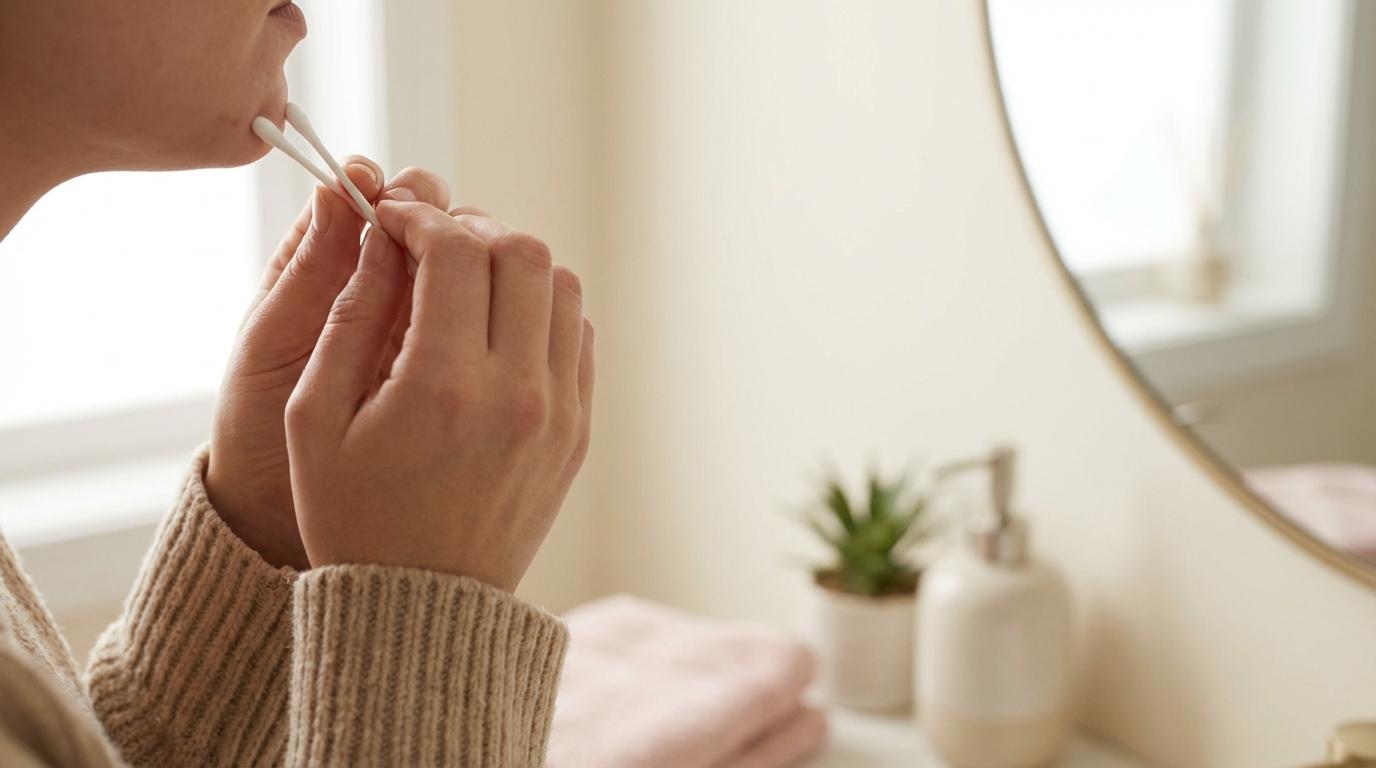
Wrap your index fingers in clean tissue or use cotton swabs. This creates a barrier between your nails and your skin, preventing those little half-moon scars that come from digging in too hard.
Place your fingers on either side of the pimple, not on top of it. Now here’s the part most people get wrong: you’re not pressing down. You’re pressing out and slightly down, creating pressure from the sides and underneath.
Dr. Sandra Lee, better known as Dr. Pimple Popper, explains that you should gently pull the surrounding skin away from the pimple and push down with light pressure around it. The central core should drain out easily if the pimple is truly ready.
If it doesn’t come out with gentle pressure, stop. Seriously, stop. If you have to force it, it’s not ready, and you’re just creating trauma and potential scarring. Walk away and try again tomorrow.
One and Done
The white or yellowish stuff that comes out is a mix of dead skin cells, oil, and bacteria. Once that’s out, stop pressing. A lot of people keep going until they see blood or clear fluid, thinking they need to “get everything out.”
You don’t. Once the visible pus is out, continuing to squeeze just damages the healthy tissue around the pimple. That’s how you end up with redness, swelling, and scarring that lasts way longer than the pimple ever would have.
If there’s still stuff in there but it won’t come out easily, leave it. Your skin will continue to push it up over the next day or two, and you can try again when it’s actually at the surface.
What Happens After Matters Just as Much
Popping a pimple creates an open wound on your face. Treat it like one.
First, gently clean the area again. You can use a gentle cleanser or even just water. Pat dry with a clean tissue.
Then, cover it. Hydrocolloid pimple patches are genuinely useful here. According to dermatologists cited by Skincare.com, these patches keep the area clean, absorb any remaining fluid, and physically prevent you from touching or re-popping the spot. They also create a moist healing environment that can speed up recovery.
If you don’t have pimple patches, a small dab of Vaseline or Aquaphor works too. It protects the wound and keeps it from drying out and scabbing over. Scabs on your face take longer to heal and are more likely to leave marks.
Don’t put on makeup for at least a few hours, ideally overnight. Foundation in a fresh wound is asking for trouble.
What You Should Never Pop
Some blemishes are off-limits, period.
Cystic acne is the big one. These are the deep, painful lumps that never come to a head. They’re too far under the skin for you to extract, and trying just spreads the infection deeper. If you’re dealing with cystic acne regularly, that’s a conversation for a dermatologist, not a DIY situation.
Anything in the “triangle of death” area, which runs from the corners of your mouth to the bridge of your nose, requires extra caution. Blood vessels in this area connect to your brain, and while it’s rare, severe infections here can become dangerous. If you have an inflamed or infected pimple in this zone, leave it alone or see a doctor.
Fresh pimples without a head are also a no. If there’s no visible exit point, you’re just going to push everything sideways and down, making the problem worse.
When to Call in a Professional
There’s no shame in admitting a pimple is beyond your skill level.
Dermatologists can extract stubborn blackheads and whiteheads using sterile tools and proper technique. For painful cysts, they can inject them with cortisone, which flattens them within a day or two without any of the scarring risk that comes from trying to squeeze them yourself.
If you’re dealing with acne that leaves scars, won’t respond to over-the-counter treatments, or keeps coming back in the same spots, it’s time to see someone who can look at the bigger picture and give you a real treatment plan.
Preventing the Next One
The best pimple is the one you never have to pop in the first place.
Keep your hands off your face during the day. Your fingers pick up bacteria from everything you touch, and every time you rest your chin on your hand or touch your cheek, you’re transferring that bacteria to your pores.
Change your pillowcase weekly, or more often if you’re dealing with breakouts. Same goes for anything that regularly touches your face, like your phone screen.
Use products with salicylic acid or benzoyl peroxide if you’re prone to breakouts. Salicylic acid helps clear out pores, while benzoyl peroxide kills acne-causing bacteria. Both can help stop pimples before they start.
And when you do get a pimple, resist the urge to mess with it until it’s actually ready. The waiting is hard, but it’s a lot easier than dealing with a scar for the next six months.