
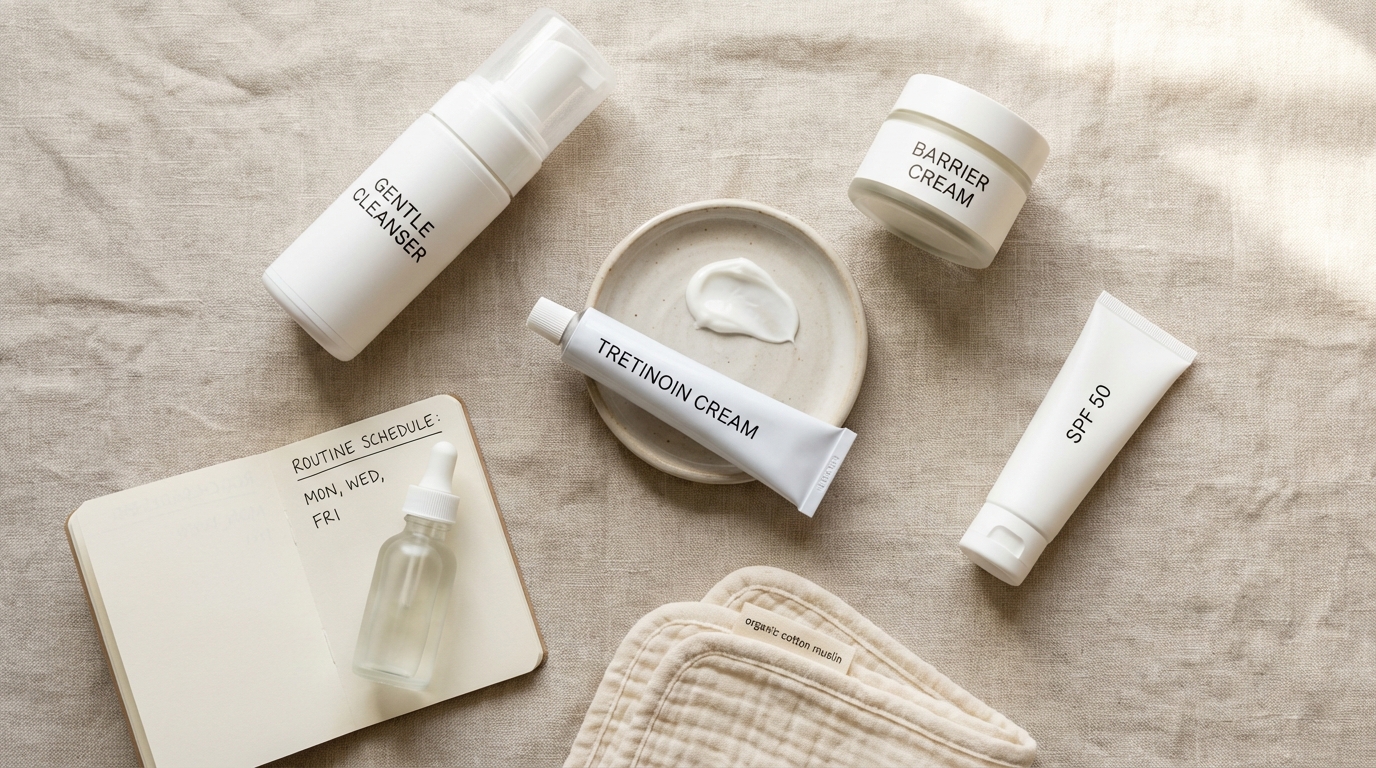
So your dermatologist handed you a prescription for tretinoin, maybe said something about using it at night, and sent you on your way. Now you’re staring at the tube wondering how exactly this fits into your existing routine, and whether your skin is about to stage a full rebellion.
I’ve been there. Tretinoin is one of the most researched and effective ingredients in skincare, but it comes with a learning curve. The good news? With the right approach, you can minimize the adjustment period and actually enjoy the benefits everyone talks about. Let me walk you through exactly how to build a routine that works.
Why Application Timing Matters More Than You Think
Tretinoin isn’t like other products where you just slap it on and call it a day. The timing of when and how you apply it significantly affects both its effectiveness and how much irritation you’ll experience.
Here’s something most people don’t realize: applying tretinoin to damp skin dramatically increases penetration, which sounds good until you realize that increased penetration also means increased irritation. According to Traceside Dermatology, waiting 15 to 30 minutes after cleansing before applying tretinoin allows your skin barrier to recover and minimizes the risk of retinoid dermatitis.
Yes, that means you need to wash your face and then… wait. I know it feels inefficient. But this one step can make the difference between tolerating tretinoin well and having your skin peel off in sheets.
The Basic Evening Application Order
Once your face is dry (truly dry, not just towel-dried), here’s the sequence:
1. Cleanse with a gentle, non-foaming cleanser. Avoid anything with active acids for now.
2. Wait 15-30 minutes. Use this time to do something else. Scroll your phone. Make tea. Just let your skin fully dry.
3. Apply a pea-sized amount of tretinoin. That’s it. A pea. More is not better here.
4. Follow with moisturizer after the tretinoin absorbs (another few minutes).
Buffering: Your New Best Friend During Adjustment
If waiting 30 minutes sounds rough, let me introduce you to buffering. This technique creates a protective layer that slows tretinoin absorption while still allowing its benefits to reach your skin.
There are three main ways to buffer:
Classic Buffering
Apply your moisturizer first, let it absorb for a few minutes, then apply tretinoin on top. The moisturizer acts as a barrier, diluting the tretinoin’s penetration and reducing immediate irritation.
The Sandwich Method
This one’s exactly what it sounds like. Apply moisturizer, then tretinoin, then another layer of moisturizer. You’re sandwiching the tretinoin between two protective layers. According to OKDERMO, this provides maximum protection against irritation and is especially helpful for those with sensitive or dry skin.
Mixed Buffering
Mix equal parts tretinoin and moisturizer in your palm before applying. This dilutes the concentration you’re applying while still delivering the active ingredient.
Here’s the thing about buffering: it doesn’t make tretinoin less effective in the long run. You’re just being smarter about how you introduce it to your skin. Many dermatologists recommend buffering during your first 2-4 weeks, then gradually transitioning to direct application as your skin builds tolerance.
Products to Pause While Your Skin Adjusts
This is where people get into trouble. Tretinoin doesn’t play well with everything in your cabinet, especially during the adjustment period.
What to Stop Using Immediately
AHAs and BHAs: This includes glycolic acid, lactic acid, salicylic acid, and mandelic acid. Using these alongside tretinoin is a recipe for over-exfoliation. According to City Skin Clinic, combining exfoliating acids with tretinoin can cause extreme dryness, redness, and peeling.
Benzoyl Peroxide: Not only can this cause irritation when combined with tretinoin, but research shows benzoyl peroxide can actually oxidize and deactivate tretinoin, making it less effective. If you need benzoyl peroxide for acne, use it in the morning and save tretinoin for night.
Vitamin C Serums: Vitamin C is acidic and can increase irritation when used with tretinoin. The good news is you don’t have to ditch it entirely. Move your vitamin C to your morning routine and keep tretinoin at night.
Physical Scrubs and Exfoliating Brushes: Your skin is already getting exfoliated by the tretinoin. Adding manual exfoliation on top is overkill that will leave your skin raw.
What You Can (and Should) Keep Using
Niacinamide: This is actually one of the best ingredients to pair with tretinoin. Niacinamide has anti-inflammatory properties that help calm tretinoin-induced irritation, and it strengthens your skin barrier by promoting ceramide production. Use it before or after tretinoin, or look for a moisturizer that contains it.
Hyaluronic Acid: Since tretinoin can cause dryness, hyaluronic acid’s ability to attract and retain moisture makes it a perfect partner. Apply it over your tretinoin to help minimize dryness.
Ceramides: These help repair and maintain your skin barrier, which tretinoin can compromise. Look for moisturizers with ceramides in the ingredient list.
Sunscreen: This isn’t optional. Tretinoin makes your skin more sensitive to sun damage. Wear SPF 30+ every single day, even if you’re staying inside. I’m not being dramatic. UV rays come through windows.
Building Your Tolerance: A Realistic Schedule
Nobody goes from zero to nightly tretinoin use without consequences. Your skin needs time to adapt to this new ingredient, and rushing the process just extends the misery.
Weeks 1-2: Introduction Phase
Start with tretinoin only 2-3 nights per week. Some dermatologists recommend an alternating schedule: one night on, one night off. This gives your skin recovery time between applications.
During this phase, irritation is most pronounced. Expect some redness, dryness, and possibly peeling. This is normal. It’s not a sign that tretinoin isn’t working for you.
Weeks 3-6: Adjustment Phase
According to Strut Health, this is when your skin starts building tolerance and the initial intense irritation begins to subside. You can gradually increase frequency to every other night if your skin tolerates it.
If you’re still experiencing significant irritation, don’t push it. Stay at 2-3 times per week until things calm down. There’s no prize for suffering.
Weeks 6-12: Building Toward Nightly Use
By week 6, most people can use tretinoin every other night comfortably. Some can move to nightly use. Pay attention to your skin. If it looks happy and healthy, you can increase frequency. If it looks irritated, scale back.
For some people, especially those with naturally sensitive or dry skin, nightly use may never be the goal. Using tretinoin 4-5 nights per week still delivers excellent results with less irritation.
Beyond 12 Weeks: Maintenance
By now, your skin should be adjusted. Irritation should be minimal or completely absent. You might even be able to drop the buffering technique if your skin tolerates direct application.
This is also when you’ll start seeing real results. For most skin concerns, tretinoin takes 3-4 months to show significant improvement. The adjustment period is an investment in long-term benefits.
What About Starting Strength?
If your dermatologist gave you options, starting with a lower strength makes sense. The typical progression is 0.025% to 0.05% to 0.1%.
Starting with 0.025% allows your skin to acclimate with less drama. After several months of consistent use, you can discuss moving to a higher concentration if needed. But here’s something important: higher strength doesn’t always mean better results. Many people do beautifully on lower concentrations long-term.
Sample Tretinoin Routines
Morning Routine
Gentle cleanser (or just water if your skin is dry). Vitamin C serum (optional, now that it’s morning). Moisturizer. Sunscreen, SPF 30+. Non-negotiable.
Evening Routine (Beginner, Buffering)
Gentle cleanser. Wait 15-20 minutes for skin to fully dry. Apply moisturizer. Wait a few minutes. Apply pea-sized amount of tretinoin. Optional: another layer of moisturizer if needed.
Evening Routine (Advanced, Direct Application)
Gentle cleanser. Wait 15-20 minutes. Apply tretinoin directly to dry skin. Wait a few minutes for absorption. Apply moisturizer with niacinamide and/or hyaluronic acid.
When Things Go Wrong
Sometimes even with the best approach, tretinoin adjustment gets rough. Here’s how to handle common problems:
Excessive peeling: Scale back frequency immediately. Add more moisturizer. Consider using a gentle enzyme mask once a week to help with flaking (avoid physical scrubs).
Burning or stinging that doesn’t stop: This isn’t normal adjustment. Stop tretinoin, focus on barrier repair with gentle products, and contact your dermatologist.
Purging (new breakouts): Tretinoin increases cell turnover, which can bring existing congestion to the surface. This is frustrating but temporary. It usually resolves within 6-8 weeks. If you’re still breaking out after 12 weeks, talk to your dermatologist.
The “worse before better” phase is lasting forever: If significant irritation persists beyond 12 weeks of consistent use, something needs to change. It might be the concentration, the frequency, or something else in your routine causing problems.
The Bottom Line
Tretinoin works. The research backing it up is extensive, and dermatologists prescribe it because it genuinely delivers results for acne, anti-aging, and pigmentation concerns.
But getting those results requires patience and strategy. Give your skin time to adjust. Use buffering techniques when needed. Cut out products that interfere with the process. And most importantly, don’t expect perfection in week two.
The adjustment period is temporary. The benefits of a well-tolerated tretinoin routine can last for years. Start slow, stay consistent, and trust the process.