
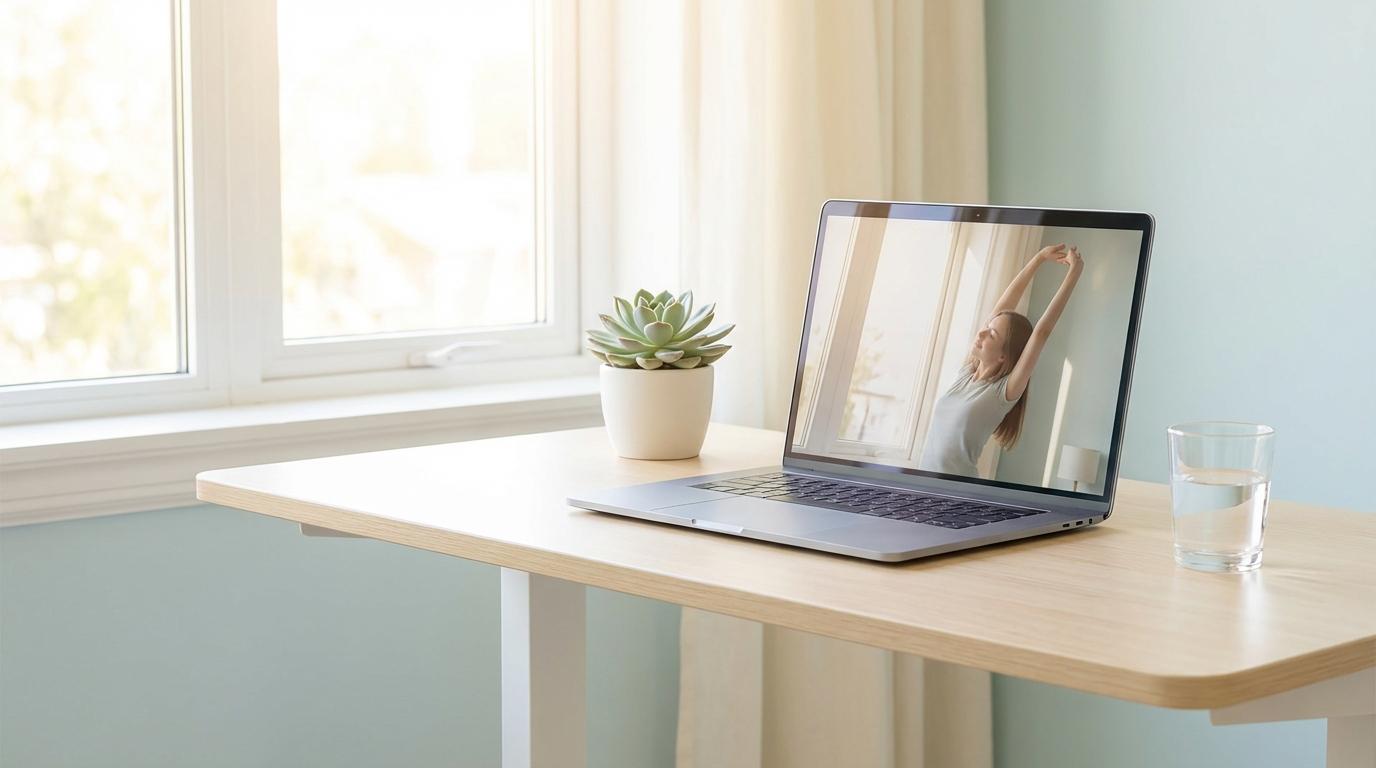
Your desk is affecting your face. I know, I know, that sounds like something your mom would say right after telling you to sit up straight. But here’s the thing: the way you spend 8+ hours a day hunched over a keyboard genuinely impacts how blood flows to your skin, and blood flow is basically the delivery service for all the good stuff your face needs to look alive.
I spent three years at a job where I sat in the same position for so long that my coworker once asked if I was okay because my face looked “gray.” Spoiler: I was fine, just incredibly still. Turns out your skin needs movement to thrive, and most of us are treating our bodies like they’re furniture.
Why Blood Flow Matters for Your Face
Blood carries oxygen and nutrients to your skin cells while hauling away waste products and toxins. When circulation slows down, your skin gets the short end of every stick: less oxygen means duller complexion, fewer nutrients means weaker barrier function, and slower waste removal means hello, congestion.
Dermatologists have been talking about this connection for years. Dr. Whitney Bowe, a board-certified dermatologist, frequently discusses how lifestyle factors impact skin health in ways we don’t always consider. The position you sit in and how long you stay there falls squarely into that category.
Think about it: when you’re sitting hunched over, your neck and shoulders compress, blood vessels narrow, and your face receives less circulation than it would if you were standing or moving. It’s not dramatic enough to cause immediate problems, but do it for years and you’re essentially putting your skin on a low-nutrient diet.
The Posture-Face Connection
Bad posture doesn’t just give you back pain (though it definitely does that too). When your head juts forward, which happens to basically everyone staring at a screen, it compresses the blood vessels in your neck. One study on posture and blood flow found that forward head posture can reduce blood flow to the brain and face by a noticeable percentage.
Your skin notices this. Less blood flow means:
- Slower cell turnover (hello, dull skin)
- Reduced collagen production over time
- Puffiness that won’t quit because lymphatic drainage slows
- That “tired” look even when you slept eight hours
The lymphatic system, which handles fluid drainage in your face, doesn’t have its own pump like your heart. It relies on muscle movement and gravity to work properly. Sit still long enough and everything just… pools. That’s part of why your face looks different after a long flight versus after a walk.
Standing Desks: Helpful or Hype?
Standing desks got super trendy a few years ago, and honestly, they’re not magic. Standing all day has its own problems (hello, varicose veins and lower back strain). But the real benefit isn’t standing versus sitting. It’s the ability to switch between positions.
A sit-stand desk lets you change your posture throughout the day, which keeps blood moving differently and prevents the stagnation that happens when you’re frozen in one position. The goal isn’t to stand for eight hours. It’s to not sit for eight hours straight.
If a standing desk isn’t in your budget (and they’re not cheap, which is annoying), a regular desk with intentional movement breaks works nearly as well. The desk itself isn’t the point. The movement is.
Movement Breaks That Actually Help
You’ve probably heard “take breaks” a million times, but let me be specific about what actually improves facial circulation:
Every 30-45 minutes:
- Stand up and stretch your arms overhead (opens up the chest and neck)
- Roll your shoulders backward 10 times
- Tilt your head side to side, gently stretching your neck
- Walk to get water (hydration plus movement, efficiency queen)
Every 2 hours:
- Take a 5-10 minute walk, even if it’s just around your office or apartment
- Do some light stretching or a quick yoga flow
- Step outside for fresh air if possible (bonus points for temperature change, which increases circulation)
I use a simple timer app on my phone that buzzes every 45 minutes. At first it felt annoying, but now my body expects it. And honestly? My skin looks better in the afternoons than it used to when I would surface from work after four hours of not moving.
Your Desk Setup Actually Matters
Ergonomics sounds boring until you realize bad setup equals bad posture equals compromised circulation equals meh skin. Here’s the quick version:
Monitor height: Top of screen should be at or slightly below eye level. If you’re looking down, your head juts forward, compressing those neck blood vessels.
Chair height: Feet flat on floor, thighs parallel to ground. This prevents circulation issues in your legs that can affect overall blood flow.
Keyboard position: Elbows at 90 degrees. Hunching over a keyboard that’s too low pulls your shoulders forward and compresses your chest.
Screen distance: About arm’s length away. Too close and you’ll lean forward (there’s that forward head posture again).
These adjustments sound like they’re about back health, and they are. But everything connects. Better posture means better blood flow through your neck means better circulation to your face. Your body is annoyingly interconnected like that.
Signs Your Posture Is Affecting Your Skin
Not everyone experiences skin issues from desk life. But if you’re noticing any of these, it might be worth examining your setup and movement habits:
- Persistent puffiness, especially around the jawline and under eyes
- Skin that looks dull by mid-afternoon but revives after you move around
- Slow healing of breakouts or irritation
- That “gray” or sallow undertone that wasn’t there before
- Breakouts along your jawline (this can also relate to phone posture and touching your face)
The tricky part is that these symptoms have multiple potential causes. But if you’ve optimized your skincare routine and you’re still not seeing the glow you want, look at how you’re spending those eight-plus hours. Good products can only do so much if the delivery system (your blood) isn’t doing its job efficiently.
The Sleep Connection
While we’re talking about positions and circulation, sleep posture matters too. The way you position yourself for 7-8 hours at night affects facial blood flow and fluid drainage. If you’re curious about optimizing that side of things, check out how sleep impacts skin repair for the full breakdown.
Between your desk hours and your sleep hours, you’re looking at roughly 16 hours a day in specific positions. That’s a lot of time for circulation patterns to establish themselves. Small adjustments in both areas compound over time.
Quick Facial Massage for Desk Workers
When you do take those movement breaks, adding 60 seconds of facial massage can help move lymphatic fluid and boost circulation right where you want it:
- Use gentle pressure to stroke from the center of your face outward
- Press along your jawline from chin to ear
- Use your fingertips to make small circles at your temples
- Gently press under your cheekbones and slide toward your ears
Don’t go hard on this. The lymphatic system responds to light pressure. You’re not trying to give yourself a deep tissue massage. Just encouraging fluid to move along. Some people like using a gua sha tool for this, but your fingers work fine.
What Actually Changes
I want to be real with you: fixing your desk setup and taking movement breaks isn’t going to transform your skin overnight. This is subtle, cumulative stuff. But after a few weeks of better habits, people often notice:
- Less afternoon puffiness
- More even skin tone throughout the day
- That “just worked out” glow happening more often
- Products absorbing better (circulation helps with that)
- Generally looking more awake without extra concealer
The changes are gradual enough that you might not notice them until someone comments or you compare photos. But they’re real. Your skin reflects your overall circulation, and your circulation reflects how you move (or don’t move) throughout the day.
Making It Sustainable
The best desk setup and movement routine is the one you’ll actually do. If standing desks feel gimmicky to you, skip them. If you hate timers, find another cue (every time you send an email, roll your shoulders, whatever). The point is consistent movement, not any specific method.
Start with one change. Maybe it’s adjusting your monitor height. Maybe it’s a 45-minute movement timer. Maybe it’s just standing up every time you take a phone call. Build from there once that becomes automatic.
Your skin has to work with whatever you give it. Give it decent circulation, and it can do its job better. Sit frozen like a statue for hours on end, and even the best serums have to fight harder to do their thing. It’s not complicated. It’s just one of those annoying lifestyle factors that nobody wants to hear about because it requires actual behavior change.
But hey, at least this one is free. Adjust your chair, set a timer, and move your body. Your face will quietly thank you by looking slightly less tired all the time. Not a bad trade.