
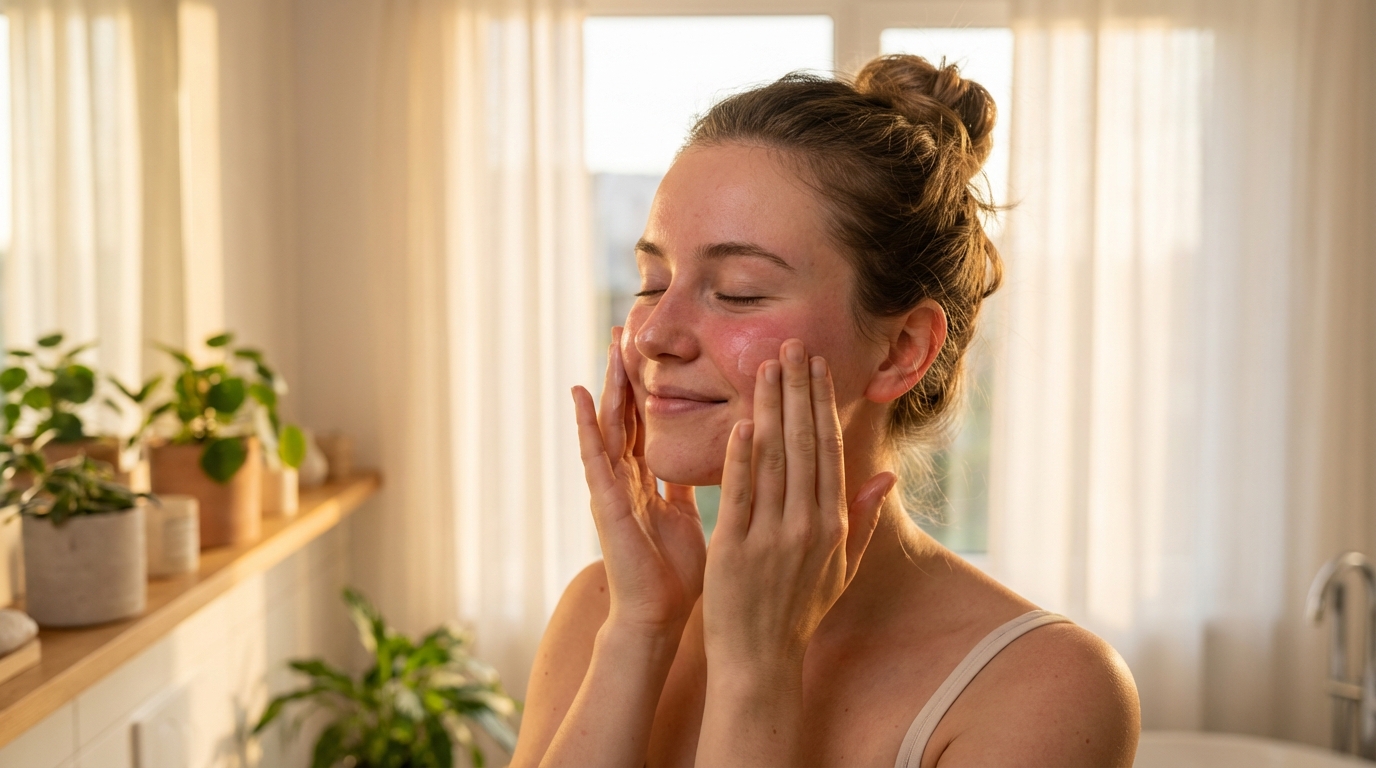
Living with redness-prone skin taught me one of the most valuable lessons in skincare: sometimes doing less brings you more peace. Your skin is not broken. It is simply sensitive, and it responds beautifully when you treat it with gentleness.
Building a routine for reactive skin is less about finding products and more about creating a calm, consistent practice. Let me walk you through what has worked for me and so many others with easily flushed skin.
Ingredients to Avoid
When your skin tends toward redness, certain ingredients act like alarm bells, triggering inflammation even in small amounts. Learning what to skip is just as important as knowing what to use.
Fragrance is often the biggest culprit. Even products labeled natural or botanical can contain essential oils that irritate sensitive skin. Look for fragrance-free rather than unscented, as unscented products sometimes use masking fragrances.
Other common triggers include:
- Denatured alcohol (listed as alcohol denat., SD alcohol, or isopropyl alcohol)
- Menthol and peppermint (that cooling sensation is actually irritation)
- Witch hazel, especially with alcohol
- High concentrations of vitamin C (above 10% for most sensitive skin)
- Retinol, especially when starting out or using daily
- Physical scrubs and harsh exfoliating beads
This does not mean you can never use active ingredients. It means being thoughtful about which ones, how much, and how often. Sensitive skin responds better to a slow, intentional approach.
Calming Ingredients That Help
Certain ingredients have a naturally soothing effect on reactive skin. These are the friends you want in your routine.
Centella Asiatica (also called cica or tiger grass) helps strengthen the skin barrier and calm inflammation. It has been used in traditional medicine for centuries and shows up in many gentle Korean skincare products.
Other calming ingredients to look for:
- Niacinamide at low concentrations (2-5% is plenty for sensitive skin)
- Aloe vera (look for it high on the ingredient list)
- Green tea extract for its anti-inflammatory properties
- Oat extracts (colloidal oatmeal is particularly soothing)
- Allantoin, a gentle healer often overlooked
- Licorice root extract for redness and uneven tone
Ceramides deserve special mention. These lipids help repair and maintain your skin barrier, which is often compromised in redness-prone skin. Products with ceramides, cholesterol, and fatty acids mimic your skin natural protective layer.
Gentle Application Techniques
How you apply products matters as much as what you apply. Friction and tugging can trigger flushing even with the gentlest formulas.
When cleansing, use lukewarm water and your fingertips only. Massage in small circles with almost no pressure, letting the cleanser do the work. Rinse by splashing water on your face rather than rubbing. Pat dry with a soft towel, never rub.
For serums and moisturizers, try the pressing method. Warm a small amount between your palms, then gently press your hands against your face. Hold for a few seconds. This allows the product to absorb without any friction.
Some additional gentle practices:
- Wait 30 seconds between products to let each one settle
- Apply products to slightly damp skin for better absorption
- Use your ring finger around the eye area (it applies the least pressure)
- Pat on SPF rather than rubbing it in circles
Think of your skincare routine as a form of self-care rather than a task to rush through. When you slow down, you notice how your skin responds to each product and each touch.
Temperature and Your Skin
Temperature changes are a major trigger for redness-prone skin. Understanding this connection helps you make choices that keep your skin calm throughout the day.
Hot showers feel wonderful but can leave your face flushed for hours. Try turning down the temperature, or at least keep your face out of the direct hot water stream. Washing your face at the sink with lukewarm water is gentler than doing it in a steamy shower.
Environmental temperature shifts matter too. Going from cold outdoor air into heated buildings, or from air conditioning into summer heat, causes blood vessels to dilate and contract rapidly. You cannot always avoid these situations, but you can prepare.
Tips for managing temperature triggers:
- Keep a thermal spring water mist in your bag for cooling down
- In winter, give your skin a moment to adjust before entering heated spaces
- Avoid very hot drinks if they trigger flushing (let coffee cool slightly)
- Exercise in cooler environments when possible
- Sleep with a fan or in a cool room, as night flushing is common
Spicy foods, alcohol, and hot beverages can also trigger flushing from the inside. You do not need to eliminate these entirely, but being aware of the connection helps you make choices that work for your skin.
Building Your Calm Routine
A gentle routine for redness-prone skin does not need many steps. In fact, fewer products often means fewer opportunities for irritation.
Morning: Gentle cleanser (or just water if your skin feels okay), calming serum with niacinamide or centella, moisturizer with ceramides, mineral SPF (zinc oxide and titanium dioxide are less likely to irritate than chemical filters).
Evening: Same gentle cleanser, perhaps a hydrating toner if you enjoy the extra moisture, moisturizer or a richer night cream.
That is it. You do not need ten products. You need products that work with your skin instead of against it, applied with patience and care.
Living with redness-prone skin is not a problem to solve. It is simply your skin way of communicating. When you listen and respond gently, the conversation becomes much more peaceful.