
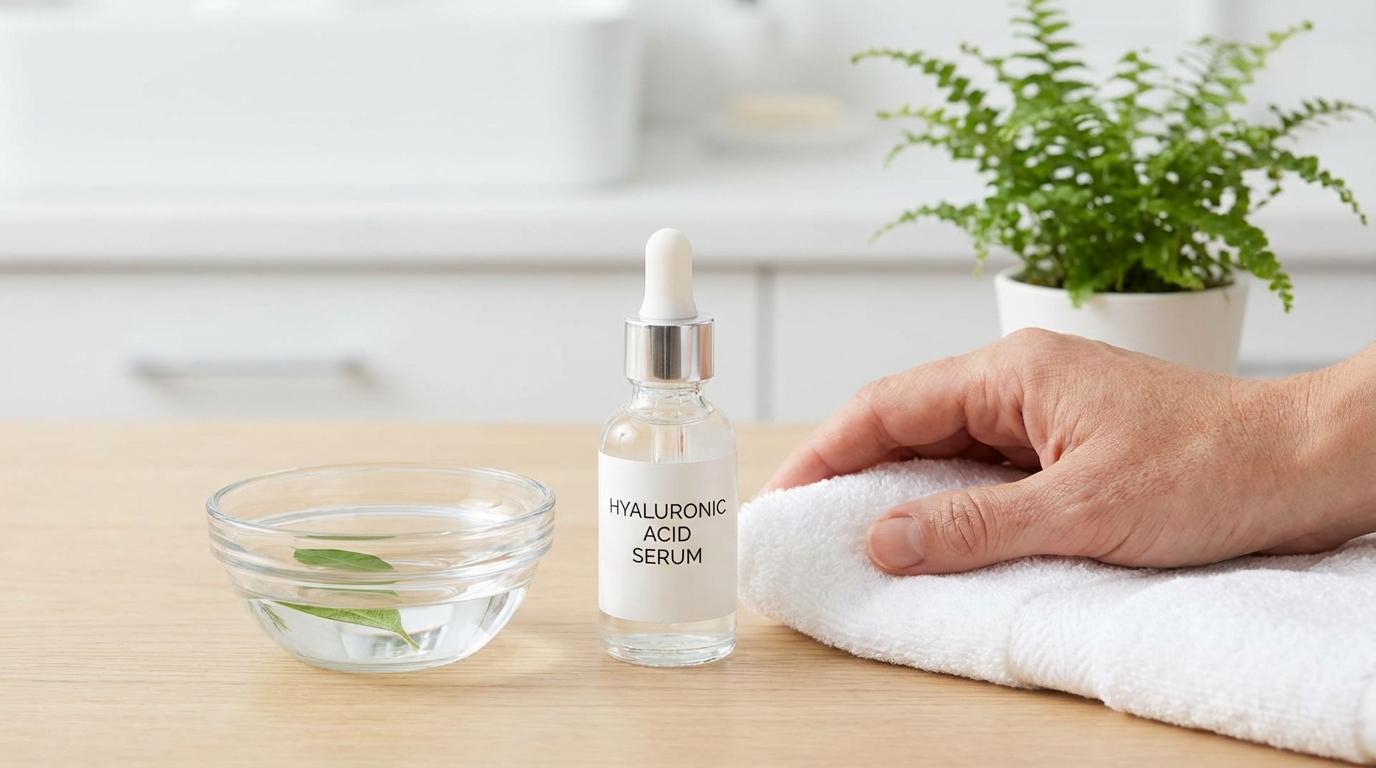
Hyaluronic acid shows up in practically every skincare product these days. Serums, moisturizers, toners, sheet masks, you name it. And I get the appeal. HA is a naturally occurring molecule in our skin that holds up to 1,000 times its weight in water. That sounds impressive, right? But here is where my biochemistry brain kicks in: impressive numbers do not always translate to practical results. And yes, you can absolutely overdo it.
Let me break down what is actually happening at the molecular level when you slather on that hyaluronic acid serum, and why context matters more than you might think.
How Hyaluronic Acid Actually Works
First, let us get one thing straight. Hyaluronic acid is a humectant, which means it attracts and binds water molecules. It does not produce moisture out of thin air. It has to pull that water from somewhere.
Here is where it gets interesting. HA comes in different molecular weights, and the size matters quite a bit for how it behaves on your skin:
- High molecular weight HA (over 1,000 kDa) sits on the skin surface and forms a film that helps prevent moisture loss
- Medium molecular weight HA (between 100-1,000 kDa) can partially penetrate the outer layers of skin
- Low molecular weight HA (under 100 kDa) penetrates deeper into the epidermis
A 2013 study published in the Journal of Clinical and Aesthetic Dermatology found that low molecular weight HA showed significant improvements in skin hydration and wrinkle depth after 60 days of use. But here is the catch: the study was conducted in controlled conditions where participants also used moisturizers and lived in normal humidity environments.
The takeaway? HA works best as part of a system, not as a standalone solution.
The Humidity Factor Nobody Talks About
This is where things get tricky, and where I see a lot of skincare advice fall apart.
Remember how I said HA pulls water from somewhere? In humid environments (think 70% humidity or higher), HA can draw moisture from the air into your skin. That is the dream scenario everyone imagines when they buy that HA serum.
But in dry environments? Here is the problem. When the air around you is drier than your skin, HA still needs to bind water molecules. So where does it get them? From deeper layers of your skin.
Yes, you read that correctly. In low humidity conditions, hyaluronic acid can actually pull water from your own skin, potentially leaving you more dehydrated than before.
A study on humectants and skin hydration explains this phenomenon. Humectants work best when there is adequate environmental moisture to draw from, or when they are properly sealed in with an occlusive layer.
Practical translation: if you live in a dry climate, use air conditioning frequently, or it is winter, you need to rethink how you use HA.
When Too Much Backfires
Here is where the “more is better” mindset gets people in trouble.
I have seen plenty of skincare routines where someone uses an HA cleanser, followed by an HA toner, then an HA serum, and finishes with an HA moisturizer. That is a lot of hyaluronic acid competing for the same water molecules.
The problem with layering multiple HA products:
- Saturation point: Your skin can only hold so much water. Excess HA just sits on the surface doing nothing useful.
- Sticky, tacky texture: Too much HA creates a film that can feel uncomfortable and may interfere with other products.
- Potential dehydration: In dry conditions, all that HA is competing for water that may not exist in your environment.
- Waste of money: You are paying for redundant ingredients when one well-formulated product would do the job.
According to the American Academy of Dermatology, humectants like HA work best when paired with emollients and occlusives that help seal in the moisture. Using humectants alone, especially in multiple layers, can actually backfire.
Signs You Are Overdoing It
How do you know if your HA habit has gone too far? Watch for these signals:
Tight, uncomfortable skin despite using “hydrating” products. This is the classic sign. You are applying products marketed as moisturizing, but your skin still feels parched. This often happens when HA is pulling moisture from your skin rather than the environment.
A tacky or sticky residue that never fully absorbs. A thin layer of HA should sink in within a minute or two. If your skin stays tacky, you have applied more than it can use.
Flaking or peeling in areas where you apply the most product. Sounds counterintuitive, but dehydration from over-humectant use can manifest as flaky patches, especially around the nose and mouth.
Other products seem to work worse than before. If your moisturizer suddenly feels like it is not absorbing or your makeup is not sitting right, excess HA creating a film on your skin might be the culprit.
The Smart Way to Use Hyaluronic Acid
Based on the science, here is how to actually get the benefits without the downsides:
Apply to damp skin. Give HA some easy water to grab onto. After cleansing, pat your face with a towel so it is still slightly damp, then apply your HA product.
Layer appropriately for your climate. In humid environments, you can get away with more HA. In dry climates or during winter, stick to one HA product and make sure you seal it with a good moisturizer or oil.
Look for well-formulated products. The best HA serums combine multiple molecular weights with other hydrating ingredients and emollients. Paula’s Choice has a good breakdown of what to look for.
Always seal it in. Follow your HA serum with a moisturizer, and in very dry conditions, consider adding an occlusive layer (like a thin layer of squalane or a sleeping mask) to prevent transepidermal water loss.
One product is enough. You do not need HA in every single step of your routine. Pick one well-formulated HA serum or moisturizer and let it do its job.
The bottom line? Hyaluronic acid is a useful ingredient when used thoughtfully, but it is not magic, and it is definitely possible to overdo it. Pay attention to how your skin responds, consider your environment, and remember that good skincare is about balance, not about cramming in the maximum amount of any single ingredient.
Your skin knows what it needs. Sometimes that means stepping back and simplifying rather than adding more.