
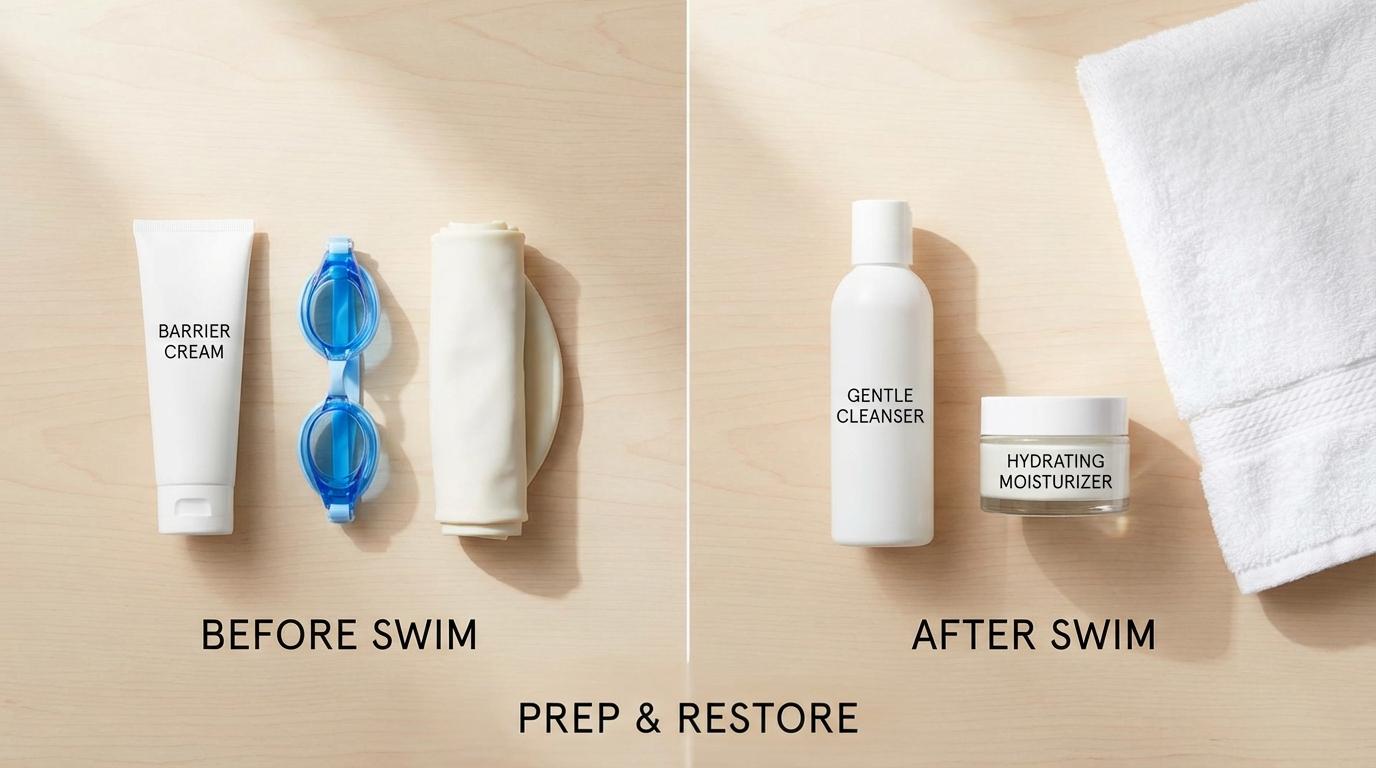
Swimming is great exercise. It is low impact, it works your whole body, and there is something mentally refreshing about being in water. But here is the thing: pool water is treated with chemicals, primarily chlorine, and those chemicals do not just kill bacteria. They also strip away your skin’s natural protective oils.
Let me walk you through what is actually happening to your skin when you swim, and what you can do before and after to minimize the damage.
What Chlorine Actually Does to Your Skin
Chlorine is a disinfectant. That is its job. It oxidizes organic matter, which means it breaks down and destroys bacteria, algae, and other microorganisms in pool water. The problem is, your skin is also organic matter.
When you swim in chlorinated water, the chlorine reacts with the natural oils on your skin. These oils are part of your skin barrier, the protective layer that keeps moisture in and irritants out. Chlorine dissolves those oils, leaving your barrier compromised.
The result? Dry, tight skin. That squeaky-clean feeling after swimming is not actually clean skin. It is stripped skin. If you swim regularly without taking precautions, you might notice increased sensitivity, flakiness, or even breakouts from a damaged barrier.
People with eczema, rosacea, or already sensitive skin tend to react more strongly to chlorine. But even if you do not have an existing skin condition, repeated exposure without proper care will affect you eventually.
Pre-Swim Protection: Creating a Barrier
The goal before swimming is to minimize how much chlorine can penetrate your skin. You cannot completely block it, but you can reduce its impact.
Step one: rinse with fresh water first. This sounds almost too simple, but it makes a real difference. Wet skin absorbs less chlorinated water than dry skin. Think of it like a sponge: a dry sponge soaks up whatever you put on it, while a wet sponge is already saturated. Take a quick shower before getting in the pool.
Step two: apply a protective layer. A thin layer of moisturizer, body oil, or even petroleum jelly creates a physical barrier between your skin and the pool water. You do not need anything fancy here. Something basic and occlusive works. Apply it right before getting in.
Some swimmers use coconut oil because it is cheap and widely available. It will not fully protect you, but it helps. The key is having something on your skin that chlorine has to work through before reaching your natural oils.
For your face specifically, you can use a water-resistant sunscreen. You probably need sun protection anyway if you are swimming outdoors, and the water-resistant formulas tend to cling to skin better than regular moisturizers.
While You Are Swimming
Once you are in the pool, there is not much you can do except limit your exposure time. The longer you are in chlorinated water, the more your skin barrier gets broken down.
If you are a casual swimmer doing laps for exercise, try not to spend hours in the pool. Get your workout done and get out. If you are at the pool all day for a social event or vacation, take breaks. Get out, rinse off with fresh water, reapply your protective layer, then get back in.
Competitive swimmers who spend hours in the pool every day often struggle more with chlorine damage. If that describes you, the pre and post routines become even more important.
Post-Swim Cleansing: The Most Important Step
What you do after swimming matters more than what you do before. Chlorine does not just sit on the surface of your skin. It binds to it. If you do not wash it off properly, it continues to cause damage even after you are out of the pool.
Shower immediately. Not later when you get home. Right after. Use lukewarm water (hot water further strips oils) and a gentle, hydrating cleanser. Soap and water alone will not fully remove chlorine. You need something that breaks down the chemical bond between chlorine and skin.
There are cleansers specifically designed to neutralize chlorine, often marketed to swimmers. These contain ingredients like vitamin C (ascorbic acid) that react with chlorine and neutralize it. You can also make a DIY version by dissolving vitamin C powder in water and using that as a rinse before your regular cleanser.
For your face, use your regular gentle cleanser. Make sure you cleanse thoroughly around your hairline where pool water tends to collect. Pat dry gently instead of rubbing.
Restoring Moisture After Swimming
Your skin just lost a bunch of its natural protective oils. It needs moisture back, and it needs it right away. The longer you wait to moisturize after swimming, the more water evaporates from your skin, leaving it even drier.
Apply moisturizer while your skin is still slightly damp from the shower. This helps lock in some of that water. Use something richer than your usual moisturizer if you can. Creams and ointments work better than lotions for post-swim repair.
Look for moisturizers with barrier-supporting ingredients: ceramides, fatty acids, cholesterol, hyaluronic acid. These help rebuild what the chlorine stripped away. Products marketed for dry or sensitive skin are often good choices.
For your face, your regular moisturizer is fine, but you might want to add a hydrating serum underneath for extra support. Something with hyaluronic acid helps draw water into the skin. Follow with your moisturizer to seal it in.
If you are swimming outdoors during the day, do not forget to reapply sunscreen after your post-swim moisturizing routine.
Building a Quick Routine
Here is what this looks like in practice:
Before: Shower with fresh water (2 minutes). Apply body oil or moisturizer (1 minute). Apply water-resistant sunscreen to face and exposed areas (1 minute).
After: Shower with lukewarm water and gentle cleanser (3-5 minutes). Apply rich body moisturizer while still damp (2 minutes). Apply hydrating serum and face moisturizer (1 minute). Sunscreen if going back outside.
Total time: about 10-15 minutes for both routines combined. Not nothing, but not unreasonable if you value your skin health.
Signs Your Skin Needs a Break
If you are a regular swimmer, watch for these warning signs that your skin barrier is compromised:
Persistent dryness that does not resolve with moisturizer. Redness or itching that lasts more than a few hours after swimming. Increased breakouts or bumps on areas exposed to pool water. Stinging when you apply products that normally feel fine.
If you are seeing these signs, take a break from the pool for a few days. Focus on barrier repair with gentle, hydrating products. Your skin will bounce back, but it needs time to recover.
Swimming does not have to wreck your skin. A little prep and proper aftercare go a long way. Your skin can handle chlorine exposure if you are giving it the support it needs.